Birth of a second baby elephant: a new female has joined the herd!
Update, 7 April 2026
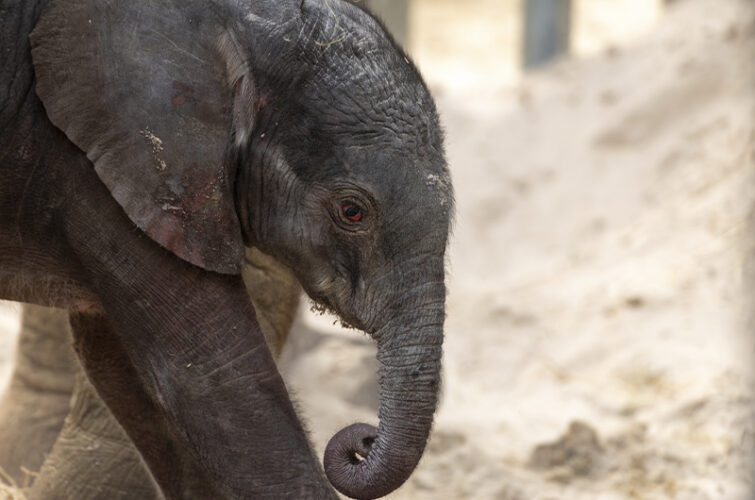
Our second baby elephant now has a name: Rosie.
Chosen following a vote on our social media channels, this name was the public’s favourite from among four suggestions put forward by the elephant keepers.
The little female is doing very well. She already weighs 111 kg, which is perfectly normal for a baby elephant, and continues to grow alongside her mother, Ashanti.
A big thank you to everyone for your participation and enthusiasm surrounding this birth!
____________________________________________________
Great joy at ZooParc de Beauval: Ashanti (23), a female African savannah elephant, gave birth to her very first calf during the night of Saturday 21st to Sunday 22nd March. The baby, born at 4.11 am, is a female and is doing well, as is her mother.
Following the birth of Himba on 15 February, this is the second baby elephant to be born in just a few weeks within the Beauval elephant herd. An exceptional event, both for the teams, for the herd and for the European breeding programme.
A quick and natural birth
It all happened very quickly. Ashanti’s waters broke at 3.14 am and, less than an hour later, her baby was born. “It was nothing like N’Dala’s birth. After her waters broke, we could see straight away that Ashanti’s calf was already well on its way. We saw proper contractions; labour was progressing all by itself. It was incredibly encouraging,” says Johanna, an animal keeper in the elephant section.
The birth took place without medical intervention. The vets were present and ready to step in if necessary, but Ashanti gave birth naturally, in a calm manner. “It was so quiet that Marge, one of the other females, was asleep and didn’t even get up,” says Johanna.
A caring and protective new mum
This birth was particularly eagerly awaited as it was Ashanti’s first baby. The teams knew that a first birth could hold surprises, but the young mother very quickly displayed excellent maternal behaviour.
From the moment of birth, she took an interest in her calf and immediately began to stimulate it. As is often the case with female elephants, these first actions can be impressive, as they are energetic. Ashanti was very involved, at times even a little impatient.
“She immediately had the right instincts to try and help her calf stand up. She was very attentive, sometimes a bit clumsy, a bit impatient, but she had immediately adopted a maternal behaviour,” explains Johanna.
The keepers briefly stepped in to help her calm down in the very first few minutes, talking to her and giving her a little food to soothe her.
Today, Ashanti is very attentive, protective and calm with her little one. “When the baby gets close to the other females in the neighbouring enclosure, Ashanti comes straight over and positions herself between them and her little one,” says Johanna.
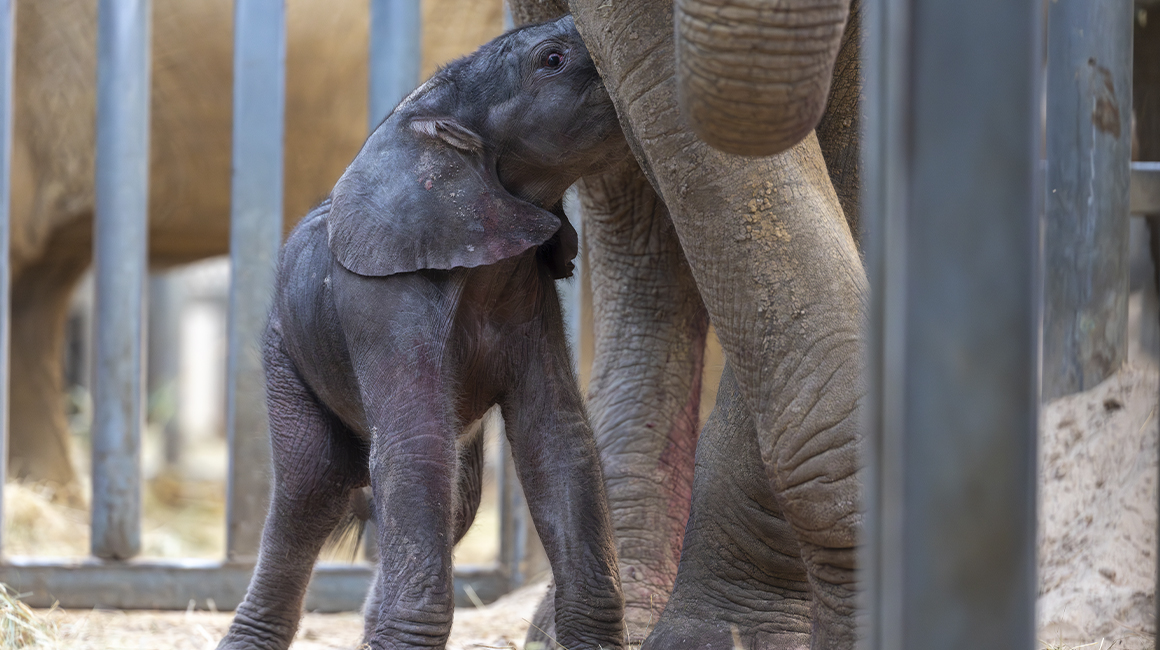
A lively, curious female… and already very chatty!
The little female tried to stand up very soon after her birth. Brave, she persevered despite her tremors in the first few hours. “She tried to stand up straight away; she really gave it her all. You can tell she’s a little one with a bit of character, just like her mum,” smiles Johanna.
Another distinctive trait spotted in her first few hours of life: she vocalised a lot. “On Sunday, that’s all she did! She’s a real chatterbox!” says the keeper.
The first feeding observed took place around 8 am. The teams had some doubts in the early hours about Ashanti’s milk coming in, which is common in a first-time mother, but they are now reassured. “The calf immediately showed the right behaviour to latch on, and the mother presented her teats well. This Monday morning, we are absolutely certain there is milk and that the calf is feeding properly.”
Two baby elephants in a matter of weeks: a historic spring
With this second birth, Beauval is experiencing a truly rare moment: two little females have been born just a few weeks apart, both daughters of Akili.
For the teams, it is a huge relief following Himba’s complicated birth. “With Ashanti, honestly, I felt fine the whole time, confident, because we had no reason to worry as everything was going well as it progressed,” says Johanna. “The fact that it went well really takes a weight off our shoulders. It’s a huge relief.”
These two births also open up some wonderful prospects for the future of the group.
“It’s brilliant, because they’re both females, so they’ll stay. They’re half-sisters and they’ll grow up together,” says Johanna happily. “For the balance of a social group like this, it’s really important that there are individuals of roughly the same age.”
This baby elephant is the second to be born at Beauval this year, following the birth of little Himba on 15 February! Classified as “Endangered” on the IUCN Red List, these two births are essential for the conservation of the species. The ZooParc de Beauval had not seen an elephant birth since 2012, making the arrival of these baby elephants all the more extraordinary!
Find out more about the species
A moment that marks a keeper’s life
For the elephant team, these successive births represent an exceptional moment, both professionally and emotionally.
“It’s the kind of moment that leaves a lasting impression on a keeper’s life,” says Johanna. “It’s incredible. We’ll never forget it. Now, it’s changing our daily lives too: we see them developing, growing, interacting… we’re part of the family too.”
The keepers are now eagerly awaiting what comes next: the future introductions between the two babies and the rest of the group. “We can’t wait to start the introductions, to see how they interact, to put the two babies together… it’s going to be brilliant.”
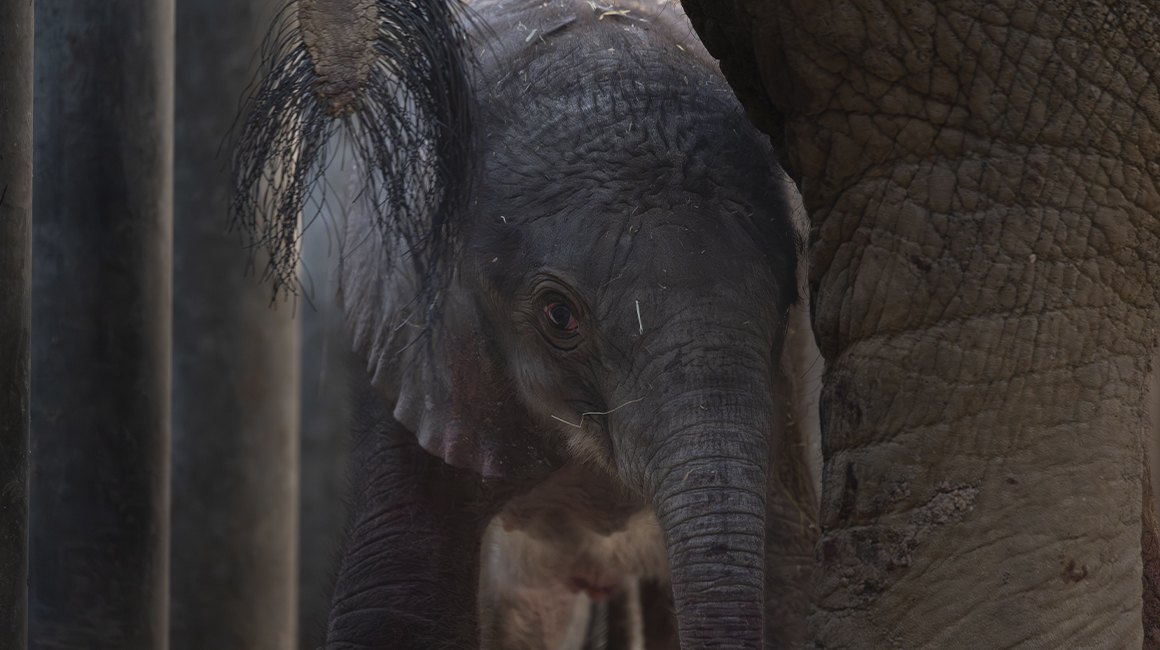
Can we see Ashanti’s baby yet?
Ashanti’s little female calf is currently in the pens at the back of the Elephant House. She can already be spotted by visitors, although this is still more difficult than with Himba.
With a bit of luck — and sometimes the help of a keen eye or a camera — visitors can already spot this second baby elephant, snuggled up to her mother, but that’s not all! In fact, the little female is proving to be much more curious and adventurous than her half-sister Himba.
Good news: from the middle of the week (Wednesday or Thursday), Ashanti and her baby should be settled into the pens at the front, near N’Dala and Himba.
The name will be chosen by the public on social media
The teams are already thinking about a name for this new little female. Several suggestions will be shortlisted internally by the elephant keepers before being put to a public vote on social media. Several names are expected to be linked to the story behind this birth and the calf’s personality. You’ll be able to vote in the coming days on Facebook and Instagram. Stay tuned!
The elephant group at Beauval is open for sponsorship
At ZooParc de Beauval, eight females — including two very young ones born in 2026 — and one male, Akili, roam across three plains totalling 6 hectares: this is the largest living space for elephants in France. An exceptional facility, designed with their well-being in mind.
You can sponsor the elephant group and contribute directly to the conservation of endangered species around the world. Sponsorship is a donation to the Beauval Nature association, 66% of which is tax-deductible.