A centre for dolphins, the only one of its kind in Europe, in Beauval in March–April 2027
Since the announcement of the creation of the Centre for the Study, Scientific Research and Conservation of Dolphins at Beauval, many of you have been in touch. Thank you for your messages of support and for all your questions.
Dolphin visibility, breeding, transfers, orcas, marine sanctuaries…
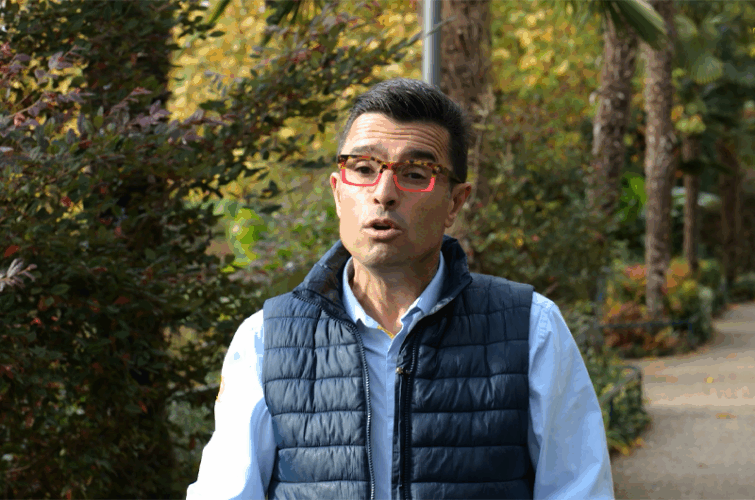
Rodolphe Delord, CEO of ZooParc de Beauval, answers your questions with complete transparency in a new video (in French).
At the request of the government and the Ministry for Ecological Transition, and following discussions with animal welfare organisations, ZooParc de Beauval has been working over the past few weeks on the design of a groundbreaking project: a facility of the future intended to house dolphins from several European dolphinariums.
This is not merely a project to take in these dolphins, but an extraordinary, ambitious and profoundly innovative initiative, unique in Europe: the creation of a Centre for the Study, Scientific Research and Conservation of Dolphins (CERSSD).
With a capacity of 20 to 30 dolphins, the CERSSD will offer these animals an exceptional living environment, designed down to the smallest detail with their wellbeing in mind. Seven pools, three vast landscaped lagoons, over 30,000 cubic metres of reconstituted seawater, beaches, rocks, waves and natural currents will recreate an environment close to that which they experience in the wild. Innovative educational spaces will also enable the public to gain a better understanding of the challenges involved in cetacean conservation: underwater viewing windows, observation rooms and educational programmes will offer an experience that is both immersive and informative.
The animals at the CERSSD will be included in the European Endangered Species Programme (EEP), managed by experts from the European Association of Zoos and Aquaria (EAZA), to ensure the scientific and collaborative management of the population.
This project, officially presented to the government and animal welfare organisations, aims to establish a European benchmark model, centred on animal welfare, research, training and conservation, to address the urgent need and prepare for the future of cetaceans in Europe.
Watch the video featuring Rodolphe Delord, CEO of ZooParc de Beauval.
An investment that guarantees the animals’ welfare, according to the Minister of State for Ecological Transition, who was visiting Beauval
On Thursday 6 November, Mathieu Lefèvre, Minister of State for Ecological Transition, visited ZooParc de Beauval: “I came here this morning to reaffirm the Government’s support for the dolphin rescue centre project that the Director of ZooParc de Beauval plans to build, for several reasons: the first being that it is an investment in France, in our country, which will boost French employment and the development of this leisure industry here on national soil; but also, and above all, because it is an investment that guarantees the animals’ welfare and which will, I believe, the law that the Republic enacted in 2021 on the captivity of cetaceans and the ban on cetacean shows to be fully complied with. And I am very pleased to see the project presented by Mr Delord, which offers every guarantee in terms of ethics, responsibility and sustainability, and which will ensure that the dolphins – in particular those from Planète Sauvage – can be accommodated there. As for the dolphins at Marineland, this is obviously the aim of this new centre, which will be built fairly quickly, and it seems to me to be the best option available for the dolphins at Marineland.”
Lamya Essemlali, chair of the Sea Shepherd France association, said: “The solution proposed by Beauval allows the animals to remain in France under French jurisdiction. What we envisage doing now is working with Beauval and the government to draw up an ethical charter that guarantees we are in full agreement on how all this will work.”
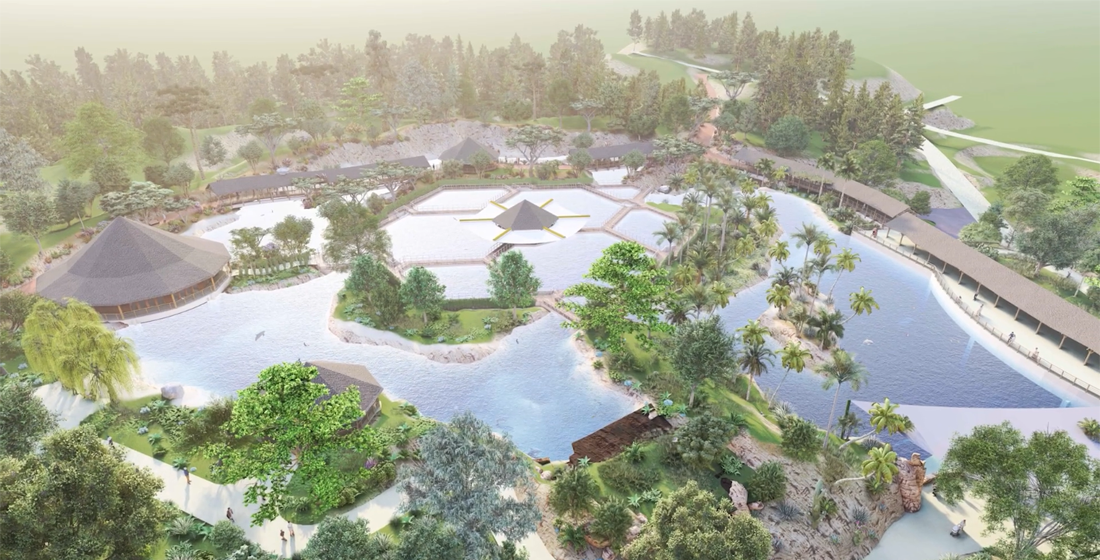
Initial 3D sketches of the planned dolphin pools at Beauval
A leading scientific and educational hub dedicated to cetacean conservation
This centre will embody a European model of transition, innovation and cooperation, dedicated to animal welfare, research and the protection of marine life. It will serve as a leading scientific and educational platform dedicated to cetacean conservation. As part of the scientific network, it will be able to host stakeholders in marine life conservation and contribute to the training of future generations of marine biologists, animal carers, vets and wildlife managers.
Proposed areas of focus
- Training: a centre for practical training for future marine conservation professionals (students, vets, nature reserve managers).
- Emergencies: a response unit for stranding incidents and the establishment of temporary on-site care facilities for cetaceans in distress.
- Monitoring of wild populations: setting up and coordinating an at-sea acoustic monitoring programme to continuously track the status of wild populations of dolphins and porpoises.
- Threat reduction: research into solutions to limit accidental entanglement in fishing nets, the leading cause of cetacean mortality in France.
- Physiology and health: studies into the metabolism, immunity and resilience of cetaceans in the face of environmental change.
By creating a model centred on animal welfare, scientific research and education, ZooParc de Beauval aims to turn a crisis into an opportunity to build a sustainable and responsible future for these animals and for the wild species they represent.
As part of this new and unique initiative, ZooParc de Beauval will welcome the 11 dolphins from Planète Sauvage, near Nantes, which has chosen to refocus on terrestrial species and has decided to rehome its dolphins at Beauval.
The ZooParc de Beauval will also be able to accommodate the 12 dolphins from Marineland.
Discussions on this matter have been ongoing for several weeks.
Beyond responding to the situation in France, this centre aims to contribute, at a European level, to the development of best practice and the sharing of expertise in support of the conservation and protection of cetaceans, in a spirit of cooperation with all stakeholders.
More than half of all dolphin species are in decline
Cetaceans are among the species most vulnerable to human pressures: bycatch, chemical and noise pollution, habitat loss, collisions and climate change threaten their survival. According to the IUCN (International Union for Conservation of Nature) Red List, more than half of all dolphin and whale species are in decline or not sufficiently understood to be effectively protected. Certain populations and subspecies of bottlenose dolphins are currently threatened.
In France, the situation remains a cause for concern: thousands of common dolphins die every year, trapped in fishing gear, whilst improvements to the care of cetaceans in distress, those that have strayed or have been found stranded alive, are the subject of discussions and a working group coordinated by the Ministry for Ecological Transition. As with many other species, the conservation of dolphins relies in part on the scientific and technical expertise of zoological institutions.
The creation of a centre dedicated to the study of cetaceans at Beauval presents a unique opportunity to combine responsible animal care, applied research, education, welfare and conservation. A first step capable of leading the way and uniting European stakeholders around a common goal: to secure a future for dolphins living in institutions whilst actively contributing to the conservation of their wild counterparts.