A young bearded vulture reared at Beauval has been reintroduced to Germany
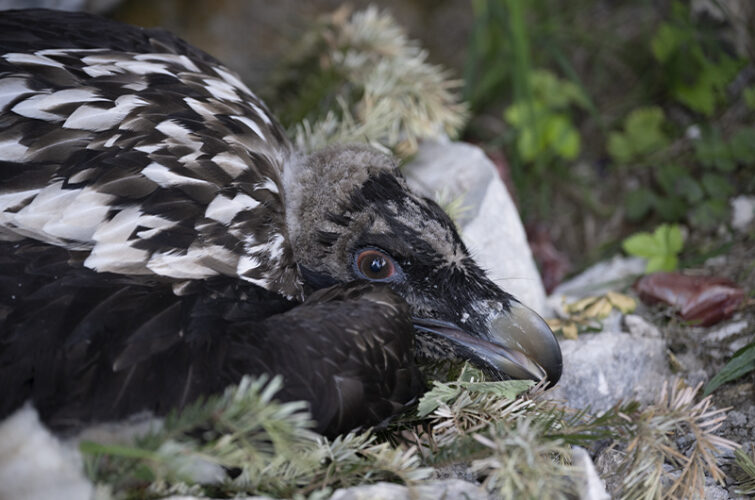
Rescued when he was just a few days old, raised by Makalu – the male bearded vulture at ZooParc de Beauval – and then prepared for release into the wild, this young bird of prey has just written a new chapter in its story. On 24 June 2026, he was reintroduced into Berchtesgaden National Park in Germany, where he will help to bolster the wild populations of this species, which is emblematic of the European mountains.
New hope for the bearded vulture
Two years after the reintroduction of Paradiso in Switzerland, the ZooParc de Beauval is playing a part in another important milestone for the conservation of the bearded vulture.
This reintroduction was made possible thanks to collaboration between ZooParc de Beauval, Pairi Daiza, Berchtesgaden National Park, the Vulture Conservation Foundation – supported by Beauval Nature – and the LBV-Bartgeier Projekt.
At 90 days old, the young bird of prey, named Zierli, was placed in a specially prepared mountain nest near a second nest occupied by another chick from the Haute-Savoie Conservatory of Natural Areas. Its name pays tribute to Dr. Hubert Zierl, the first director of Berchtesgaden National Park from 1978 to 2001, who celebrated his 90th birthday this year. Zierli’s sex will be determined in the coming weeks through a blood analysis.
For around three weeks, they will be fed directly in the nest twice a week. Their diet will consist of chamois bones and meat collected from the national park; the meat will, in particular, provide them with the water they need for their development. Throughout this period, programme staff will maintain constant surveillance near the reintroduction site. Once they have made their first flights, the two birds, fitted with GPS trackers, will continue to be monitored to support them during their first months of life in the wild.
This reintroduction is excellent news for the bearded vulture. Once extinct in many parts of Europe, this large bird of prey is now benefiting from reintroduction programmes that are facilitating the species’ gradual return to several mountain ranges. However, despite these encouraging results, the bearded vulture remains classified as ‘Near Threatened’ on the IUCN Red List*. Poisoning, disturbance during the breeding season, habitat degradation, lack of food and collisions with overhead cables and wind turbines continue to threaten wild populations.
An extraordinary story
The journey of Zierli is particularly memorable.
In early May, two chicks from the same clutch were born at Pairi Daiza. Among bearded vultures, only one chick is usually reared each year. When two chicks are born, competition for food is so fierce that, more often than not, only one of them survives. To give the ‘second-born’ the best possible chance, it was entrusted to the ZooParc de Beauval. A fine example of cooperation between zoos committed to the conservation of the species.
Taken in by the pair of bearded vultures at Beauval, the young bird had a turbulent start. Contrary to all expectations, the female of the pair proved aggressive, violently attacking the newborn and flinging it out of the nest. Thanks to the vigilance and quick response of the animal care teams, however, it was saved and taken into care in time. Thereafter, Makalu, the male of the pair, raised the chick on his own until it left the nest.
A few months later, it is now ready to write a new chapter in its story in the Bavarian Alps.
A European programme supported by Beauval Nature
This reintroduction forms part of the European bearded vulture conservation programme coordinated by the Vulture Conservation Foundation, which has been financially supported by Beauval Nature since 2012.
The aim is to strengthen wild populations through breeding, scientific monitoring and the reintroduction of young birds into several European mountain ranges. Thanks to the efforts of zoos, conservation organisations and nature area managers, the species is gradually making a comeback in the Alps, the Pyrenees, Corsica and the Massif Central, amongst other places.
Sponsor La Rhune and protect biodiversity
Whilst Zierli begins its life in the wild, the story continues at the ZooParc de Beauval.
La Rhune, the female of the ZooParc de Beauval’s bearded vulture pair, is set to be reunited with Makalu, who raised the young chick on his own prior to its reintroduction. As true ambassadors for their species, they are part of the European bearded vulture conservation programme.
You can support their protection and the work carried out by Beauval Nature by sponsoring La Rhune.
*International Union for Conservation of Nature
Photo credit: ©Hansruedi Weyrich