Common spadefoot toad: a new strategy to protect the species
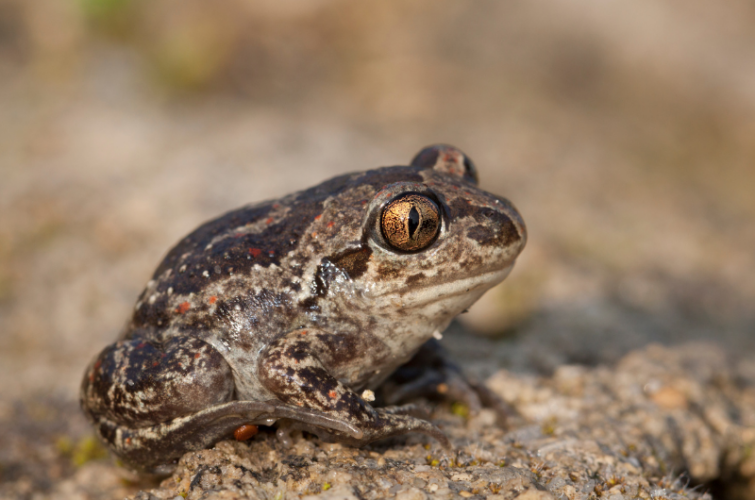
The common spadefoot toad is not found at the ZooParc de Beauval… but it is one of the species monitored and protected by the Beauval Nature association, directly in its natural habitat.
A new phase is beginning for this amphibian, which is threatened with extinction at national level. Following the initial encouraging results from the wildlife crossings installed in winter 2024, the teams are now testing a novel approach: relocating some of the eggs to restored, as yet unoccupied ponds. A decisive boost to help the species regain ground.
The common spadefoot toad, a threatened amphibian
The common spadefoot toad is a medium-sized toad, measuring 5 to 8 cm. In France, its distribution is highly patchy: there are a few populations in Alsace and Lorraine and two isolated populations in the Centre-Val de Loire region. One of these, in the Loiret, numbers around a hundred adults and is the largest population in France.
The common spadefoot toad is therefore considered critically endangered in the Centre-Val de Loire region, mainly due to the drying up and disappearance of wetlands, pollution and the introduction of invasive alien species. Over the past fifty years, its numbers have fallen by 80%.
To reverse this trend, the species is the subject of a national action plan, coordinated at regional level by the DREAL Centre-Val de Loire and led by Beauval Nature. It is within this framework that several initiatives are being carried out.
Wildlife crossings already used by numerous species
In 2024–2025, four wildlife crossings were created and installed beneath the RD19 in Lailly-en-Val (45). The aim? To allow small animals, particularly common spadefoot toads, to cross the road safely. A major challenge: the RD19 is a very busy road with over 4,000 vehicles passing through every day.

Wildlife crossing built in winter 2024
To analyse the effectiveness of the system, camera traps were placed in the tunnels. Loiret Nature Environnement, tasked with analysing the thousands of images captured by the cameras, confirms that 80 % of them are usable.
And the initial results are very encouraging:
- The animals are moving in both directions, a sign that the tunnels are acting as genuine corridors,
- No fatalities have been observed on the road,
- Around thirty species are using the crossings, including six species of amphibians.
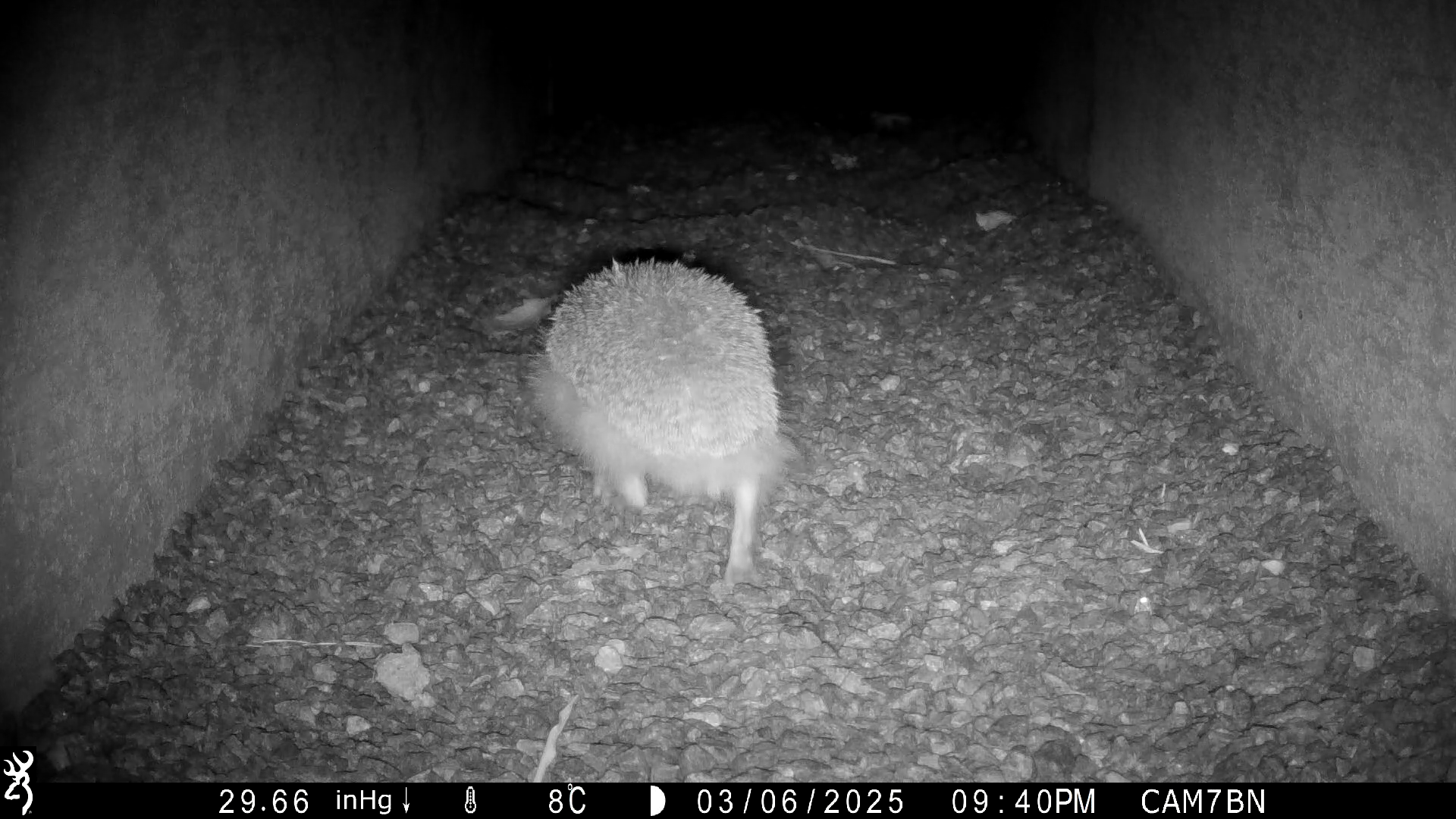
A hedgehog uses one of the passages to cross the road
These data confirm that these amphibian crossings play a key role in reconnecting the various ponds at the Villenouan site, managed by the Centre-Val de Loire Nature Conservancy.
A new programme to boost the population
Beyond the infrastructure works, another, more low-key project began in 2025: the restoration of the brown toad population.
The aim is to encourage the species to breed in restored ponds, known as ‘reception ponds’, by relocating some of the brown toad’s egg clutches.
Indeed, this species is known to be philopatrous; it tends to remain in the same pools and finds it difficult to colonise new territories.
Moving some of the egg clutches, even just a few hundred metres, can save several years in the population dynamics!
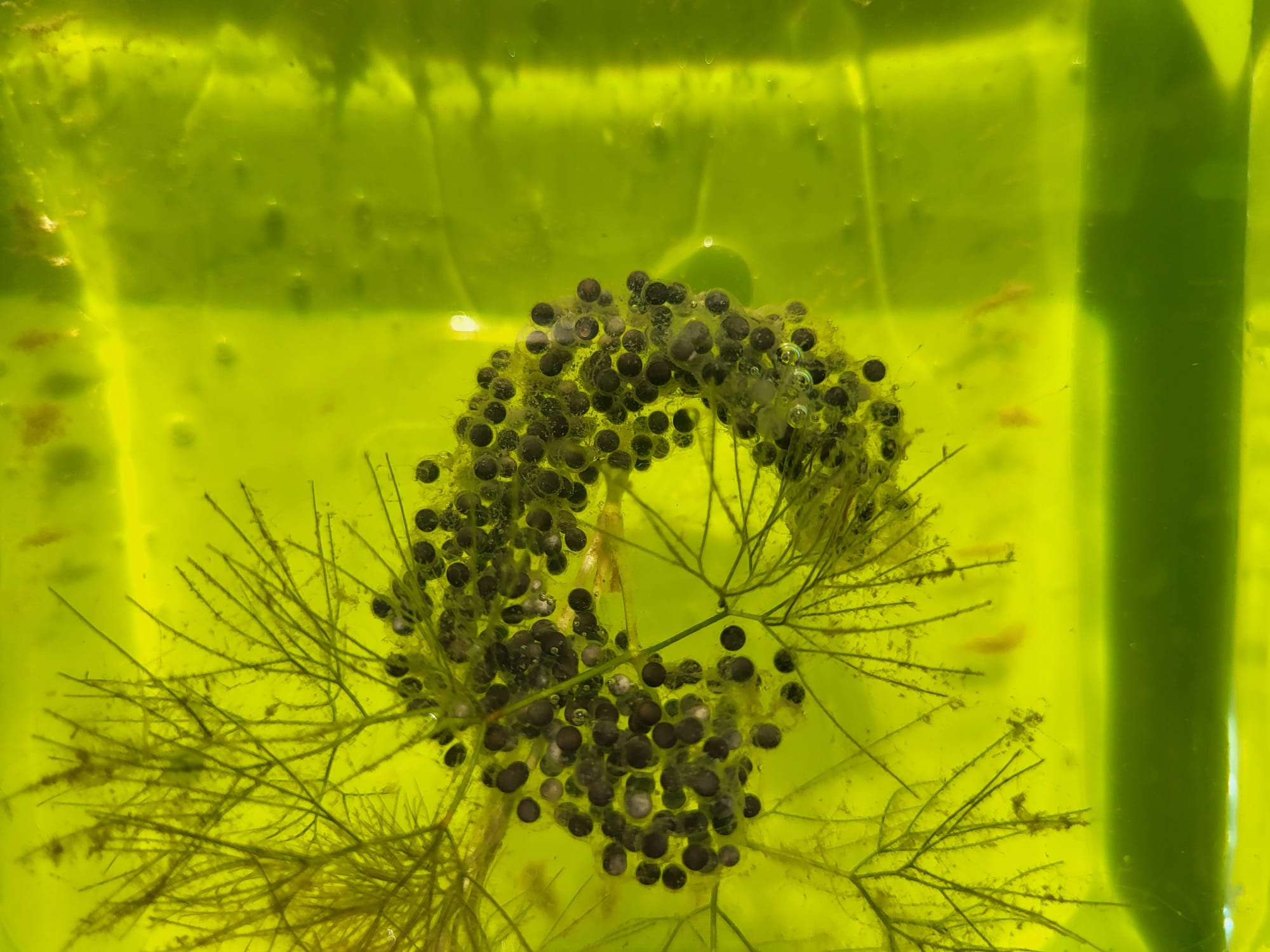
Common spadefoot toad spawning
This programme also allows us to test a method of assisted dispersal for the species, which could be replicated elsewhere.
In the field in 2026: a key season
2026 marks the second year of the population reinforcement programme. Activities have followed the same process as last year.
In April, a week after the first singing males were detected, the search for egg-laying sites intensified. Indeed, this discreet song, emitted underwater, attracts the females. They lay between 1,000 and 2,500 eggs, of which around a hundred will develop into young toads that will emerge from the pools in summer.
In 2026, 18 egg-laying sites were found, compared with just 4 in 2025. This is due to a number of factors, including a revision of the protocol used. The survey method has been improved thanks to new tools, and the survey was carried out earlier. This allows for better detection of egg-laying sites, as the eye becomes accustomed to the ‘bare’ environment and is better able to identify the appearance of egg-laying sites.
It also enables egg-laying sites to be identified early enough to allow the eggs to be moved. Indeed, if the stage of development is too advanced, the egg-laying site is protected but does not contribute to the rest of the process.
Of these 18 clutches, a selection was made for the next stage, which involved removing between a quarter and a third of the eggs. These are moved to protective enclosures in a new, previously restored receiving pond.
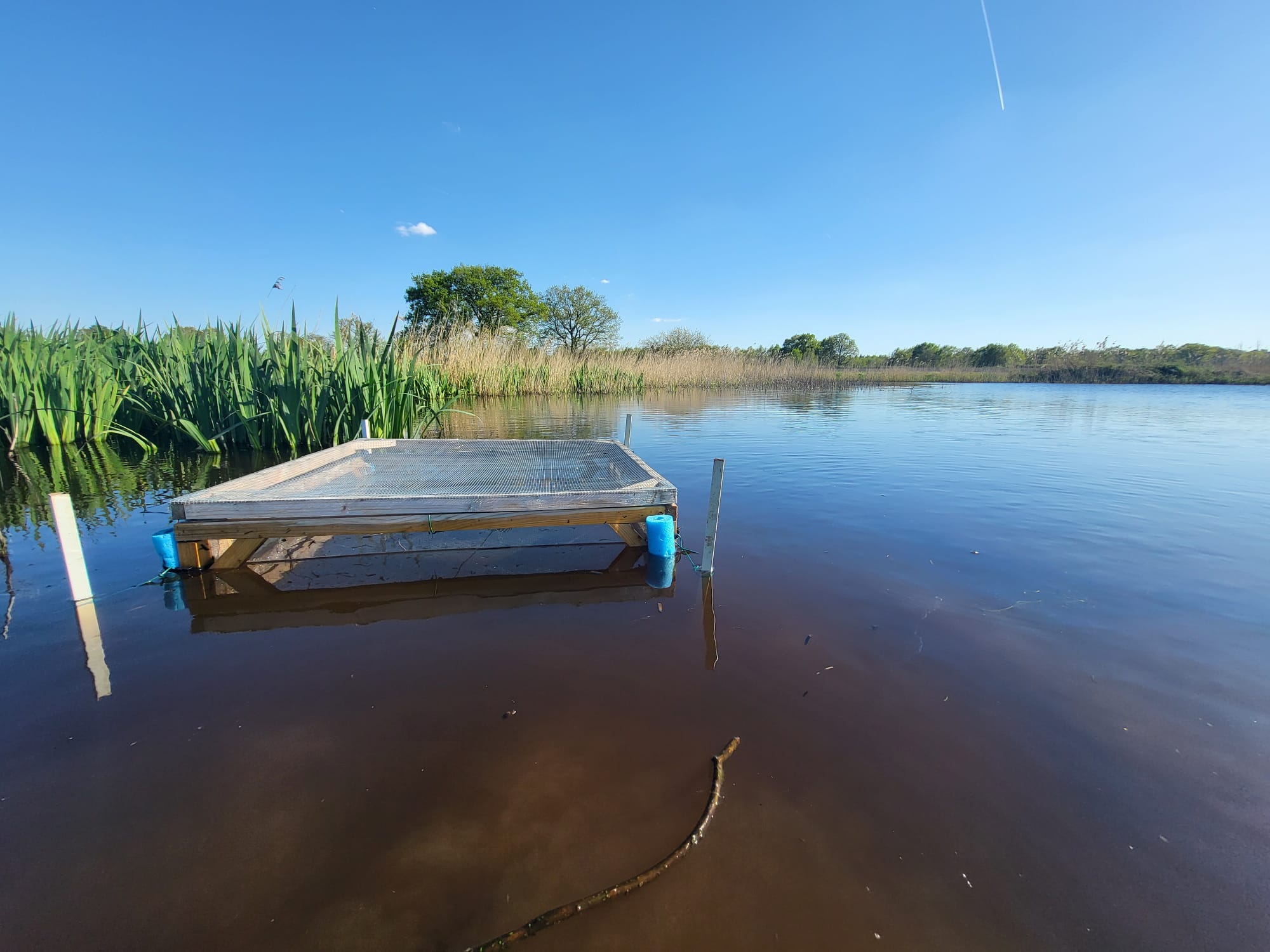
Protective enclosures
About a week later, the tadpoles appeared. They are monitored and fed until they reach a size of between 4.5 and 5 cm. Once they reach this stage, they will be released, 30 to 45 days after the eggs were moved to the protective enclosure.
The objective is now clear: to see these young brown pelobates settle permanently in these restored ponds, and to contribute to the gradual recolonisation of new sites favourable to the species in the Loiret.