Educational school trips: how to organise a successful learning day for your students
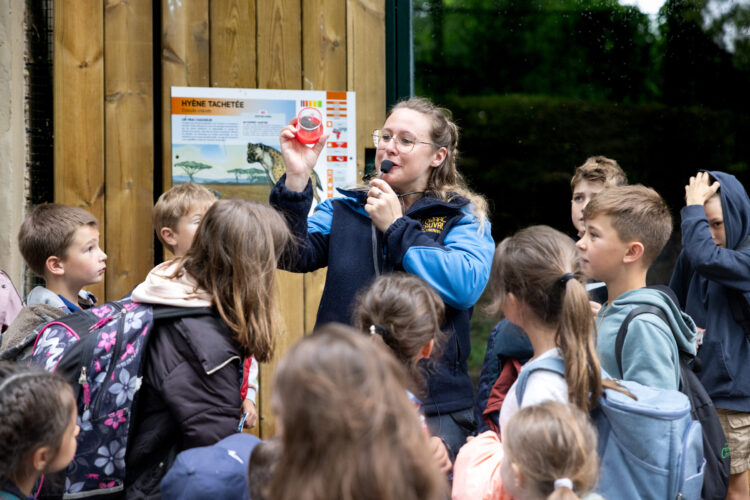
An educational school trip is a learning activity organised outside the classroom, built around clear educational objectives and linked to the school curriculum. It allows students to see, touch and experience what they study in class, helping them understand and remember it more effectively. Museums, farms, natural sites and zoos can all be suitable destinations, depending on the subject and students’ age. Here are some practical ideas and a 5-step method to help you plan and organise a successful educational school trip.
Key points to remember
- An educational school trip should have a clear learning objective linked to the curriculum: it is neither a break nor simply an excursion.
- The French Ministry of Education distinguishes three types of school trips: regular trips, occasional trips and trips involving overnight stays.
- School trips develop skills that can be difficult to work on in the classroom, including observation, independence, cooperation and curiosity.
- A successful school trip can be prepared in 5 steps, from defining learning objectives to following up in the classroom.
- ZooParc de Beauval offers educational workshops supervised by a dedicated team and adapted to each school level.
What is an educational trip?
An educational school trip is a learning experience that takes place outside the school, designed to give meaning to what students learn. It is not simply a break from the classroom: it draws on knowledge, pursues clear educational objectives and encourages students to become active observers. By leaving the classroom, children experience the real world, connect theory with practical observation and develop their curiosity. A well-designed school trip forms part of a wider class project, creates lasting learning experiences and can often be followed by classroom activities to reflect on and consolidate what students have discovered.
Educational trip or school trip: what’s the difference?
The two expressions largely overlap. A school trip refers to any supervised journey or visit undertaken by a class outside the school. An educational visit places greater emphasis on the learning aspect: it is a project connected to the curriculum, with clearly identified learning objectives. A school outing at the end of the year without an educational purpose is still a school trip, but it would not strictly qualify as an educational school trip.
The 3 types of school trips recognised by the French Ministry of Education
The French Ministry of Education distinguishes three types of school trips. Regular trips form part of the usual timetable, such as a recurring sports session. Occasional trips without an overnight stay correspond to a day visit or educational outing, such as a visit to a zoo. Trips involving an overnight stay take place over several days and require additional supervision and authorisations.
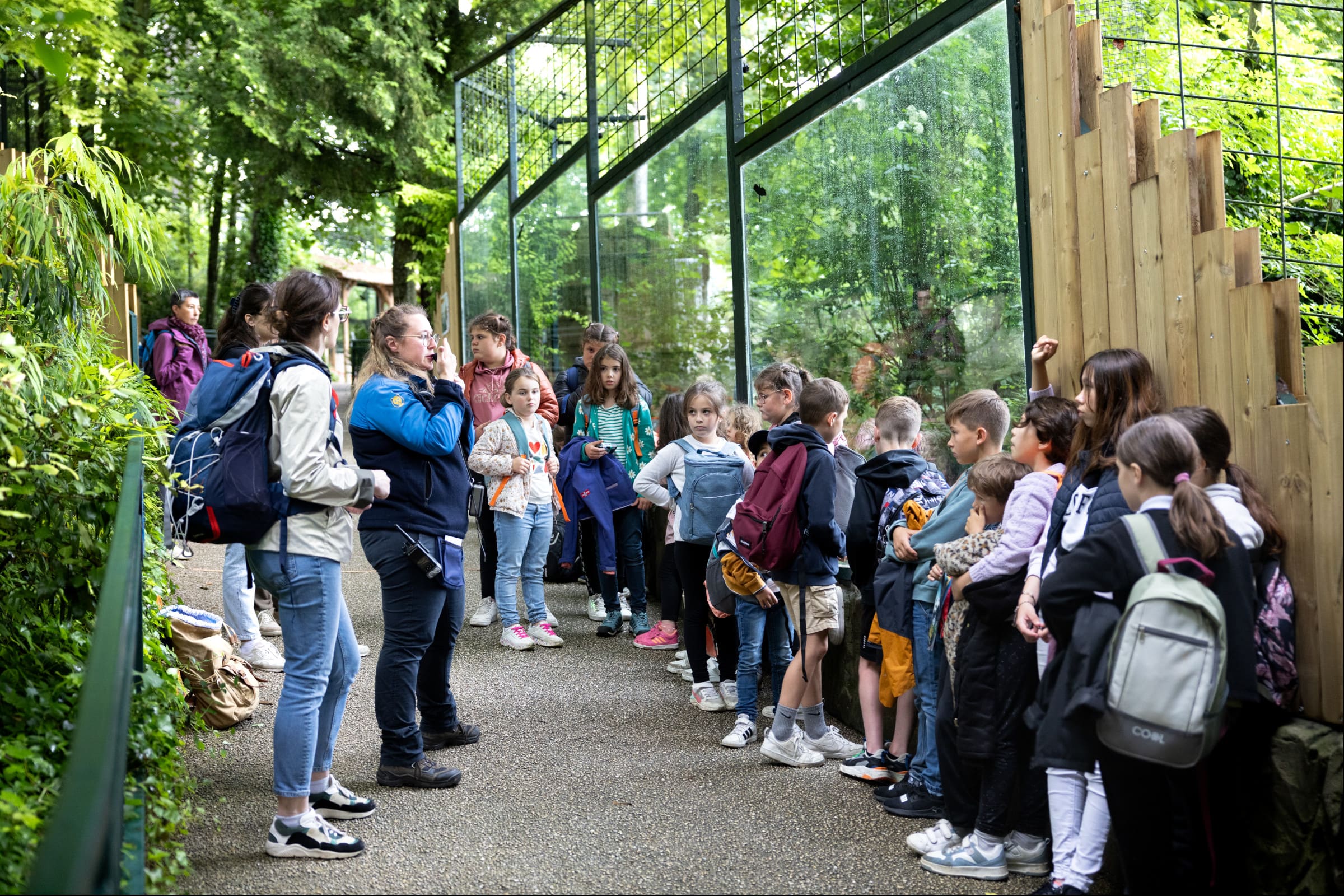
4 benefits of an educational school trip for students
Beyond the pleasure of discovering somewhere new, an educational school trip offers tangible benefits that can be difficult to achieve within the classroom. These benefits apply to all age groups, from preschool to high school. Here are four key benefits for your students.
- Making learning more concrete. Seeing an animal, handling an object or observing a natural environment brings concepts studied in class to life and can make them easier to remember over the long term.
- Developing essential life skills. Finding their way around, following instructions, organising themselves as a group and respecting others all help students develop independence and cooperation.
- Encouraging curiosity and motivation. A change of environment sparks questions and can renew students’ desire to learn, including those who may be less engaged in the classroom.
- Reducing cultural inequalities. School trips give all students access to places and experiences they may not otherwise have the opportunity to discover, making them a valuable tool for greater equality.
These benefits are even greater when the venue offers a genuine educational approach, with suitable resources and trained educators, rather than simply offering a self-guided visit.
7 ideas for educational trips by subject
The choice of destination should first depend on your educational objectives and your students’ age. Here are seven ideas for school trips, organised by subject, to help inspire your educational project. There is also no reason why different subjects cannot be combined: a zoo, for example, can be used to explore life sciences, geography and environmental education.
- In life sciences, a zoo and the discovery of different species can introduce students to biodiversity, animal classification and species conservation.
- For history, a castle, heritage site or history museum can provide chronological reference points and an introduction to built heritage.
- In art, an art museum or a workshop with an artist can combine the analysis of artworks with supervised creative activities.
- For geography, a farm or local agricultural business can introduce students to landscapes, food supply chains and human activities.
- In physical sciences, a planetarium or science centre can encourage experimentation and help students understand natural phenomena.
- For physical education, a nature park, hike or adventure course can develop motor skills, perseverance and respect for the environment.
- Finally, for civic education, a recycling centre or biogas facility can make environmental issues more tangible, from waste sorting to responsible citizenship.
How to organise a successful educational school trip in 5 steps
An educational school trip requires careful planning to ensure that everything runs smoothly. The earlier you prepare, the easier the day will be for both you and your students. Follow these five steps, from planning the project to returning to the classroom.
- Define your educational objectives. Specify what your students should discover or understand and link the trip to a topic or unit in the school curriculum.
- Choose and book your destination. Check how the venue welcomes school groups, what educational activities are available and which dates are open. Book early to secure your preferred date.
- Take care of administration and supervision. Authorisations, transport, supervision requirements, insurance and budget: plan each step with your school management team.
- Prepare your students beforehand. Introduce the topic in class and provide a visit booklet so that each student has an active role during the trip.
- Follow up in the classroom. A presentation, report or class project allows students to build on their experience, reinforce their learning and bring the project to a close.
ZooParc de Beauval, an ideal educational destination
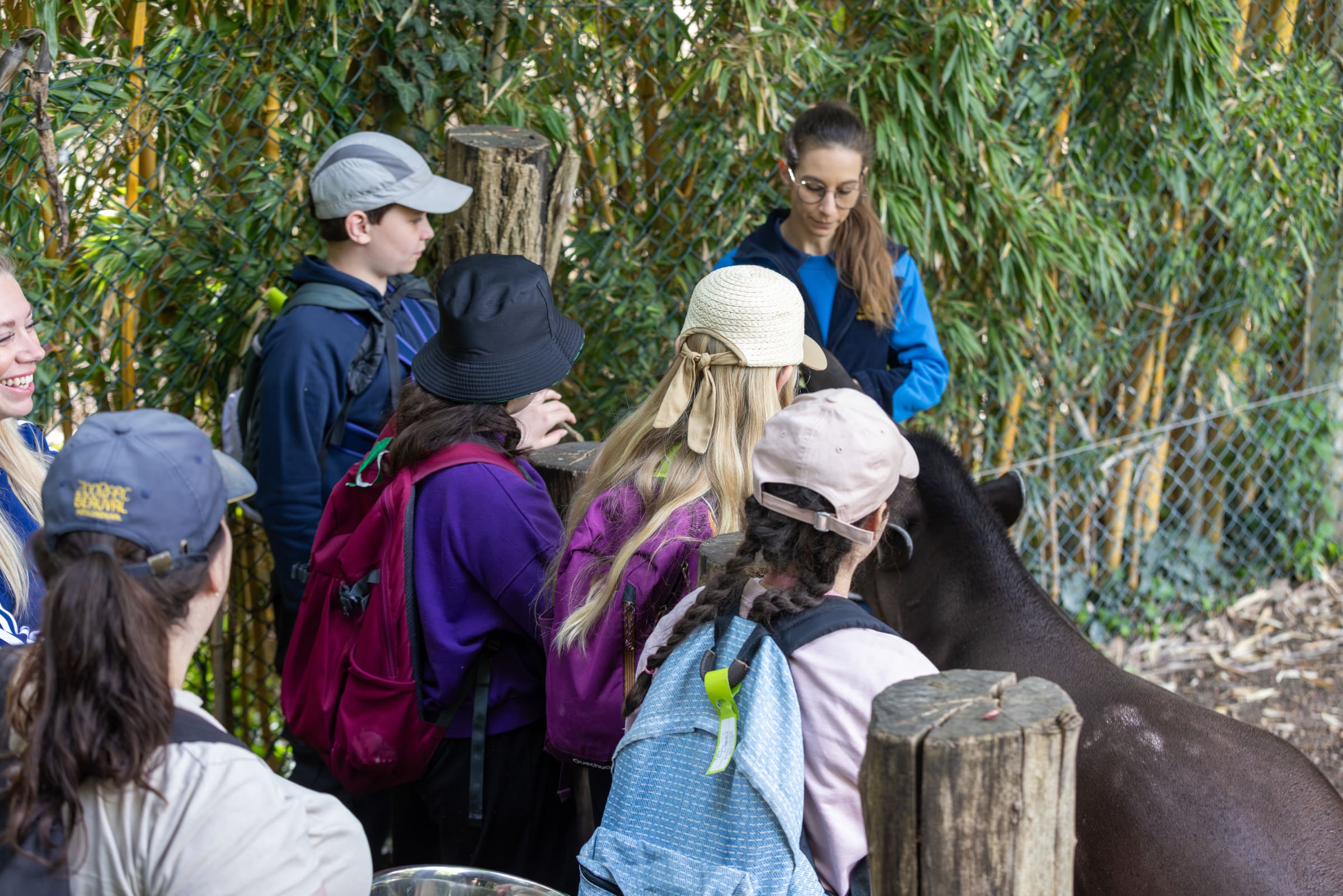
Much more than a tourist attraction, ZooParc de Beauval is a place for learning and discovery appreciated by teachers. With its 35,000 animals spread across different areas, immersive spaces and Le Nuage de Beauval cable car, it offers an exceptional setting for educational school trips focusing on life sciences, geography or environmental education. ZooParc de Beauval has developed a dedicated programme for school groups, from preschool to high school, with content adapted to the French national curriculum.
Request the school group pricing guide
Educational activities adapted to every age group
ZooParc de Beauval offers educational workshops and discovery trails lasting between one hour and one and a half hours, supervised by a dedicated educational team. Each activity is adapted to the students’ age group and involves handling real objects such as feathers, teeth and skulls. The “Éveil des sens” workshop, for example, immerses younger children in an African sensory camp. Educational discovery trails, such as In the Footsteps of the Giant Panda, allow students to explore ecology in a fun and engaging way. Group sizes are deliberately limited to ensure a comfortable visit and high-quality interaction.
Planning and booking your school visit to ZooParc de Beauval
To organise your visit, explore the available offers and school group pricing guide, then plan your logistics using the ZooParc map. For a two-day school trip, youth group accommodation allows you to extend the experience. Some meeting points are several minutes’ walk from the entrances, so remember to factor this into your schedule. As with any popular destination, it is best to book several months in advance.
Frequently Asked Questions
What age is suitable for an educational school trip?
From preschool onwards. School trips can be adapted to each age group: younger children can focus on short sensory experiences, while older students can carry out more detailed observations and investigations. At ZooParc de Beauval, workshops are designed for different age groups, from preschool through to high school, to ensure that activities remain relevant at every stage.
How many adults should accompany a school trip?
The required level of supervision depends on the students’ age and the type of trip. It is generally higher for preschool children than for primary school students, for example. Check with your school management and local education authorities, as requirements may vary. Always allow some additional capacity to deal with unexpected situations on the day.
How can I fund an educational school trip?
Several sources of funding can often be combined: the school cooperative, a reasonable contribution from families, a grant from the local or regional authorities, or an initiative organised by a parents’ association. Compare group rates and packages that include activities and transport to make the most of your budget.
When should I book a school trip to ZooParc de Beauval?
As early as possible. Spring and the end of the school year are particularly popular periods, and educational workshop slots can fill up quickly. Booking several months in advance helps secure your preferred date, activity and supervision, while giving you enough time to prepare your educational project properly.
Make your school trip an unforgettable experience
A successful educational school trip starts with a clear objective, the right destination and careful preparation. By combining discovery, life skills and links to the curriculum, you can offer your students a memorable experience and lasting learning. For a day focused on nature and life sciences, organise your school visit to ZooParc de Beauval: our teams can support you from booking through to the day of your visit.