World Okapi Day: 10 years of campaigning for an endangered species
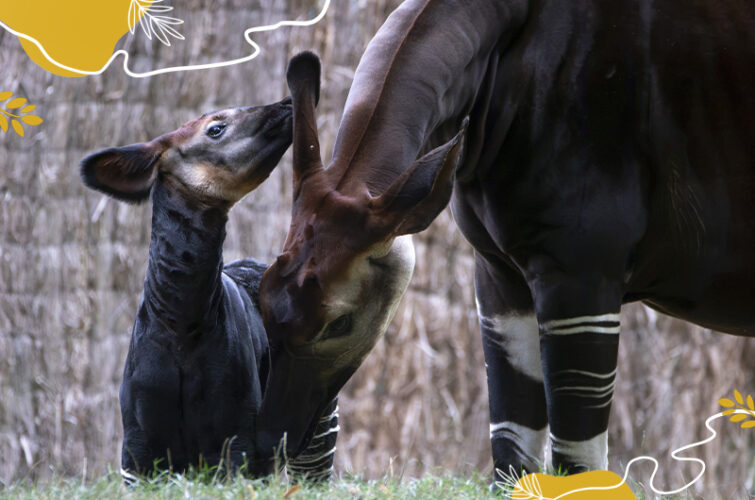
Every 18 October, World Okapi Day shines a spotlight on this remarkable giraffe-like animal. The 2026 event takes on special significance: ten years have passed since the first World Okapi Day, organised in 2016 on the initiative of the Okapi Conservation Project and its partners. At Beauval, this day also comes just a few weeks after some wonderful news: the birth of Mwindo, the calf of Quinta and Mambasa.
Raising awareness and protecting the okapi
The first World Okapi Day took place on 18 October 2016. Its aim remains the same today: to raise awareness of this iconic species of the Democratic Republic of the Congo and to mobilise support for the conservation of its habitat.
Ten years on, the event has grown in scale. Every year, more than 10,000 people take part in the celebrations in the Democratic Republic of the Congo, particularly in the towns and villages surrounding the Okapi Wildlife Reserve. Conservation education, activities for schoolchildren, cultural events and outreach to local communities form the backbone of this day, which is also supported by zoos and conservation organisations around the world.
A unique animal, found exclusively in the Democratic Republic of the Congo
Despite the stripes covering its legs, the okapi is not related to the zebra. It belongs to the Giraffidae family and, along with the giraffe, is one of only two extant species in that family. Shy and solitary, it lives in the tropical forests of central and north-eastern Democratic Republic of the Congo.
This secretive nature makes it particularly difficult to study wild populations, the numbers of which remain hard to assess accurately. One thing is certain, however: the population is in decline and the okapi is classified as ‘Endangered’ on the IUCN Red List.
Habitat degradation and fragmentation, illegal mining, poaching and security instability are among the main threats facing the species. Protecting the okapi therefore also means preserving the vast forests on which a multitude of other species depend, as well as the communities that live there.
Find out more about the species
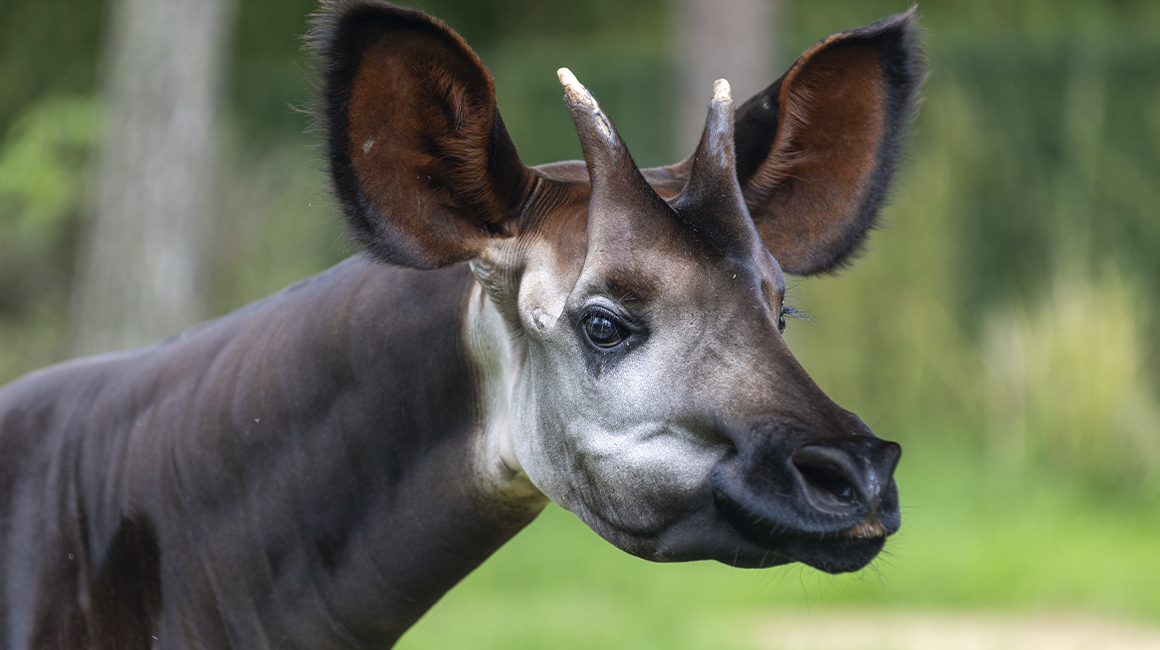
Mambasa, born at Beauval in 2018, became the father of Mwindo in 2026
Beauval Nature is committed to supporting the Okapi Conservation Project
Since 2009, Beauval Nature has been supporting the Okapi Conservation Project, which works to protect okapis and their habitat in the Democratic Republic of the Congo.
On the ground, the conservation of the species involves, in particular, stepping up surveillance, combating illegal activities and carrying out significant work with local communities.
In 2025, the NGO supported by Beauval Nature helped to deploy camera traps and develop a network of 50 informants to report illegal activities. Training in agroforestry was also offered to farmers, whilst a project is supporting nearly 300 women in developing new livelihoods. Conservation messages were broadcast on eight community radio stations and 700 students were made aware of the issue at three universities.
Support the conservation of okapis
2026: the year of Mwindo, the baby okapi born at Beauval
This year’s World Day holds special significance at ZooParc de Beauval. On 13 August 2026, at 9.09 am, Quinta gave birth to her first calf, whose father is Mambasa. Mambasa himself was born at Beauval in 2018: eight years later, a new generation of okapis has therefore come into the world at the ZooParc de Beauval.
The young male has since been named Mwindo, which means ‘eclipse’ in Lingala, in reference to the solar eclipse that took place on 12 August, the day before his birth. This third okapi birth at Beauval has brought the group’s total to five.
More than two months after his birth, Mwindo is growing well and gradually gaining confidence. Like young okapis in the wild, he still spends a lot of time sheltering, waiting for his mother to return. But when he ventures out onto the plain, he is becoming increasingly active, running about and occasionally performing a few somersaults. His diet still consists mainly of his mother’s milk, although he is already beginning to show an interest in the twigs offered to him at Quinta.
He feels very much at home on the plain where he was born; in fact, Mwindo seems to enjoy it so much that getting him back into his enclosure sometimes requires a bit of patience from the keepers! He has also just reached a new milestone by stepping onto the scales on his own for his very first weigh-in: the scales showed 56 kg.
A great opportunity to come and watch this young okapi as he grows week by week! Near the elephant plains, keep an eye out for Mwindo alongside Quinta, and also spot Bösi, Mambasa and Thamani. With their distinctive silhouette, large ears and striped legs, okapis are the sort of animals you can happily spend ages watching.
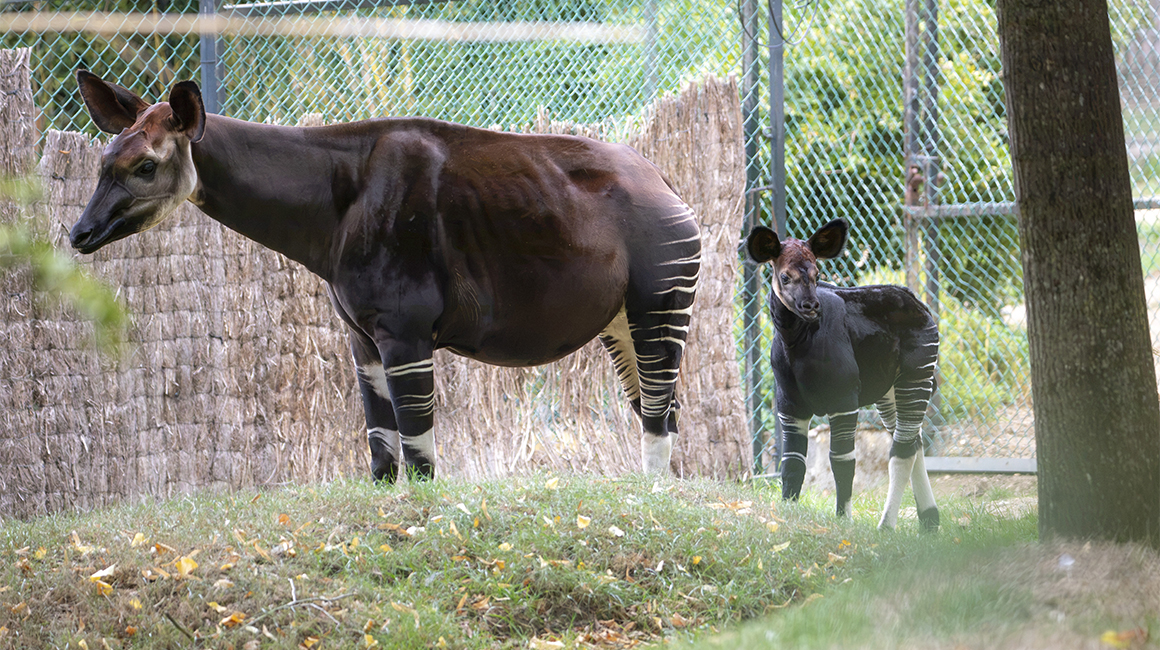
Quinta, a female okapi available for sponsorship, and Mwindo, her calf
Sponsor Quinta and protect biodiversity
Why not make the most of this World Day to become Quinta’s sponsor? From just €20, sponsorship allows you to support Beauval Nature and help fund conservation and research programmes for endangered species. Depending on the package chosen, sponsors receive various rewards, such as a photo and a sponsorship certificate, updates from Beauval Nature, and even the chance to meet the sponsored animal. As sponsorship is a donation to Beauval Nature, it entitles you to a tax relief of 66 per cent of the amount donated.
Frequently asked questions about okapi conservation
Why are okapis threatened with extinction?
Found in the wild only in the Democratic Republic of the Congo, the okapi is classified as ‘Endangered’ on the IUCN Red List. Habitat degradation and fragmentation are major threats, particularly due to agriculture, logging and mining. Poaching and instability in certain regions also put populations at risk.
Why does protecting the okapi also help to preserve the forest?
The future of the okapi is closely linked to that of the tropical forests in which it lives. Protecting its habitat therefore helps to preserve many other animal and plant species that share the same ecosystem. Conserving the okapi thus helps to protect a particularly rich biodiversity.
What is being done to protect okapis in their natural habitat?
In the Democratic Republic of the Congo, the Okapi Conservation Project works, in particular, to protect the species’ habitat and combat poaching and illegal activities. The programme also supports eco-guard patrols, develops more sustainable farming practices and carries out awareness-raising and support initiatives with local communities. Beauval Nature has been supporting this NGO since 2009.
What role do zoos play in the conservation of okapis?
The work carried out in the wild and that carried out in zoos are complementary. In Europe, okapis benefit from a coordinated breeding programme that helps to maintain a viable and genetically diverse population. Zoos also contribute to research and to raising public awareness of the threats facing the species. At Beauval, the birth of Mwindo on 13 August 2026 exemplifies this new generation of okapis at the heart of these conservation efforts.