Centre for the Study, Scientific Research and Conservation of Dolphins: the reasons behind Beauval’s decision
Following several months of studies, expert assessments and consultation, the ZooParc de Beauval has decided not to proceed with its project for a Centre for the Study, Scientific Research and Conservation of Dolphins (CERSSD).
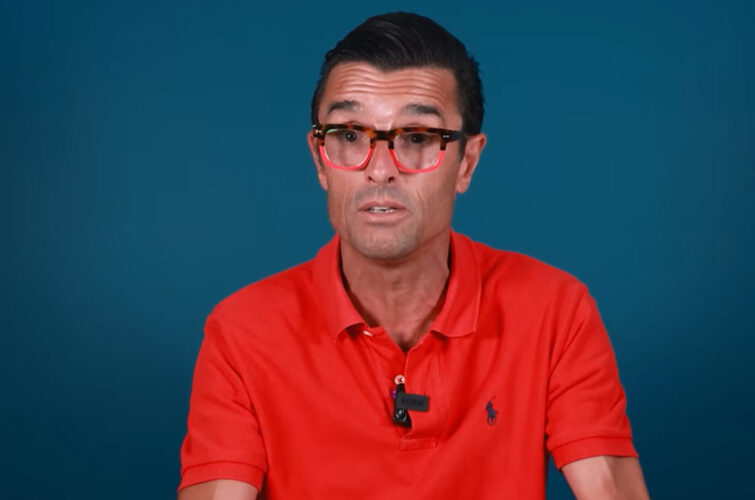
A message from Rodolphe Delord
To explain this decision in a fully transparent manner, Rodolphe Delord, CEO of ZooParc de Beauval, addresses you directly in this video (in French).
Several months of studies and expert assessments
Having been asked by the government since the summer of 2025 to explore a rehoming solution for the dolphins affected by the closure of Marineland in Antibes, ZooParc de Beauval has, over several months, mobilised its teams to work alongside engineers, architects, scientists, vets and government departments.
Together, they analysed every aspect of the project: the animals’ needs, the facilities, the scientific considerations, the technical constraints, the environmental impacts, as well as the investment and running costs. More than one and a half million euros have already been spent on studies, expert assessments and the design of an ambitious project, planned down to the smallest detail to provide the dolphins with a living environment that meets the highest standards of animal welfare.
The project was also part of a consultation process with animal welfare organisations. A charter of commitment had been drawn up with Sea Shepherd France and government departments to guarantee the highest standards of animal welfare. At the same time, more than 500 Spanish associations and organisations had opposed the transfer of the dolphins to Spanish dolphinariums, emphasising the need to find an alternative solution.
A responsible decision
Following this process, ZooParc de Beauval considers that the conditions are no longer in place to successfully carry out a project of this scale. The numerous legal challenges brought against the project create persistent legal uncertainty, which is incompatible with an investment of 45 million euros and the long-term commitments involved in caring for these animals. In this context, the financial partners cannot commit to the project until all legal challenges have been definitively resolved.
“When it comes to animal welfare, it is our responsibility to seriously consider all possible solutions. That is exactly what we have done. Today, because we are responsible, we have a duty to say no to this project,” explains Rodolphe Delord, CEO of ZooParc de Beauval.
This decision is the result of several months of analysis and deliberation. It does not call into question the convictions that have guided the project from the outset: to seek, responsibly, a sustainable solution in the best interests of the animals.
We now hope that everyone will fulfil their responsibilities so that a concrete, sustainable solution that respects the welfare of these animals can be found.
To date, Beauval was the only project capable of accommodating them in France. No concrete, immediately viable solution has been put forward that meets the same animal welfare standards and guarantees long-term funding over several decades.
A commitment that remains unchanged
ZooParc de Beauval remains fully committed to its mission of promoting animal welfare, species conservation, scientific research and public awareness. True to this ambition, it continues to spearhead numerous projects which, in the coming months, will demonstrate its commitment to biodiversity.
For over 45 years, these commitments have guided every action it takes, both in France and internationally, through numerous conservation programmes, scientific projects and ambitious initiatives dedicated to protecting biodiversity.