International Vulture Awareness Day: protecting nature’s essential allies
Every year, the first Saturday in September marks International Vulture Awareness Day. This global initiative aims to raise awareness of these birds, their ecological role and the threats they face. In France, the LPO and its vulture conservation network launched a national programme of vulture awareness events in 2014. Activities are being organised by the LPO and its partners across France from 15 August to 13 September 2026.
Vultures comprise 23 recognised species belonging to two families that evolved independently:
- the Accipitridae in Europe, Africa and Asia: the Old World vultures,
- and the Cathartidae on the American continent: the New World vultures.
Despite their different evolutionary histories, they all perform the same essential function: consuming carcasses and helping to maintain healthy, balanced ecosystems.
I’m coming to see the vultures at Beauval
Vultures: masters of flight and natural recycling
From European cliffs to African savannahs, South American forests and the high plateaus of Asia, vultures live in a wide variety of habitats. Their long, broad wings allow them to make use of rising warm air currents and soar for long periods whilst using very little energy. Old World vultures mainly locate food using their eyesight, whereas some New World species, such as the turkey vulture, also have a particularly well-developed sense of smell.
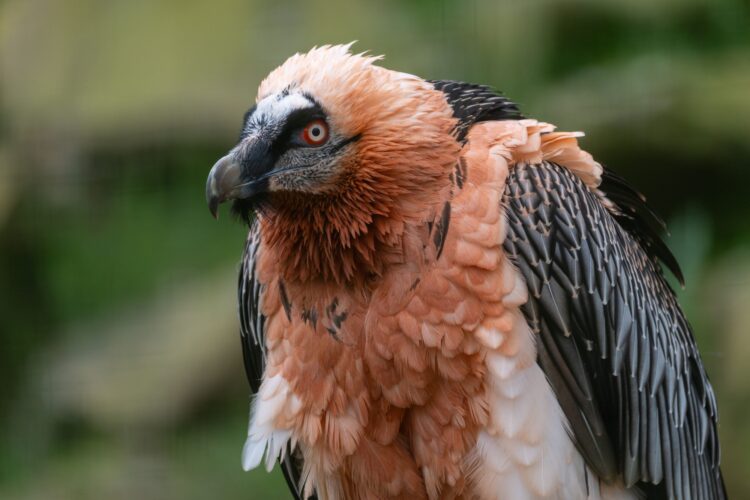
All these species are scavengers, feeding on animals that are already dead. When several species gather around a carcass, their different physical characteristics and complementary diets allow them to consume different parts of it. The griffon vulture mainly feeds on soft tissue, whilst the powerful bill of the cinereous vulture enables it to tear through tougher parts. The smaller Egyptian vulture picks up smaller scraps. The bearded vulture, meanwhile, specialises in bones, which make up most of its diet. It can swallow some bones whole and will carry larger ones into the air before dropping them onto rocks to break them open.
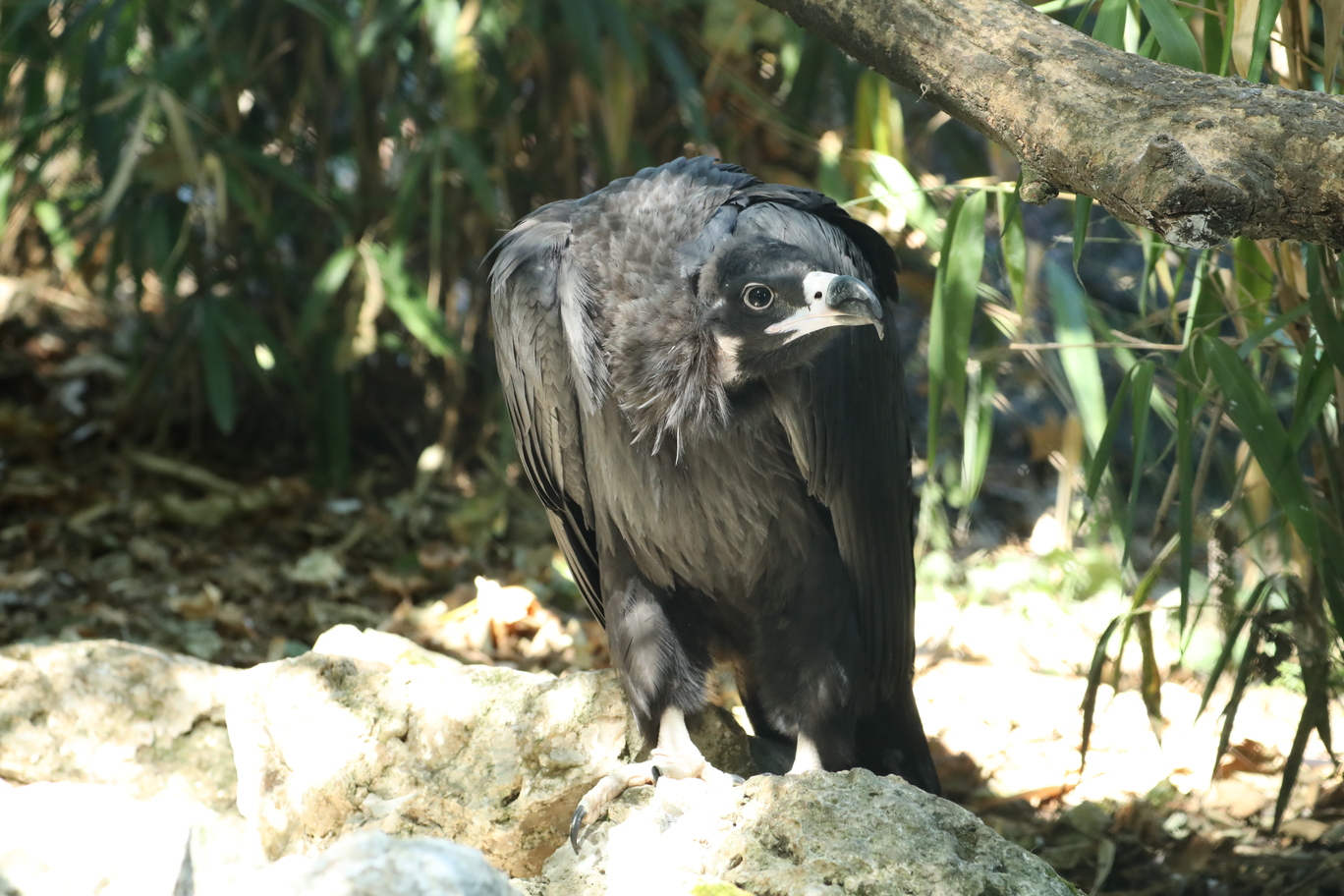
Cinereous vulture is known as Monk Vulture
Not all species follow exactly the same diet, however. The palm-nut vulture, for example, feeds on the fruit of oil palms and raffia palms, which can account for up to 65% of its diet. The Egyptian vulture is also one of the few birds known to use tools: it can use a stone to break open an eggshell.
By rapidly removing carcasses, vultures reduce access to this food source for other species that may spread disease. Their extremely acidic digestive system also destroys many pathogens, effectively making vultures an epidemiological dead end that interrupts chains of transmission. In this way, they help protect the health of wildlife, domestic animals and water resources.
Four vulture species currently breed in mainland France: the griffon vulture, cinereous vulture, Egyptian vulture and bearded vulture.
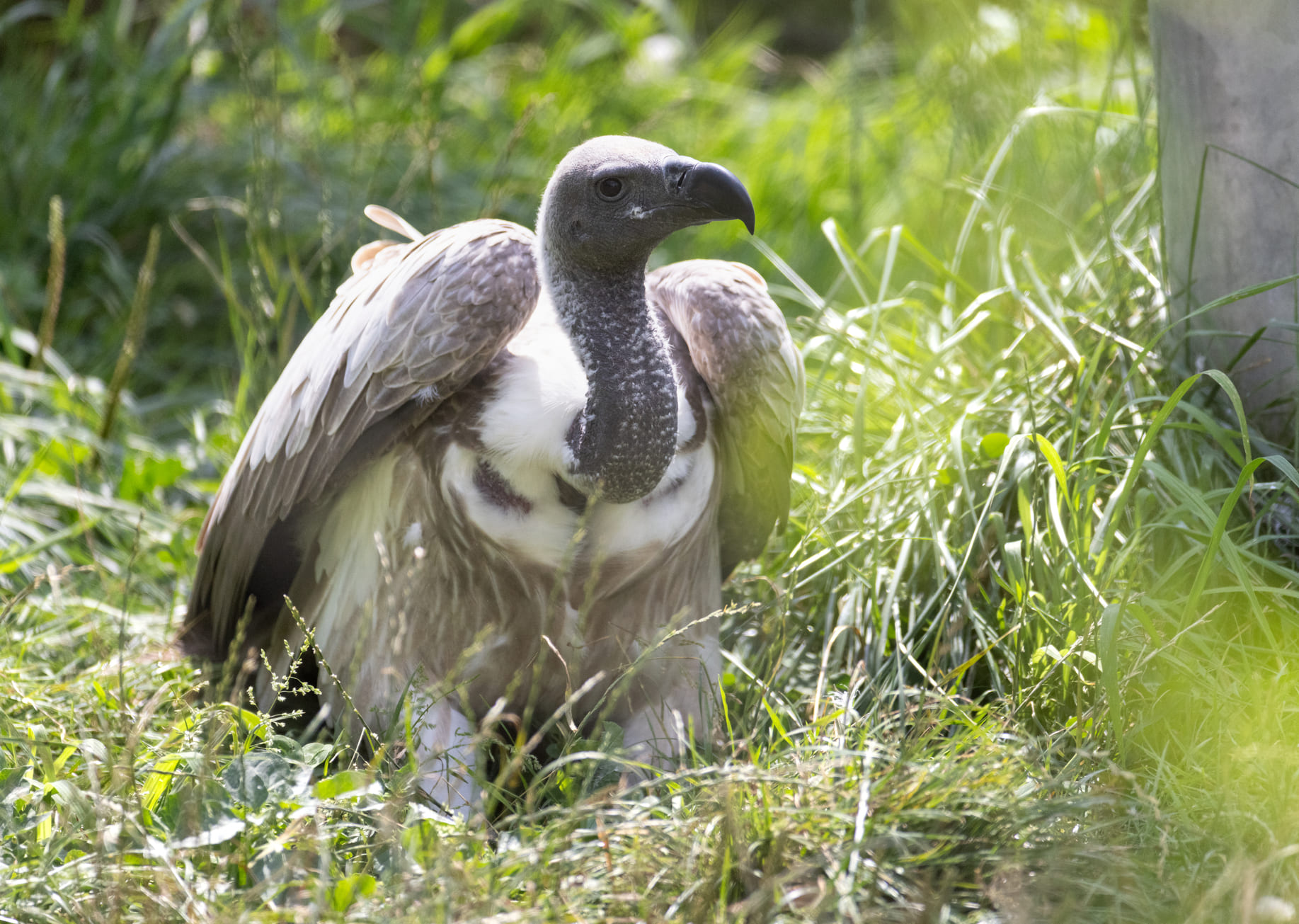
Griffon vulture
Nearly 70% of vulture species are threatened
Despite their irreplaceable role, vultures are among the most threatened groups of birds: around 70% of species are currently classified as “Vulnerable”, “Endangered” or “Critically Endangered”.
Poisoning is one of the main threats they face. In some regions, vultures may be deliberately targeted, but they can also become unintended victims of poisoned bait used to kill other animals.
In South Asia, the widespread use of diclofenac to treat livestock caused several vulture species to come close to extinction after feeding on the carcasses of treated animals. Vultures can also be exposed to lead from ammunition.
Other threats include shooting, illegal trade, declining food availability, habitat degradation, disturbance at breeding sites, electrocution and collisions with power lines or wind turbines. Their slow reproductive rate makes their populations particularly vulnerable to the loss of adult birds: larger species take several years to reach maturity and generally raise only one chick during each breeding cycle.
How Beauval Nature helps protect vultures
Beauval Nature currently supports three conservation programmes that directly benefit vultures:
Mission Rapaces: protecting vultures in France
In France, the ‘Mission Rapaces’ programme, managed by the LPO,works to protect around twenty species of birds of prey. Its activities include population monitoring, protecting habitats and breeding sites, reducing risks associated with infrastructure and raising public awareness.
The programme contributes to conservation efforts for all four vulture species found in France, including the reintroduction of griffon and cinereous vultures in the Grands Causses, as well as conservation initiatives focusing on Egyptian vultures and bearded vultures.
The bearded vulture: strengthening European populations
Since 2012, Beauval Nature has also supported the European conservation programme for the bearded vulture, coordinated by the Vulture Conservation Foundation.
Ex situ breeding, scientific monitoring, the rehabilitation of injured birds, reintroductions and population reinforcement are all helping the species gradually return to several mountain ranges across Europe.
In 2024, Paradiso became the first bearded vulture born at Beauval to be reintroduced into the wild, in the canton of Obwalden in Switzerland. Two years later, on 24 June 2026, Zierli, a young bearded vulture raised by Makalu at Beauval, was also released into the wild, this time in Berchtesgaden National Park in Germany.
The Andean condor: conservation action in Argentina
In Argentina, the Bioandina Foundation, also supported by Beauval Nature, works to protect the Andean condor, a New World vulture.
Its teams rescue and care for injured or poisoned birds, coordinate ex situ breeding and reintroduction programmes, track birds by satellite and raise awareness amongst local communities. Pachamama, a female born at Beauval, was reintroduced into the wild in Patagonia in September 2021.
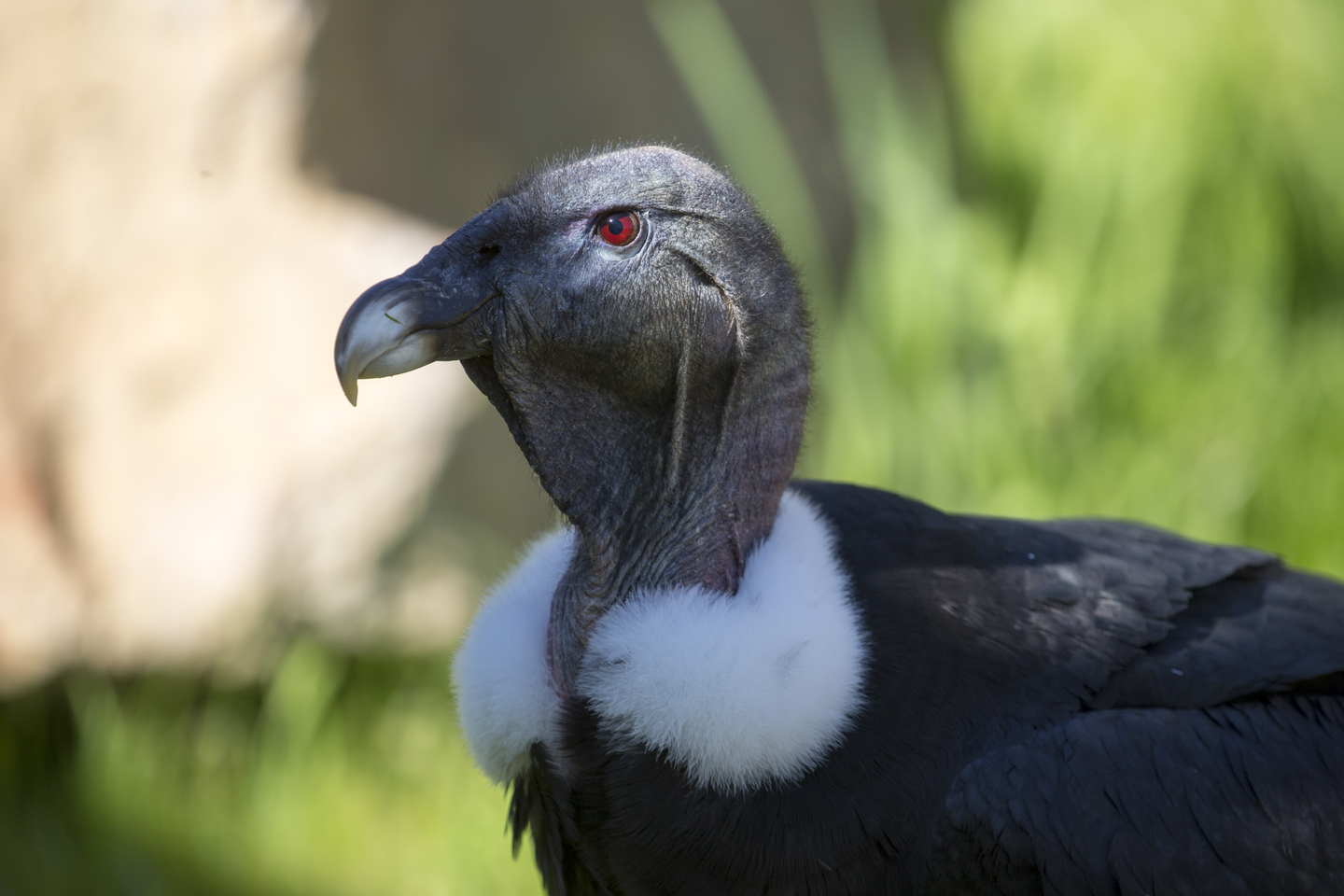
Female Andean condor
Vulture species you can see at Beauval
At ZooParc de Beauval, visitors can discover vultures from different regions of the world:
- the bearded vulture can be seen near the dromedary area
- the Andean condor is located near the Great South American Aviary
- the cinereous vulture, Himalayan griffon, hooded vulture, white-headed vulture and king vulture can be found in the historic aviaries near the South Entrance
- the griffon vulture, white-backed vulture and Rüppell’s vulture can be seen near the exit of The Equatorial Dome
- the palm-nut vulture lives in The Hippopotamus Reserve
- the black vulture, turkey vulture and king vulture can be discovered in The Great South American Aviary
Several vulture species can also be admired in full flight during the Les Maîtres des Airs bird experience.
La Rhune, an ambassador for her species
After being temporarily separated from Makalu, La Rhune was recently reunited with her mate. This separation had allowed Makalu to raise Zierli, a young bearded vulture from another park, who had not been accepted by La Rhune. Having been deeply involved with the chick right up until its departure to be reintroduced into the wild, Makalu needed a few days to settle back into his usual routine with the female. In particular, he was blocking her access to the nest. Never mind, La Rhune had by then built her own nest, lower down amongst the rocks.
Gradually, Makalu once again allowed her access to the main nest. Less than a week after their reunion, La Rhune had regained her place and her role within the pair. La Rhune has also resumed her usual habits, such as her baths in the clay pool, which she is particularly fond of.
Born on 18 March 2010, La Rhune is the female bearded vulture available for sponsorship at Beauval. By choosing to sponsor her, you are making a donation to Beauval Nature and helping to fund its conservation and research programmes. Several sponsorship packages are available, starting from €20 for a one-year period, with a range of benefits from a sponsorship certificate to a meeting with the sponsored animal. The donation entitles you to a tax relief of 66 per cent, within the limits set by law.
All you need to know about vultures
Which vulture species live in France?
Four vulture species currently breed in mainland France: the griffon vulture, cinereous vulture, Egyptian vulture and bearded vulture. Their presence today is partly the result of several decades of conservation work and reintroduction programmes.
Are vultures dangerous to humans?
No. Vultures do not pose a threat to humans. They are generally wary and prefer to avoid contact with people. Like any wild animal, however, they may try to defend themselves if they feel threatened or if someone approaches their nest.
Can vultures attack living animals?
Vultures are primarily scavengers, specialised in feeding on animals that are already dead. In France, when vultures have been reported in contact with animals that were still alive, investigations have shown that in almost every case the animals were already ill or in severe distress, with their lives already at risk.
Why do vultures have bald heads?
Their bare heads, or heads covered only in fine down, are less likely to become soiled when feeding on a carcass and are easier to clean than dense feathers. Areas of exposed skin also play a role in regulating body temperature.
What is a vulture feeding aggregation?
A feeding aggregation occurs when several vultures gather around a carcass to feed. Thanks to their complementary diets, each species plays a different role: the griffon vulture consumes soft tissue, the cinereous vulture tackles tougher parts and the Egyptian vulture picks up smaller scraps. The bearded vulture completes this natural recycling process by feeding mainly on the bones.