International Red Panda Day: an update on Ines and Browny’s cub!
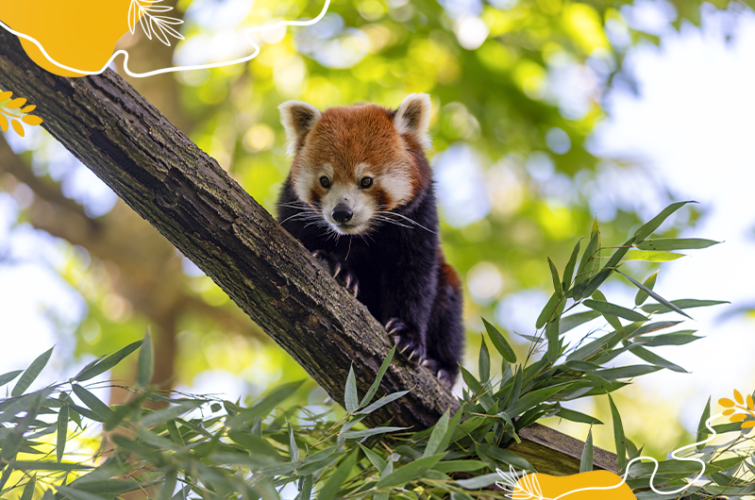
To mark International Red Panda Day, celebrated this Saturday 19 September, let’s head to The Heights of China to catch up on Ines, Browny and their cub, born on 4 July! Still safely tucked away in his dens, the young red panda is continuing to grow alongside his mother. Antoine, an animal keeper in the Pandas/Koalas section, also reveals some of the lesser-known habits of this endangered species.
Celebrated every year on the third Saturday in September on the initiative of the Red Panda Network – an organisation supported by Beauval Nature – this day raises public awareness of the threats facing the red panda and the measures being taken to protect it.
The cub is thriving with Ines
Just over two months after its birth, the cub sired by Ines and Browny is doing very well. For the time being, its daily routine consists mainly of feeding and long periods of rest in its dens.
“At the moment, he feeds, he sleeps, he’s in his dens. He’s growing slowly,” says Antoine. As he is still very young, he does not move around the enclosure on his own. It is Ines who chooses which den she wants to settle him in and carries him in her mouth from one shelter to another, depending largely on the temperature. A few particularly lucky visitors may then catch a fleeting glimpse of him.
With red pandas, cubs generally take their first steps outside the nest at around 3 months of age. The cub should therefore gradually begin to explore his surroundings more in the coming weeks.
Can we already tell what sort of character it has? It’s still too early to say for sure, but Antoine describes it for the moment as “quite calm”. The cub sometimes vocalises when the keepers approach, but interactions remain very limited. Physically, he is already a deep reddish-brown colour and has a rather round head – features reminiscent of both his parents.
I’m coming to see the red pandas
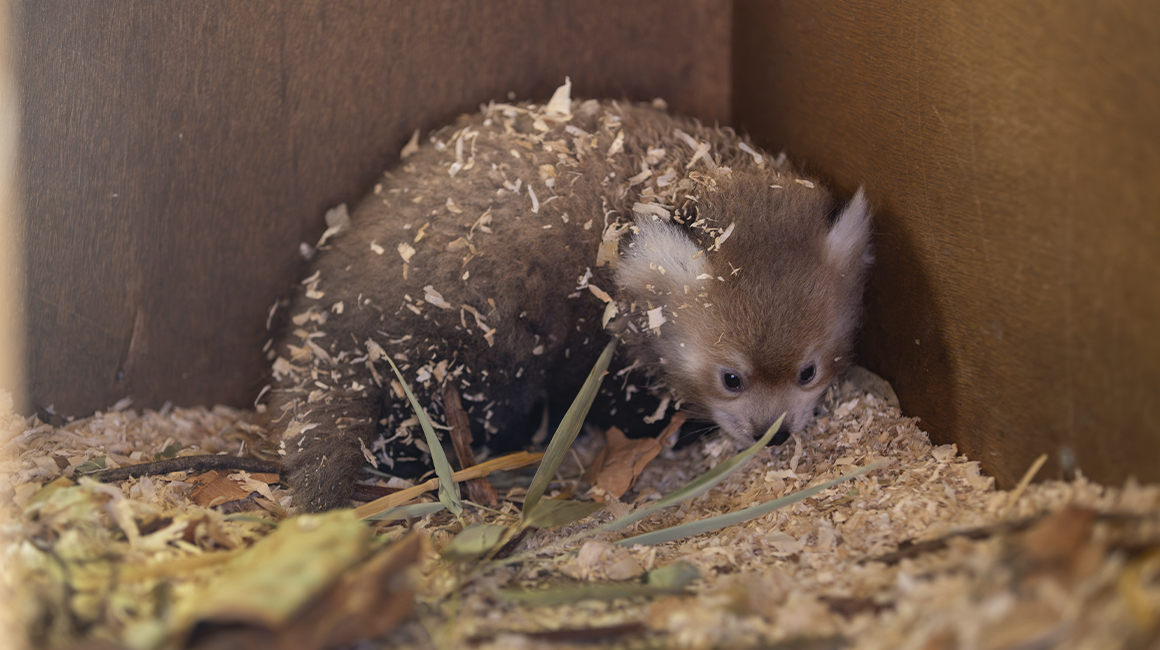
For the time being, the cub’s daily routine is mainly punctuated by feeds and long periods of rest in his dens.
Milk before discovering bamboo
For now, the cub’s diet consists entirely of its mother’s milk. Bamboo and folivore pellets are already present in its enclosure, but it is still too young to show any interest in them.
This will come gradually. When he starts following Ines around more and exploring his surroundings, he should first imitate his mother by chewing a little bamboo, before gradually incorporating it into his diet.
We will also have to wait a little longer to find out whether it is a male or a female. The baby has not yet been sexed, microchipped or weighed. These various procedures will be carried out simultaneously by the veterinary teams. Its name will be chosen at a later date.
Discreet monitoring to preserve the mother-cub bond
Twice a day, the keepers check that the baby is doing well, whilst intervening as little as possible to ensure Ines remains undisturbed and maintains her bond with her baby.
When Ines is with her baby in a hut, the team leaves them in peace and waits until she goes off to eat or climbs a tree. The keepers can then check from a distance that the baby is moving about, breathing normally and not suffering from the heat.
This discreet monitoring ensures that the mother-cub relationship is not disrupted and helps to avoid causing Ines any stress. If she feels disturbed, she may indeed decide to move her cub to another hut.
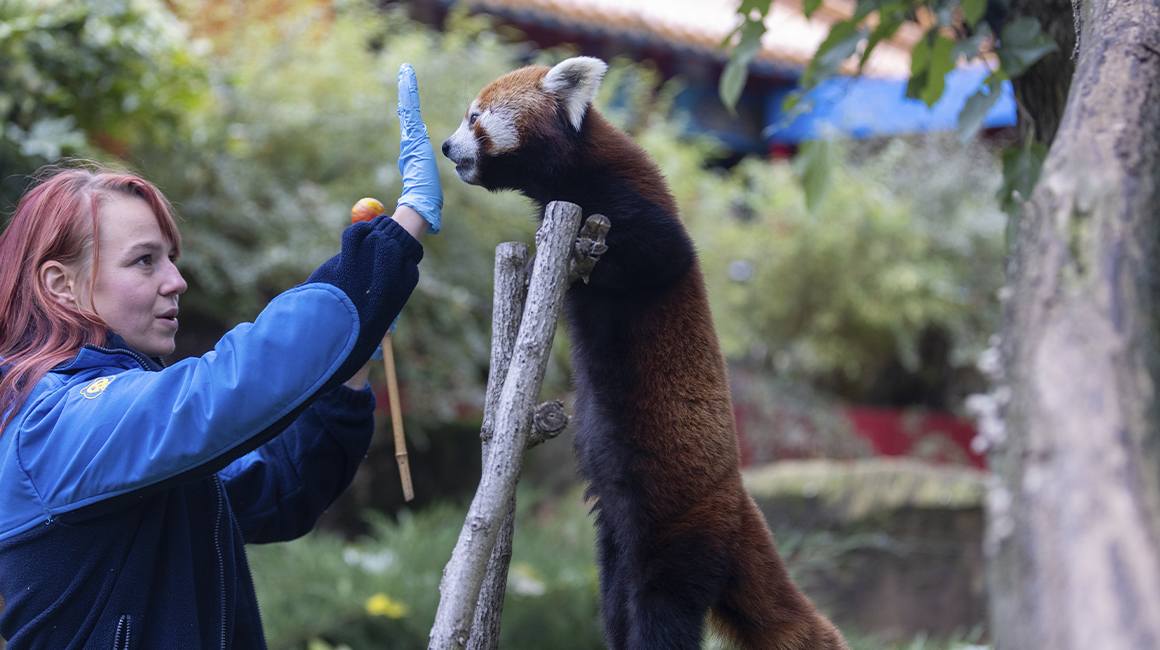
Browny seems more at ease around the keepers and willingly comes down when called.
Ines and Browny: two very different personalities
So far, no particular interaction between Browny and his cub has been observed. The male carries on as usual whilst Ines remains alone with the cub, a natural behaviour for this predominantly solitary species.
The two adults also have very different temperaments. Browny is more at ease around the keepers and willingly comes down when called, particularly during medical training sessions. Ines, on the other hand, is more timid and tends to keep her distance.
Their favourite treat? Grapes! Although very sweet, they remain a special treat, used in particular during medical training or to help administer medication. Their daily diet consists mainly of bamboo and folivore pellets.
There are also a few distinguishing features: Browny has a slightly darker coat and a rounder head, whilst Ines has a lighter facial mask and a slimmer, more elongated muzzle.
Why do red pandas stay perched in trees?
The red panda is a predominantly arboreal species, spending much of its time in trees.
Ines and Browny are generally most active in the early morning and late afternoon, when temperatures are milder. They are also more active in winter than in summer, as they do not cope well with the heat.
There’s one scene that regularly amuses the keepers: when they see a red panda start to move at the top of a tree, some visitors hope to see it come down… only to realise that it was simply looking for a new spot to settle into the branches!
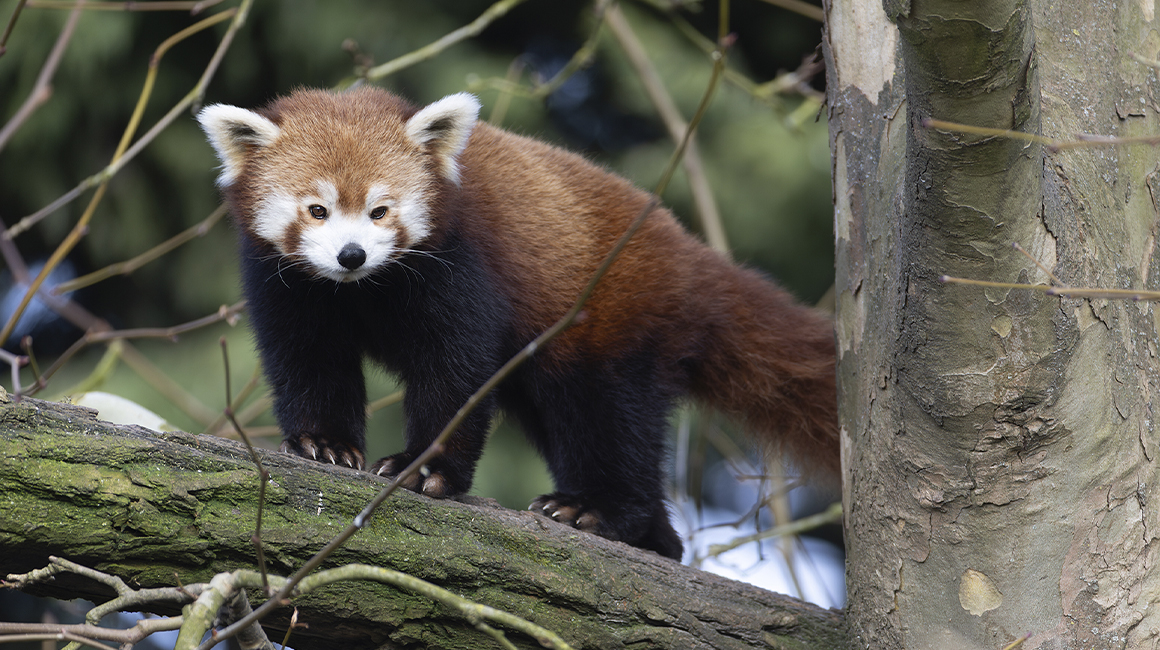
During your visit, look up! Red pandas are usually found high up in the trees.
A panda… not quite like the others
Despite their common name and shared taste for bamboo, the red panda and the giant panda do not belong to the same family. Indeed, the classification of the red panda has long been a subject of debate. Today, it is recognised as the sole surviving member of the Ailuridae family.
This species is classified as ‘Endangered’ on the IUCN (International Union for Conservation of Nature) Red List. Habitat degradation and fragmentation are among the main threats to the species, along with poaching and certain diseases that may be transmitted by domestic dogs.
Find out more about red pandas
Beauval Nature works alongside the Red Panda Network
Since 2014, Beauval Nature has been supporting the Red Panda Network, an organisation dedicated to the conservation of the red panda and its habitat.
Beauval Nature’s support helps to fund, in particular, the salary, training and field clothing of Bimala Mokta, an eco-guard within the programme. In 2025, she temporarily suspended her duties due to her pregnancy. Her husband, Anil Rai, and her brother, Dawa Lama, then took over, particularly in the Jaljale community forest in Nepal.
This enabled several initiatives to continue: monitoring red panda populations and their habitat, anti-poaching patrols, the restoration of 4 hectares of forest, and the rabies vaccination of 49 dogs to minimise the risk of transmission to wildlife.
The first global symposium dedicated to the red panda in 2026
The year 2026 will also mark a new milestone for specialists in the species: the Red Panda Network will organise the first global symposium entirely dedicated to the red panda, to be held from 5 to 9 October in Kathmandu. Researchers and specialists will discuss, amongst other things, the status of populations, threats, climate change, and in situ and ex situ conservation efforts.
This will be an opportunity to bring together the knowledge gained about this species and to collectively consider the actions needed to ensure its long-term protection.
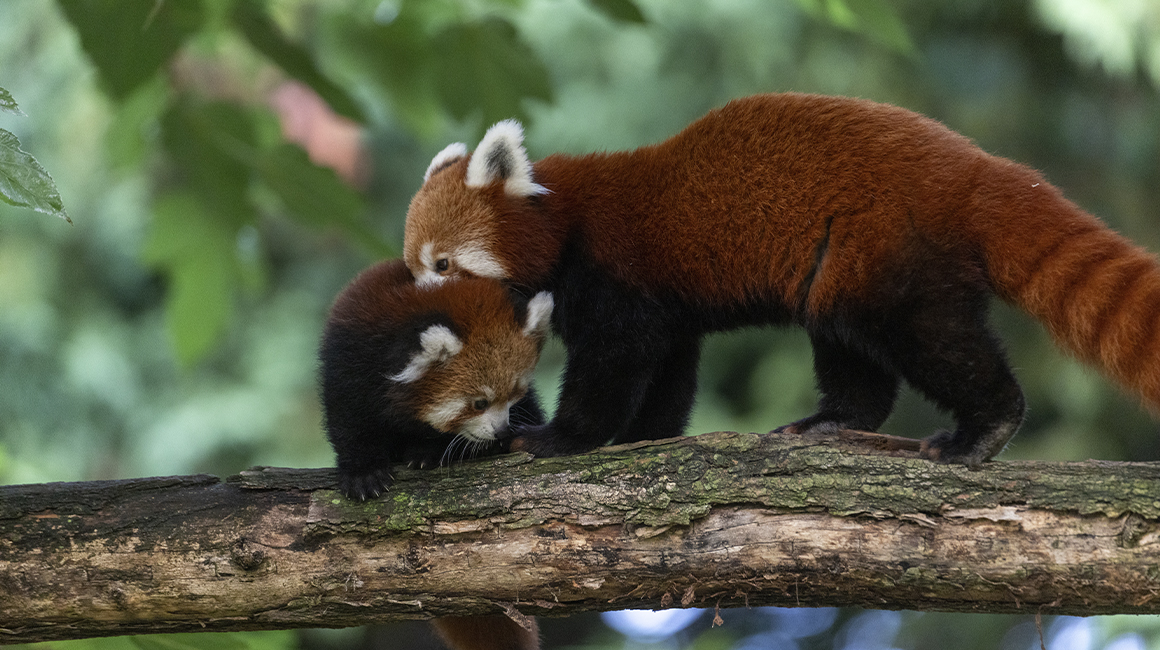
Ines, a devoted mother with her cubs.
You too can support biodiversity by sponsoring Ines
Would you like to do your bit to help endangered species? You can sponsor Ines and thereby contribute to the conservation and research programmes supported by Beauval Nature all over the world.
From as little as €20, there are several options available to become a ‘friend’, ‘supporter’ or ‘champion’ of biodiversity. Your sponsorship takes the form of a donation and may entitle you to a tax relief of up to 66 per cent of the amount donated.
Frequently asked questions: everything you need to know about the red panda
Why is the red panda cub still difficult to spot?
Born on 4 July 2026, Ines and Browny’s cub still spends most of its time in its dens and does not yet move around the enclosure on its own. It is his mother, Ines, who chooses his shelter and carries him from one den to another, depending on the temperature, amongst other things. So it is possible to catch a glimpse of him, but you’ll still need a bit of luck!
How do the keepers monitor the red panda cub without disturbing it?
The keepers check on him twice a day, whilst keeping their interventions to a minimum. When Ines is with him, they wait for her to move away before observing the cub from a distance and checking that he is moving and breathing normally. This discreet monitoring helps to preserve Ines’s peace of mind and her bond with her cub.
Does Browny, the father, look after his cub?
So far, no particular interaction between Browny and his cub has been observed. This behaviour is natural for the red panda, a predominantly solitary species: in the wild, the female raises her young alone. Interactions may change as the cub grows and begins to move about the enclosure more.
How does Beauval Nature protect red pandas?
Beauval Nature supports the Red Panda Network, an organisation committed to protecting red pandas and their habitat in Nepal. The initiatives carried out include monitoring wild populations, anti-poaching patrols, forest restoration and vaccination campaigns for domestic animals to limit the transmission of diseases to wildlife.
Beauval Nature’s support also helps to assist Bimala Moktan, an eco-guard within the programme, by funding her salary, training and field equipment.