Discovering the Himalayan tahr, to help protect it better
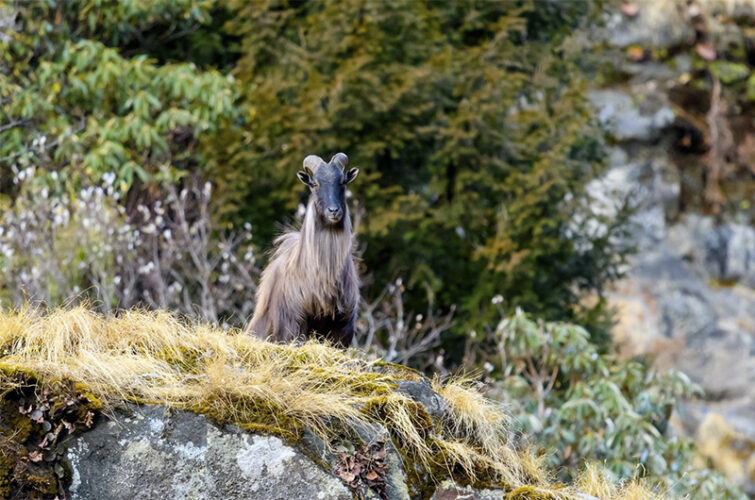
A Franco-Indian study, published on 7 September 2026 in the journal *Diversity*, provides an initial assessment of the habitat of the Himalayan tahr, a near-threatened species whose range extends from northern India to Tibet.
Conducted in the Govind Pashu Vihar sanctuary in the Indian state of Uttarakhand, this research forms part of Jayant Gupta’s PhD thesis. He is supervised by Sujeet K. Singh of the Amity Institute of Environment and Sustainability (Noida) and Gilles Maurer, a researcher at Beauval Nature affiliated with the Centre for Functional and Evolutionary Ecology (University of Montpellier).
This study paves the way for better protection of the Himalayan tahr and, indirectly, of the snow leopard, its main predator.
The Himalayan tahr, a high-altitude ungulate
The Himalayan tahr, Hemitragus jemlahicus, also known as the jharal, is a bovid and a cousin of wild goats. It lives mainly at altitudes of between 2,200 and 4,500 metres on rocky escarpments and alpine grasslands.
Endemic to the Himalayan range, its range extends from northern India and Nepal to Bhutan and Tibet. The species is currently classified as ‘Near Threatened’ on the IUCN Red List*. Its populations are declining due to hunting, habitat fragmentation and pressure from domestic herds.
From observation to data collection
To identify the areas frequented by the Himalayan tahr, the team carried out three months of research, covering 440 kilometres across rugged terrain. Their study area covered approximately 270 km², divided into 43 geographical grids, each 2.5 km square.
In each grid square, fieldwork involved direct observations and the collection of signs of presence (faeces and hair). The faeces were genetically analysed to rule out any confusion with domestic livestock or other wild ungulates.
The results confirmed the presence of the species in 24 out of 43 grids, representing 86 faecal samples collected out of 137.
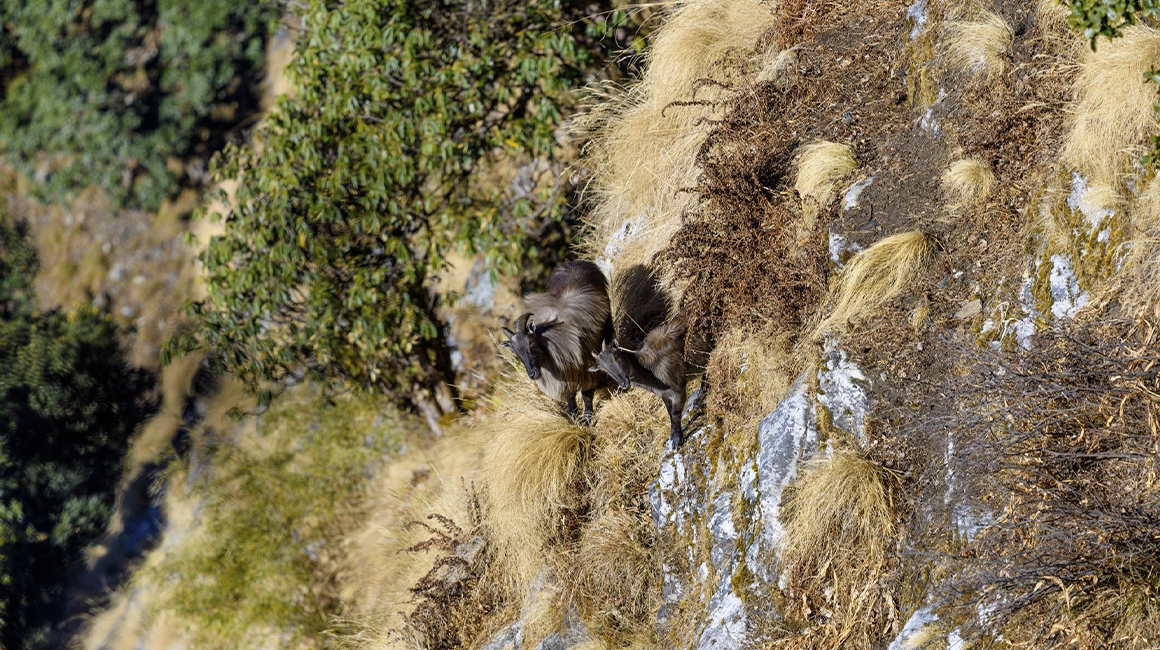
The tahr favours rocky cliffs © Sunil Sharma photography
What the fieldwork tells us:
- The Himalayan tahr is mainly active above 3,000 metres in altitude, particularly on the northern and north-eastern slopes,
- It favours rocky cliffs, alpine meadows and subalpine scrubland, whilst avoiding dense lowland forests,
- Its numbers decline significantly where domestic herds graze, as the tahr tends to move away from areas used for livestock farming.
From the tahr to the snow leopard: a balance to be preserved
In certain regions of the Himalayas, particularly in Nepal, the tahr is one of the snow leopard’s main prey species. Consequently, understanding its habitat and preserving it indirectly contributes to the conservation of this large predator.
Indeed, the snow leopard, classified as ‘vulnerable’ on the IUCN Red List, is primarily threatened by habitat degradation, the decline in its prey populations, and hunting in retaliation for attacks on domestic livestock.
Find out more about the snow leopard
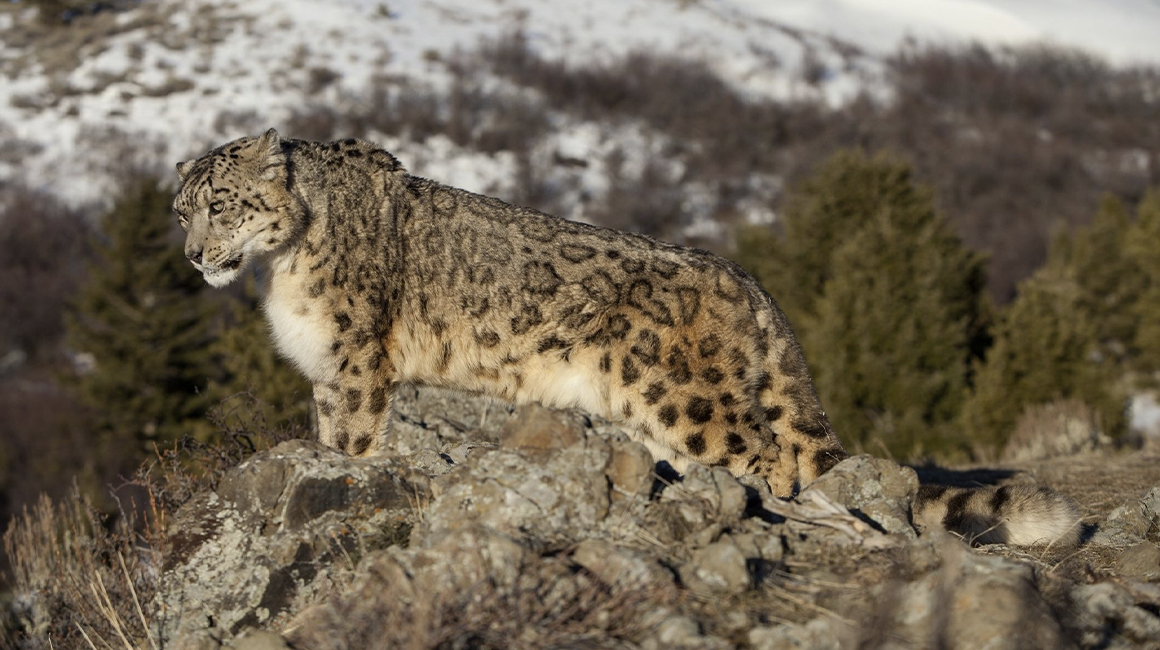
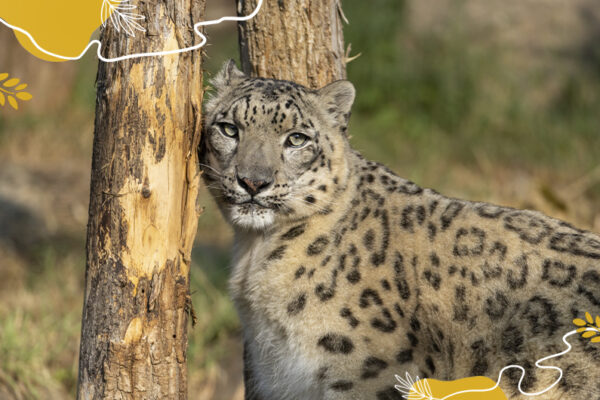
Snow leopard © Sunil Sharma photography
As the study shows, as well as providing the big cat with a source of food, conserving the tahr also prevents potential conflicts between humans and snow leopards. Indeed, when tahr numbers decline, snow leopards turn to domestic livestock. This predation results in losses for livestock farmers and exacerbates tensions between human activities and wildlife conservation.
Protecting the Himalayan tahr is therefore crucial to maintaining the balance of this mountain ecosystem. Whilst this study does not directly measure the effects on the snow leopard, it provides useful insights to better guide conservation efforts on the ground. Gaining a better understanding of a species and its habitat also helps to preserve the ecosystem balances on which it depends!
Support research with Beauval Nature
Establishing protected areas and managing pastures: the keys to protecting the Himalayan tahr
In order to preserve the tahr and, more generally, the balance of its ecosystem, the study identifies two key measures to be implemented:
- Establishing livestock-free zones to provide a safe haven for the species,
- Regulating grazing across seven overlapping grids to share plant resources equitably and minimise tensions.
It should be noted that, although the tahr avoids livestock, the study does not provide evidence of direct competition for food. To confirm this, it would be necessary to document resource overlap and direct interactions between wild and domestic bovids more thoroughly.
Such behaviour has, however, already been observed in other mountain ungulates, such as the blue mouflon in Nepal, where the presence of domestic herds has directly influenced its distribution within the study areas.
These initial findings therefore provide a working basis, which will need to be supplemented by further observations to better understand seasonal variations in habitat use and the effects of human activities. Furthermore, the BN – Amity collaboration is continuing, notably through a study on the connectivity and risks of genetic isolation among Tahr populations.
*International Union for Conservation of Nature (IUCN)
Main photo: Himalayan Tahr © Sunil Sharma photography