World Snow Leopard Day: protect one big cat, preserve an entire mountain range
On 23 October, the snow leopard takes centre stage! Also known as the ‘once’, this iconic species of the Asian mountains needs our support. From its remarkable adaptations to the cold to the research supported by Beauval Nature, discover a feline whose future is closely linked to that of its environment.
Protecting the snow leopard: a commitment that knows no borders
World Snow Leopard Day has its origins in the commitment of the 12 countries where the species lives in the wild, which came together in Bishkek, Kyrgyzstan, in 2013. Officially recognised by the United Nations General Assembly in 2024, it aims to raise public awareness and strengthen cooperation to protect this big cat and the mountain ecosystems on which it depends.
I’m coming to see the snow leopards
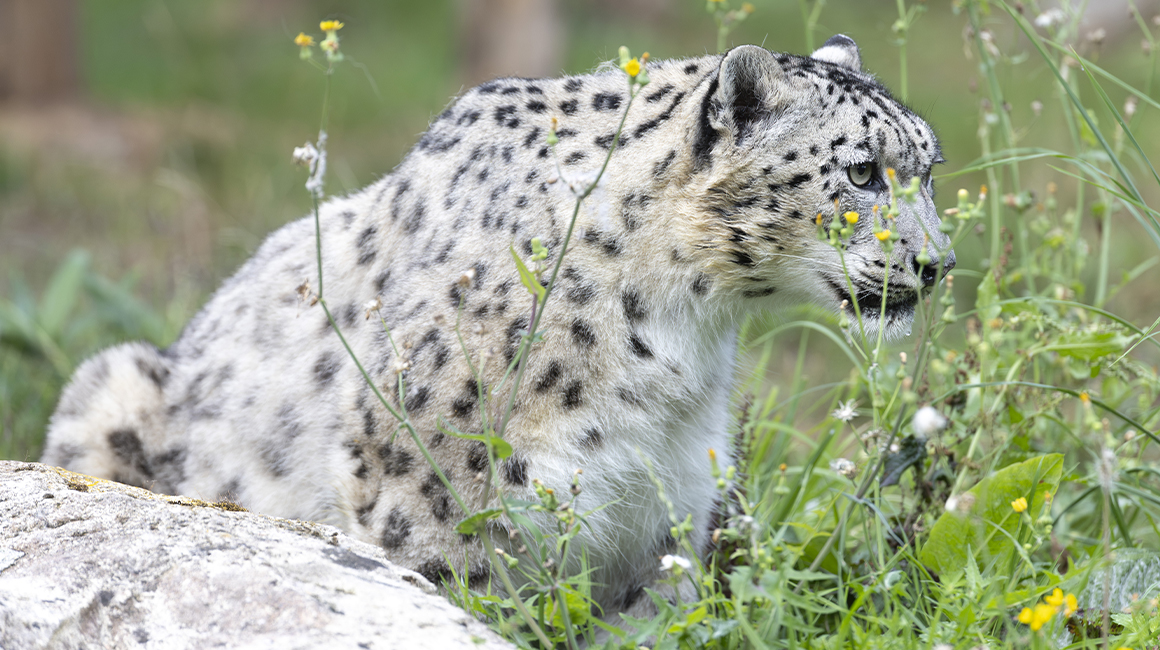
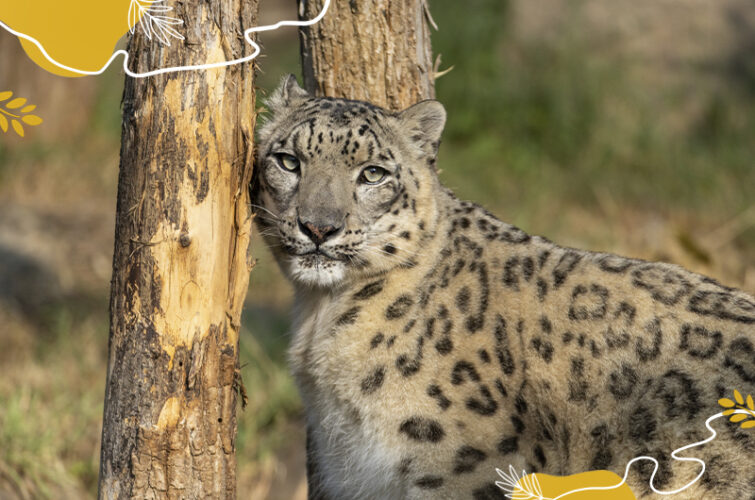
Its light grey, spotted coat allows it to blend into the rocky landscape
How the snow leopard adapts to the cold and high altitudes
From the Altai Mountains to the slopes of the Himalayas, the snow leopard (Panthera uncia) roams the mountains of Central Asia. Cliffs, gorges and rocky slopes make up its territory, sometimes reaching altitudes of up to 5,500 metres. Its light grey, spotted coat allows it to blend into this rocky landscape: it takes a trained eye to spot it amongst the rocks!
It has some valuable adaptations to cope with the cold. Its thick fur retains heat, whilst its large, fur-covered paws act like snowshoes on the snow. Its long tail helps it keep its balance on steep terrain. When resting, she can also wrap it round her body to keep warm. A dual-purpose accessory!
This agile hunter feeds mainly on ibex, blue sheep and Himalayan tahr, as well as small mammals. It approaches its prey stealthily before pouncing, making the most of its camouflage and its mastery of rugged terrain. Another surprising feature: unlike the lion or the tiger, the snow leopard does not roar! It communicates mainly through high-pitched meows and a hiss emitted through its nostrils, which is thought to serve as a greeting between two individuals.
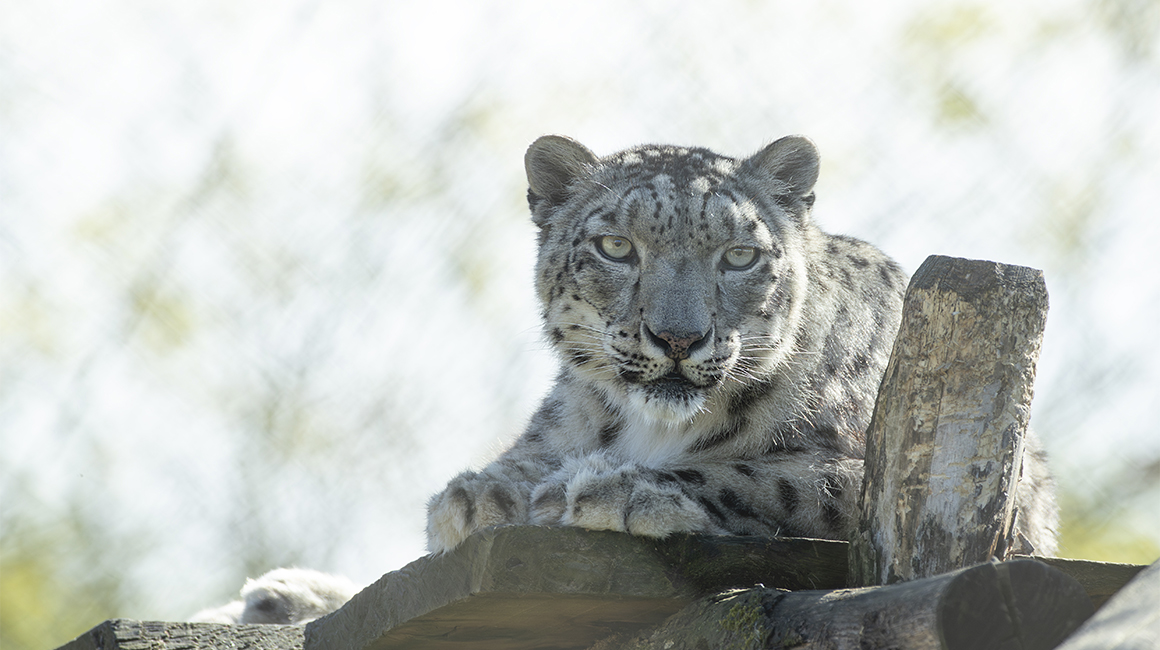
Audrey and Indus have got to know each other, but she also enjoys her moments alone
Why is the snow leopard under threat?
The snow leopard is classified as ‘Vulnerable’ on the International Union for Conservation of Nature (IUCN) Red List. Whilst its environment may seem inaccessible, human activities are exerting increasing pressure on it.
Roads, mining operations and other developments are degrading or fragmenting its habitat. Poaching, particularly for its fur, also threatens the species. Added to these pressures are the effects of climate change on mountain ecosystems.
The dwindling numbers of its wild prey represent another major challenge. When prey becomes scarce, the cat may turn to domestic herds. The losses suffered by livestock farmers can then lead to reprisals. Protecting the snow leopard therefore also involves preserving its food sources and promoting coexistence with local communities.
Working with Beauval Nature to study its prey and better protect it
To help safeguard the snow leopard, attention must be turned to another mountain dweller: the Himalayan tahr. This bovid, a cousin of the wild goat, is one of its main prey species in certain regions, particularly in Nepal.
Beauval Nature is taking part in a research programme dedicated to this ungulate, which is classified as ‘Near Threatened’ by the IUCN. A Franco-Indian study, published on 7 September 2026 in the journal *Diversity*, provides initial insights into its habitat within the Govind Pashu Vihar sanctuary in India. The study forms part of Jayant Gupta’s PhD thesis, supervised by Sujeet K. Singh of Amity University Noida and Gilles Maurer, a Beauval Nature researcher affiliated with the Centre for Functional and Evolutionary Ecology at the University of Montpellier.
Three months of fieldwork and 440 kilometres travelled enabled the collection of observations and signs of presence, including faeces analysed genetically. The results show that the tahr mainly inhabits areas above 3,000 metres, favouring rocky cliffs, alpine meadows and subalpine scrub. Its presence decreases in areas grazed by livestock, as the tahr tends to move away from livestock grazing areas.
These observations inform conservation strategies: preserving livestock-free areas and better regulating grazing in shared areas. By protecting the tahr and its habitat, these measures could also benefit its predator. An illustration of the links that bind species within the same ecosystem!
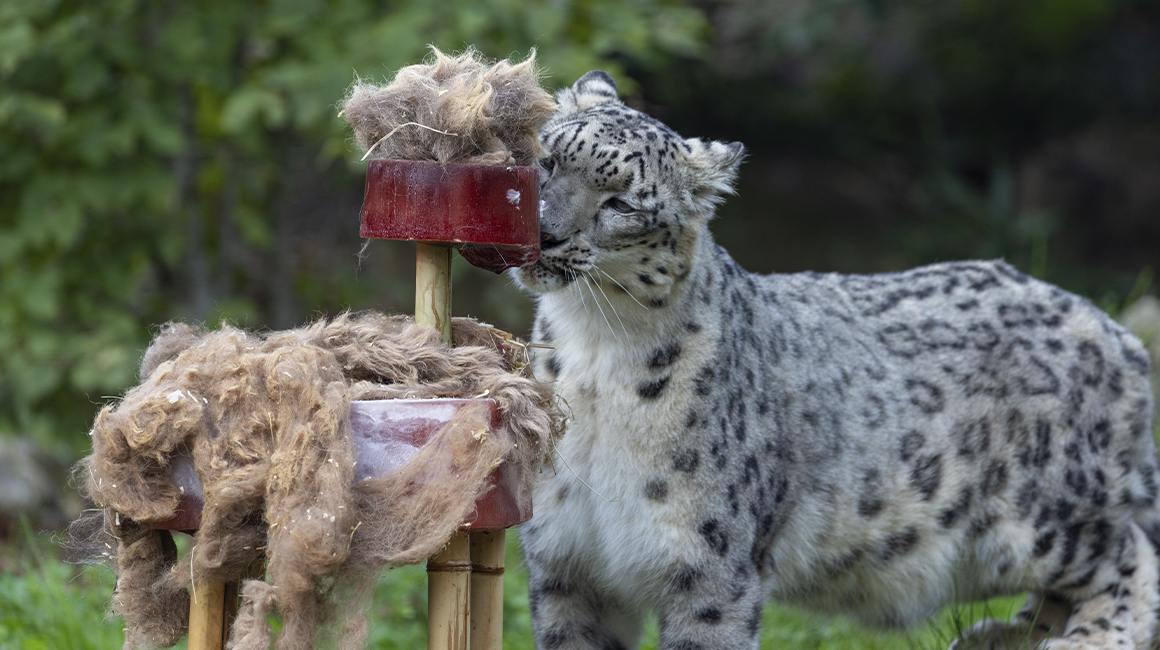
To mark this World Snow Leopard Day, a special enrichment activity was organised for the pair of snow leopards. Indus certainly made the most of it!
Audrey and Indus: a growing bond at Beauval
In the Heights of China enclosure, Audrey and Indus have got to know one another. Since the male’s arrival in June 2025, the indifference of the early days has given way to interactions that the keepers observe regularly: the two snow leopards greet each other by rubbing against one another and sometimes settle down side by side for long periods of rest.
Each still has their own little habits, though! Audrey, who is naturally calm and playful, sometimes turns her return indoors into an imaginary hunting session: she crouches, waits patiently, then suddenly pounces. Indus is more likely to show his impatience, especially when mealtime approaches. And there’s no way he’ll share his portion!
Several mating sessions have also been observed. Whilst enthusiastic about joining Indus, Audrey equally enjoys returning to the comfort of her indoor space to rest at the end of the day. These interactions fuel hopes of a future birth, although it is not yet possible to confirm this.
What if Audrey became your sponsored animal? By sponsoring her, you’ll be contributing to the conservation and research programmes supported by Beauval Nature.
Frequently asked questions about snow leopard conservation
Is the snow leopard endangered?
The snow leopard is a threatened species, classified as ‘Vulnerable’ on the IUCN Red List. This status means it faces a high risk of extinction in the wild. Poaching, habitat degradation, a decline in prey numbers and conflicts with livestock farmers are putting its populations under pressure. Whilst the situation varies from region to region, the overall trend remains one of decline.
How does climate change threaten the snow leopard?
Climate change is transforming the mountain ecosystems on which the snow leopard depends. Rising temperatures are altering water availability and vegetation, with potential consequences for the herbivores on which it feeds. In the Himalayas, the advance of forests to higher altitudes could also reduce and fragment some of its habitats. These changes may exacerbate the pressures already exerted by human activities.
Why is it essential to protect the snow leopard’s prey?
Preserving its prey means preserving its food sources. Ibex, blue mouflon and Himalayan tahr play a significant role in its diet. Their decline, particularly due to hunting and pressures from livestock farming, also puts the snow leopard at risk. When wild prey becomes scarce, the snow leopard may turn increasingly to domestic herds, fuelling conflicts with livestock farmers. Protecting wild herbivores must therefore go hand in hand with measures to protect livestock.
How can you help protect snow leopards with Beauval Nature?
You can make a donation to Beauval Nature or sponsor Audrey, Beauval’s snow leopard. These actions help fund the conservation and research programmes supported by the organisation. Among these is a programme dedicated to the Himalayan tahr, which helps us better understand the needs of this herbivore and the pressures it faces. By providing valuable insights into the protection of one of the snow leopard’s prey species, this research can indirectly contribute to the conservation of the snow leopard and its ecosystem.