AI in the service of African manatee conservation
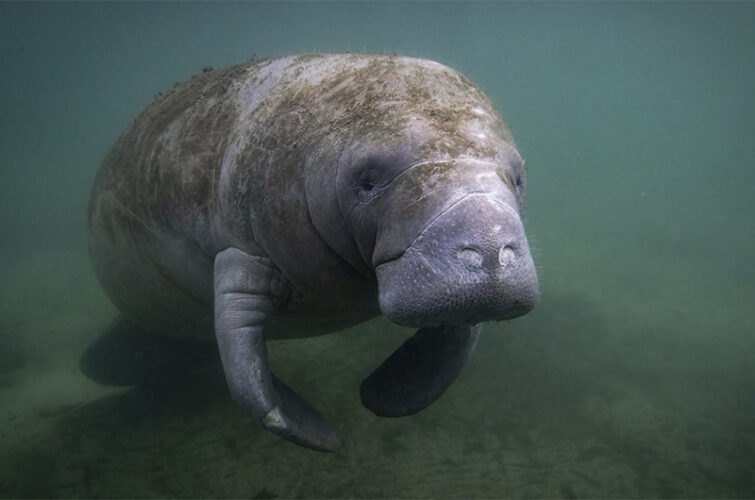
The African manatee, Trichechus senegalensis, is one of Africa’s most elusive and endangered aquatic mammals. Being shy and inhabiting murky waters, it is almost impossible to spot with the naked eye.
As a result, scientists have long lacked reliable data to protect its population effectively.
A scientific study recently published in the journal *Remote Sensing in Ecology and Conservation* could change all that. It compares the effectiveness of three artificial intelligence (AI) models in detecting the vocalisations of the African manatee. These new tools could have a direct impact on its conservation.
This study was carried out in the heart of Conkouati-Douli National Park by Lucas Dubus, a PhD student with HELP Congo / Beauval Nature, affiliated with the CEFE*-CNRS* laboratory in Montpellier.
African manatees: difficult to spot in murky waters
Nicknamed the ‘cow of the seas’, the African manatee is a large, herbivorous aquatic mammal. It lives mainly in the large rivers and coastal lagoons stretching from Mauritania to Angola, as well as in some inland waters of Chad, Mali and Niger.
Listed as ‘Vulnerable’ on the IUCN Red List*, it is primarily threatened by hunting and accidental entanglement in fishing nets. Furthermore, its low reproductive rate – one calf every two to three years – further jeopardises the species’ survival.
In total, there are thought to be fewer than 10,000 individuals remaining. However, these estimates are based more on accounts gathered from local communities than on direct counts. The lack of reliable data hinders the implementation of conservation measures tailored to the species.
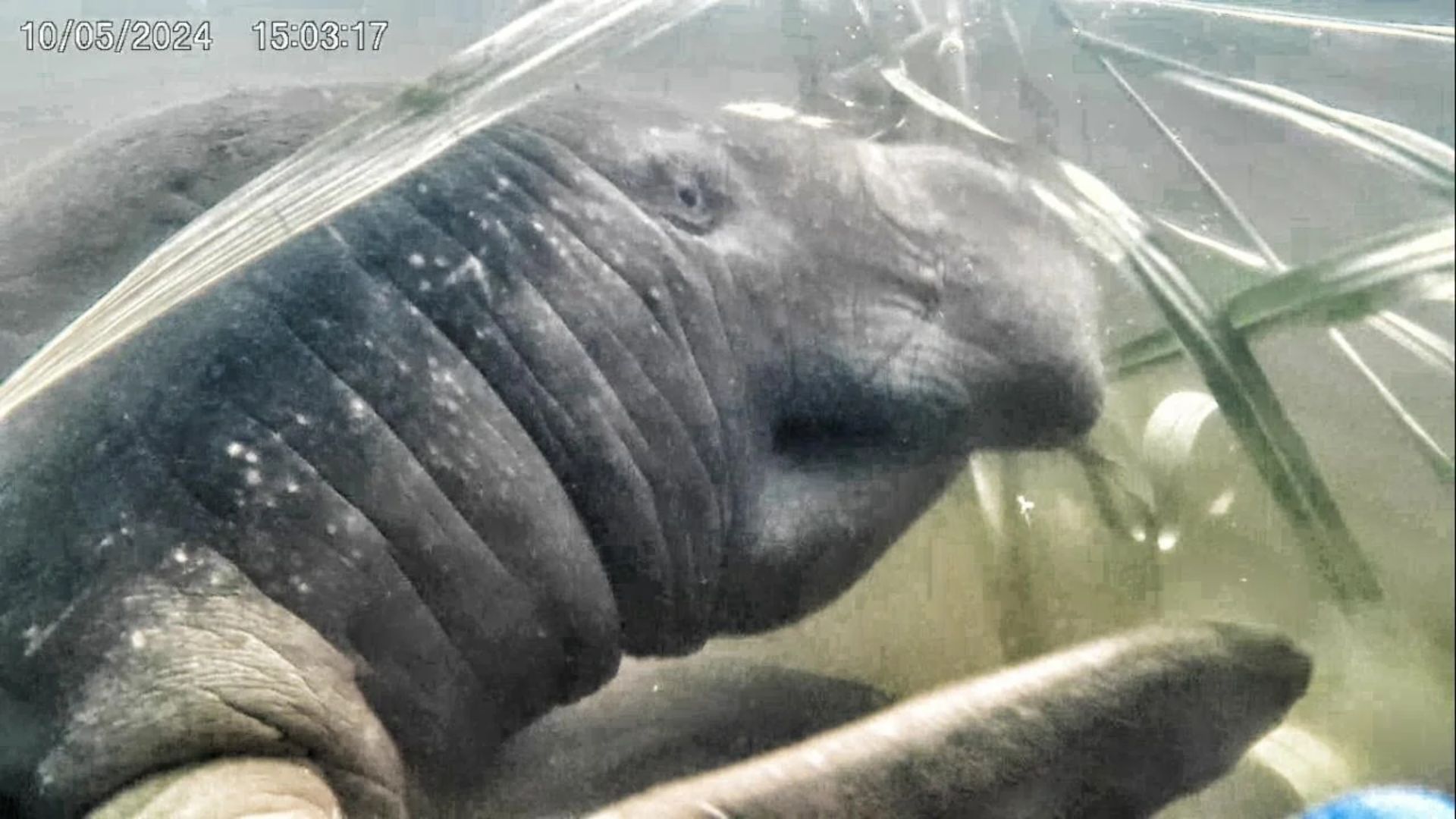
African manatee sighting in May 2024
AI: a real boost for scientists
Passive acoustic monitoring was used to locate the manatees. Between March 2024 and April 2025, the team recorded 600 days of continuous underwater sound using several hydrophones (underwater microphones) installed at 52 sites within the national park.
Faced with the volume of data generated, AI was tasked with automatically identifying and detecting manatee vocalisations. To do this, three models were compared:
- A conventional machine learning programme widely used in bioacoustics (Kaleidoscope),
- A convolutional neural network (CNN*) that transforms each sound into an image (spectrogram) (ResNet),
- A transformer that captures the overall acoustic context (Dasheng).
The latter two fall under the umbrella of deep learning, a form of AI that learns to characterise data (sounds, images, etc.) from examples annotated by researchers.
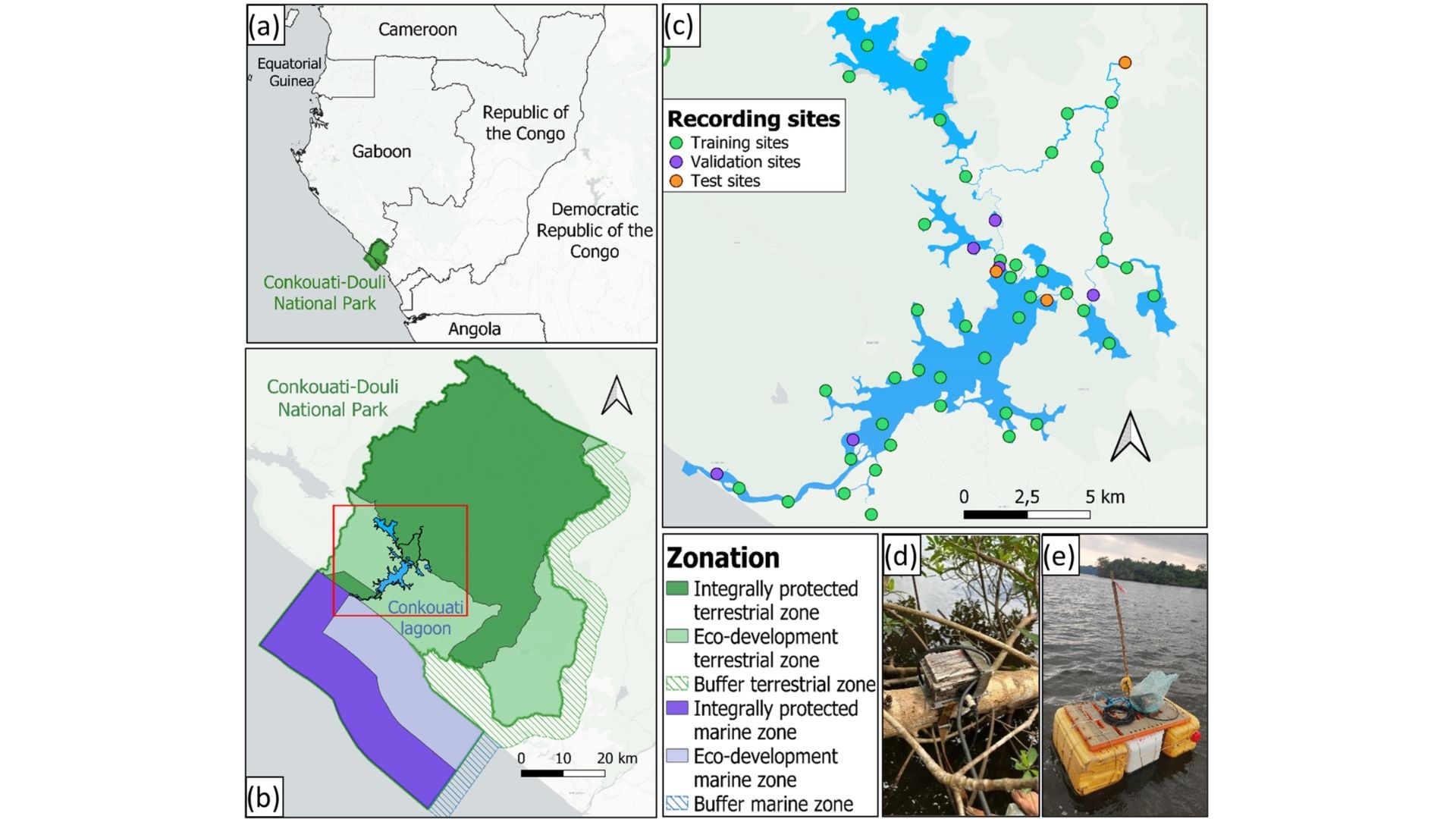
Study area for the African manatee
In practice: how do deep learning models recognise manatee vocalisations?
Annotating sounds manually is very time-consuming. Two methods were therefore used to train the deep learning models:
- Transfer learning: here, the AI is pre-trained on very large databases of images and sounds,
- Data augmentation: here, sounds are mixed together to train the AI to recognise the manatee’s call under a variety of conditions.
Deep learning, significantly superior to conventional software
The results of the software comparison are conclusive:
- Conventional software fails to recognise around 7 out of 10 vocalisations, compared with 1 in 10 for the best of the two deep learning models.
- The AI required just 300 annotated vocalisations to learn to recognise manatees with excellent accuracy.
This is very good news for conservation efforts!
Even if local NGOs and eco-rangers have few recordings at their disposal, they can install inexpensive and effective acoustic monitoring tools.
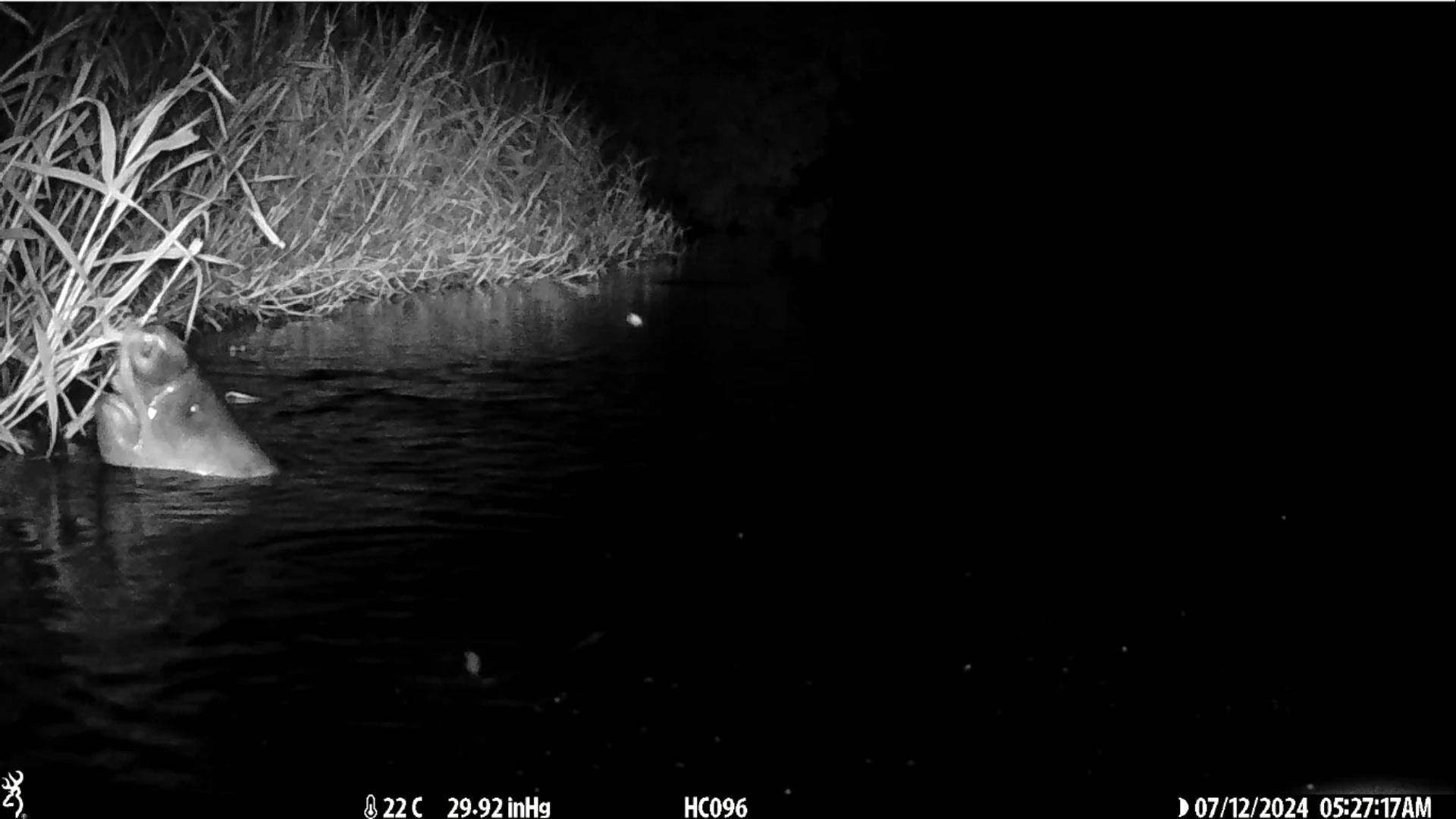
Detection of the African manatee in December 2024
Direct impacts on the ground
The study also identified areas frequently visited by manatees that lie outside the national park’s strictly protected zones. Thanks to this improved understanding of their geographical distribution, protected areas can be adjusted to effectively conserve the species.
Furthermore, the redefinition of protected areas is not limited to the protection of manatees and may benefit other vulnerable species.
What next?
Having presented his work on methods for detecting African manatees at the academic year launch conference last September, Lucas Dubus is continuing his PhD research along two lines:
- Modelling the seasonal habitat use of manatees in the national park, based on acoustic detection,
- A genetic characterisation of the manatee population at the site, based on environmental DNA.
We’ll be keeping a close eye on upcoming scientific publications to bring you the results!
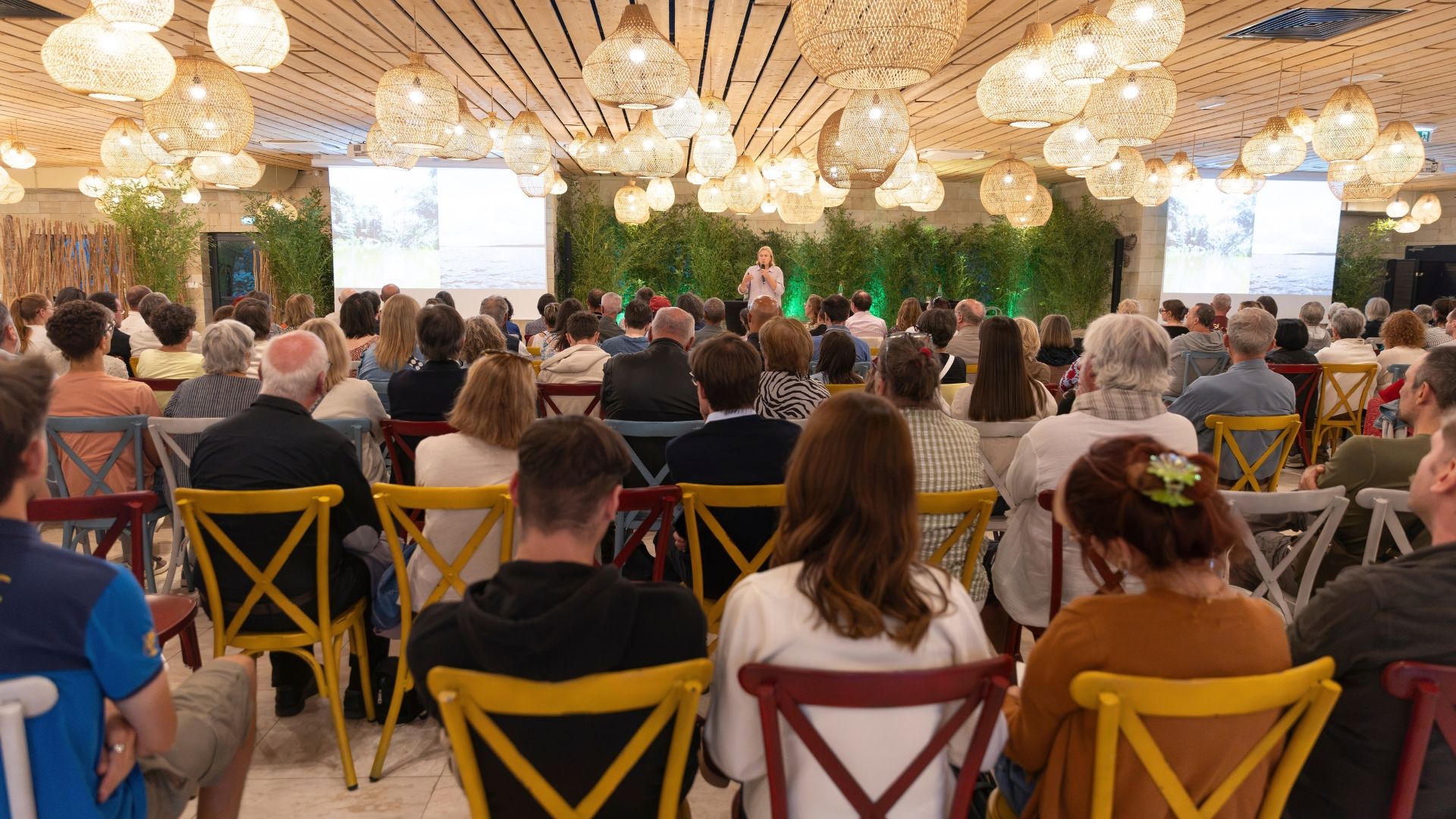
Lucas Dubus at the start-of-term lecture
Did you miss the new academic year lecture? Watch the recording (in French):
*Centre for Functional and Evolutionary Ecology
*French National Centre for Scientific Research (CNRS)
*International Union for Conservation of Nature (IUCN)
*Convolutional Neural Network (CNN): convolutional neural network
Main photo: ©Harry Collins