Baby elephants, golden monkeys, rhinos… a year full of new arrivals at Beauval
2026 will go down as an exceptional year for Beauval. With unprecedented births, historic firsts and eagerly awaited arrivals, the birth register is overflowing! Elephants, golden monkeys, Indian rhinoceroses, red-cheeked gibbons and even the Berry black donkey: so many births that delight visitors whilst contributing to the conservation of endangered species.
Two baby elephants that are melting visitors’ hearts
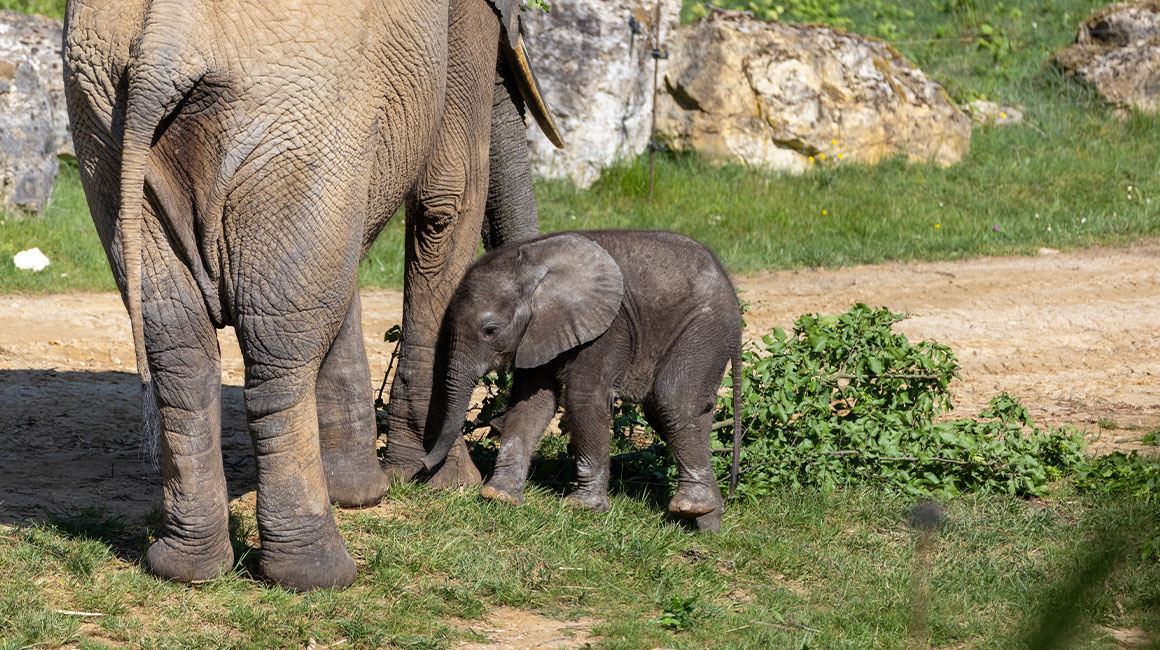
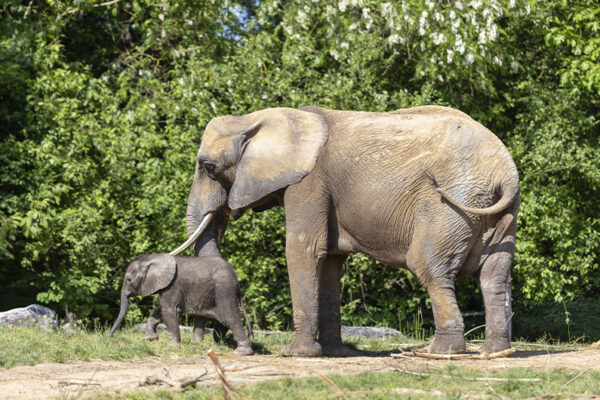
Himba’s first outing
It’s one of the year’s major highlights: for the first time since 2012, Beauval has welcomed not one, but two African savannah elephant calves.
Born on 15 February and 22 March, Himba and Rosie are growing before our very eyes. Curious, playful and very close to the other members of the herd, the two young females are discovering their surroundings every day. They can now be seen alongside the adults on the plain, much to the delight of visitors. This is excellent news for this species, whose populations face numerous threats in their natural habitat. African savannah elephants are classified as ‘Endangered’ on the IUCN Red List*.
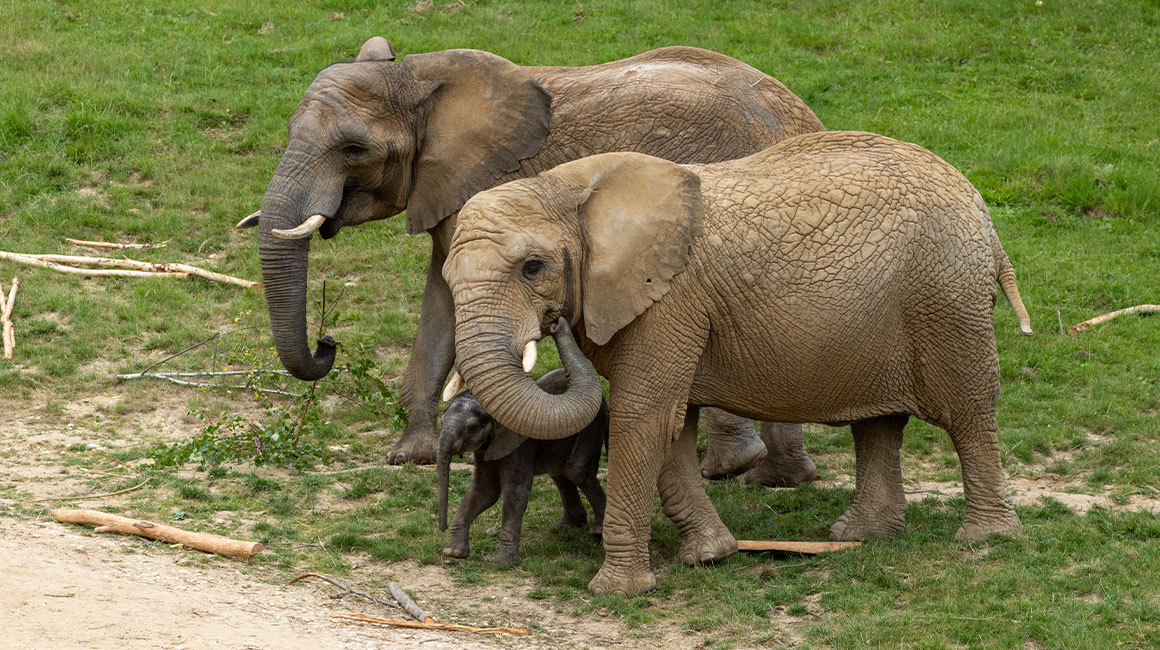
Rosie’s first outing
Find out all about Rosie’s arrival
A historic twin birth among the golden monkeys
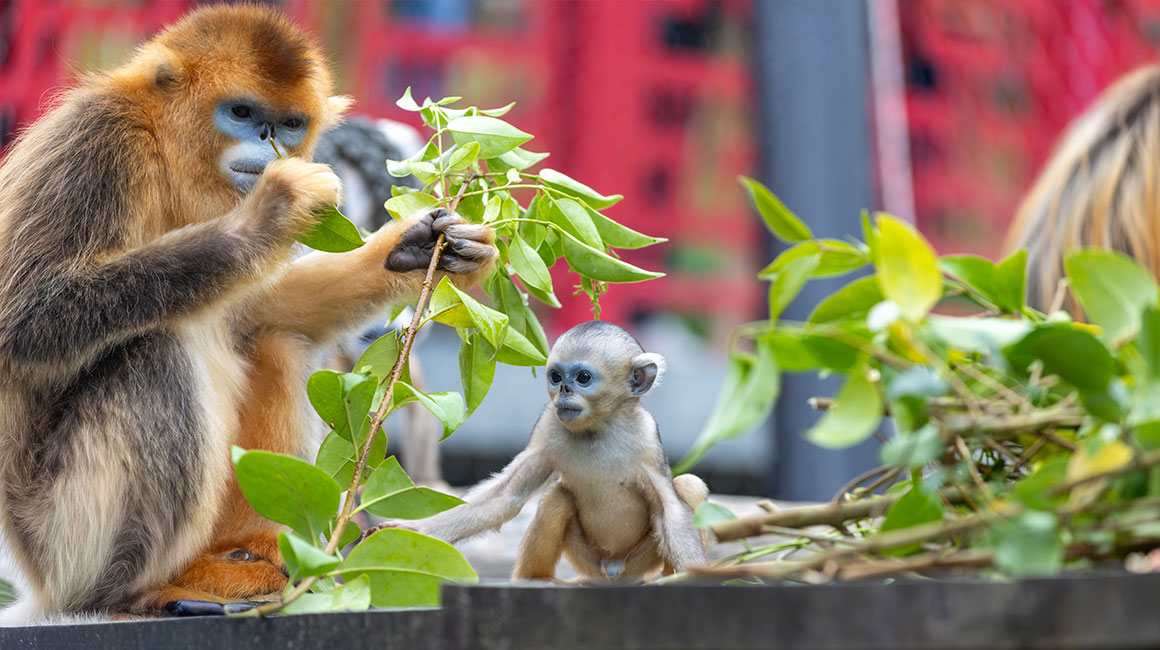
One of the golden monkey babies alongside its mum
The year 2026 will also be memorable for the golden monkeys, classified as “endangered” on the IUCN Red List*. The females Jindou and Jinhua each gave birth to a baby on 11 March and 3 April respectively. These births mark a historic first: never before have golden monkeys been born outside Asia.
The two young primates are gradually gaining confidence and are now venturing onto the branches and climbing frames in their aviary, providing heart-warming scenes.
Two female Indian rhinos, two different temperaments
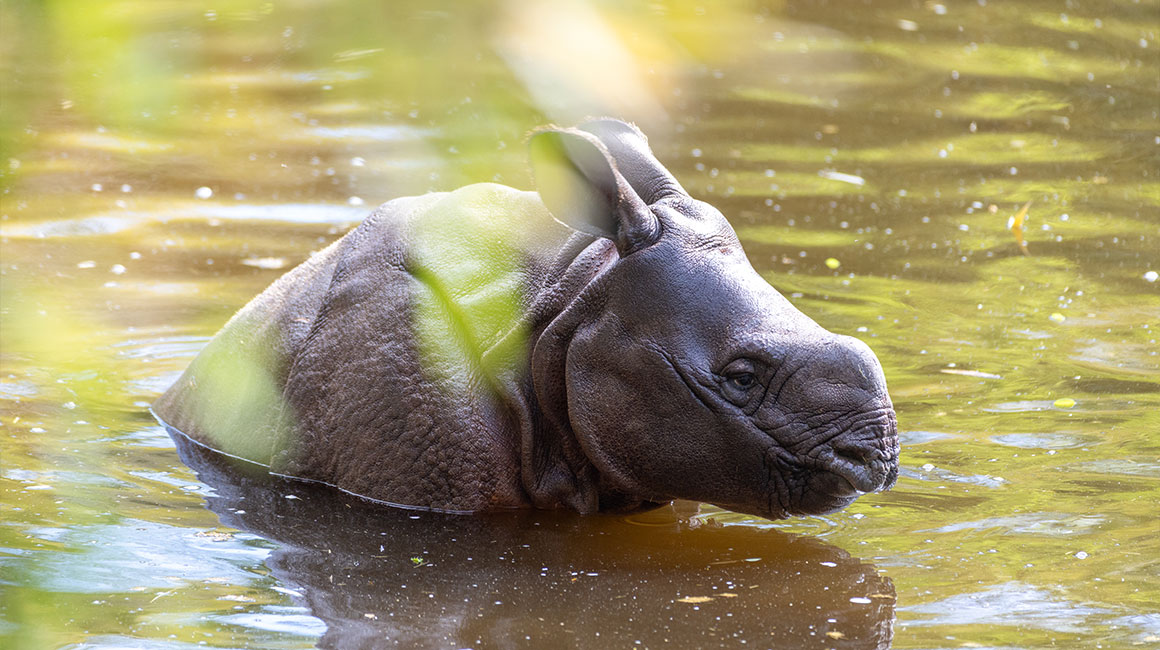
Bahïs in the water
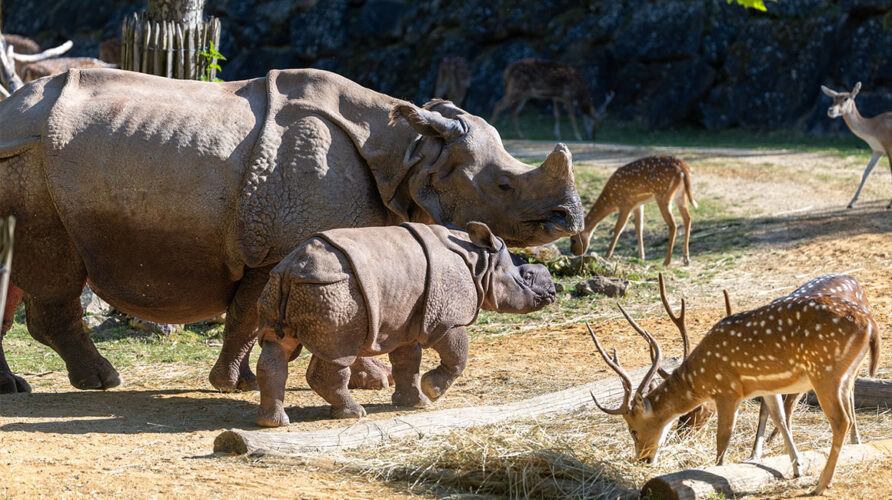
The group of Indian rhinos, a species classified as ‘vulnerable’ on the IUCN Red List*, has also grown with the births of Bahïs in September 2025 and Neytiri in January 2026.
Raised by their respective mothers, Saathi and Henna, the two young females already display very distinct characteristics. More adventurous, Bahïs readily explores her surroundings, whilst Neytiri prefers to observe before taking the plunge. Both can be seen in the Asian Plain or in their enclosure.
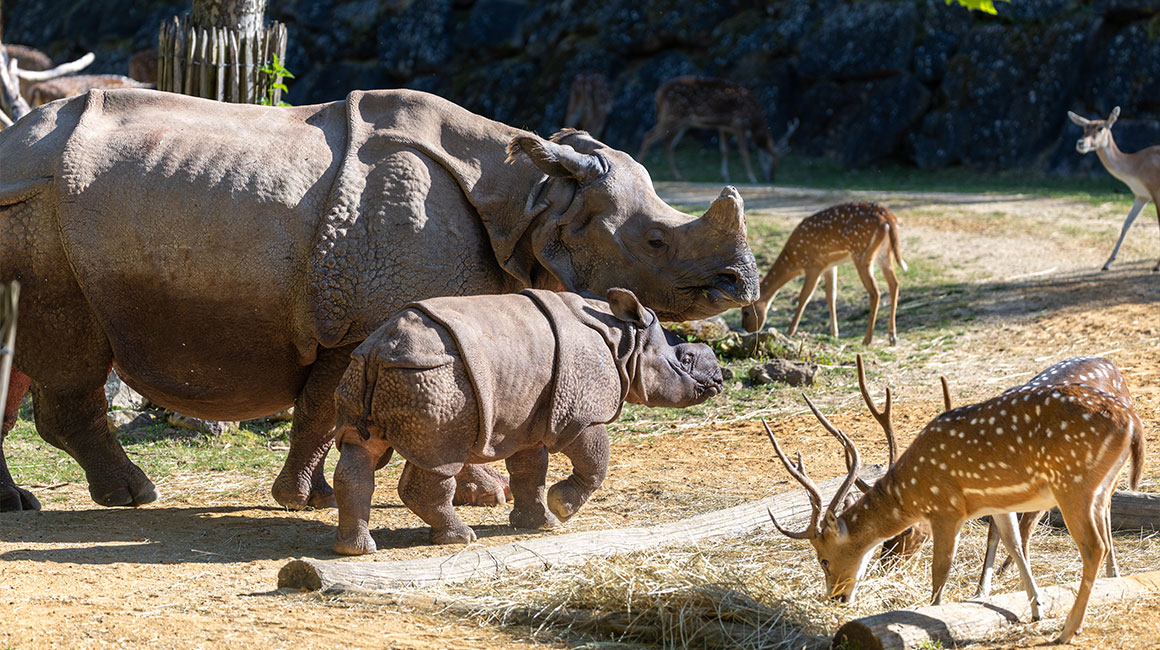
Neytiri and her mum Henna
Behind the scenes of Bahïs’s lightning-fast birth
Neytiri’s (almost) surprise birth
A much-anticipated red-tufted gibbon baby
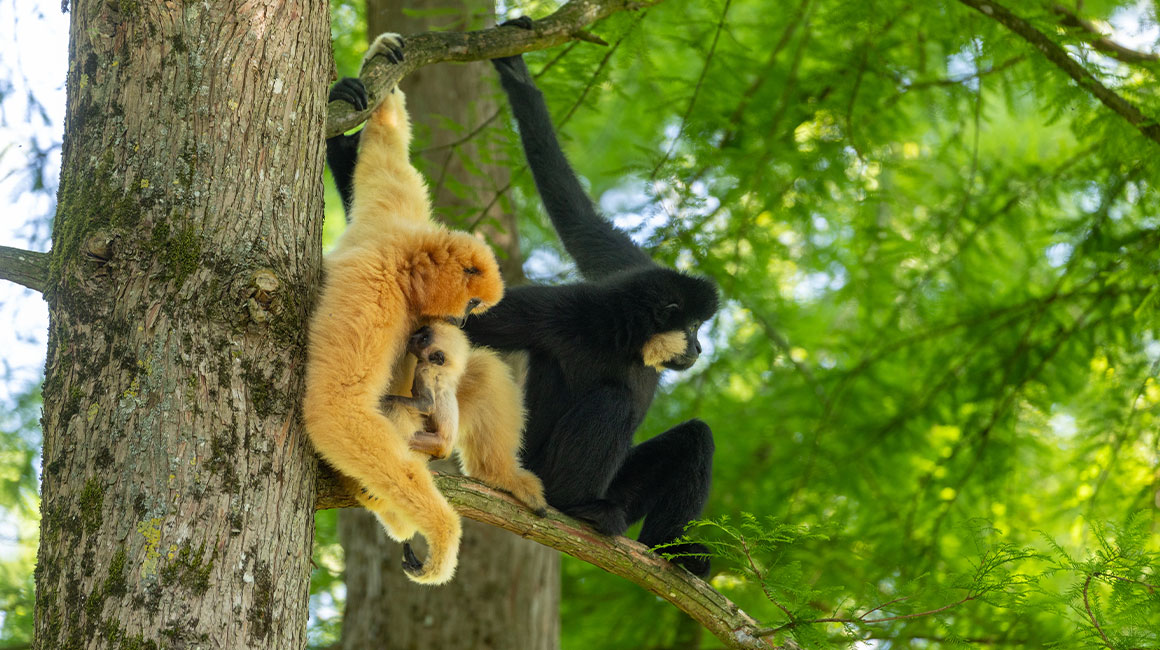
Baby gibbon surrounded by its parents
On 1 April, Maïka and Hatin became parents for the first time to an adorable red-cheeked gibbon baby, a species classified as ‘Endangered’ on the IUCN Red List*.
Eagerly awaited by the animal care teams, this birth took place under the best possible conditions. Although a first-time mother, Maïka immediately adopted the right maternal behaviours. Still clinging to his mother, it is currently impossible to determine his sex, but he is already the centre of attention. Born with a cream-coloured coat like his mother, his fur will darken as he grows. As adults, females return to a light colouring whilst males retain their black coat.
Good news from Bucolia too
The farm’s animals are also in the spotlight. At Bucolia, Beauval’s new educational farm, a little male Grand Noir du Berry donkey has been born.
This birth is excellent news for this French breed, which has a small population. In an environment inspired by the traditional farms of Sologne, visitors can already watch him growing up alongside the other farm animals.
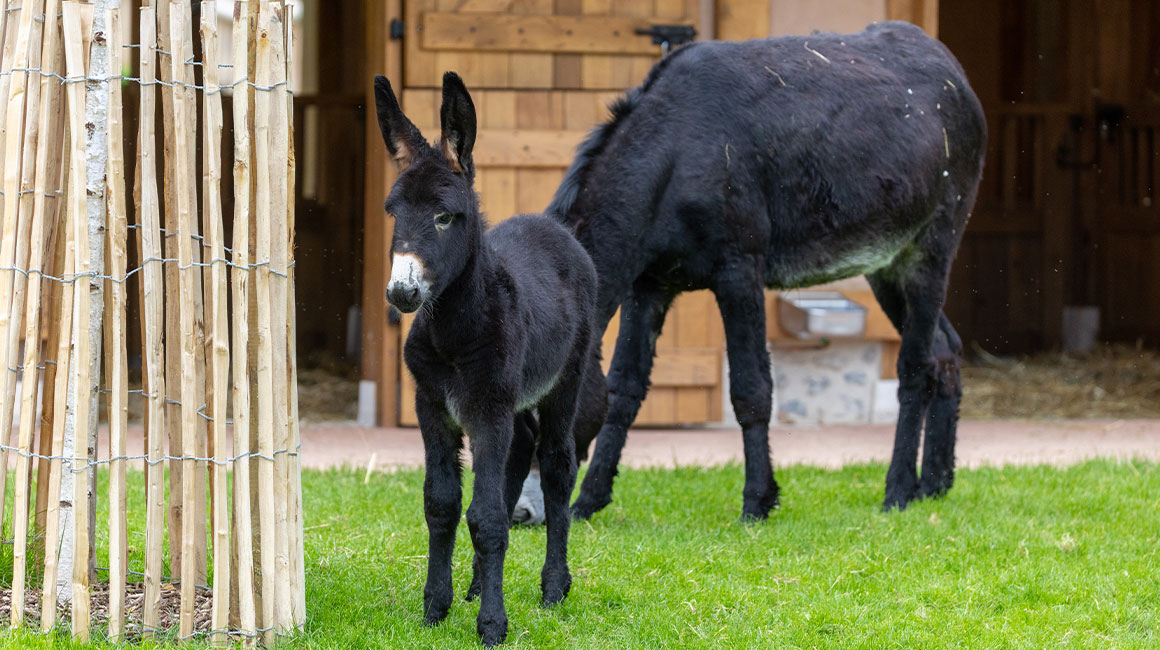
Bucolia’s foal
Many other babies to discover
The year has also seen many other births:
- 2 pygmy marmosets
- 2 guereza colobus monkeys
- 1 bongo
- 1 Javan langur
- 1 Caribbean manatee
- 3 red kangaroos
- 5 Humboldt penguins
Births in the service of species conservation
Beyond the emotion they evoke, these births illustrate the role played by Beauval in the conservation of many endangered species. Each new arrival is a success for the animal care teams and a concrete contribution to conservation programmes carried out on an international scale.
One thing is certain: with such a string of births, 2026 is already shaping up to be one of the most memorable years in Beauval’s recent history. It promises plenty of moments of emotion and wonder for visitors.
*IUCN: International Union for Conservation of Nature