Dolphins: a decisive milestone reached for the project at Beauval
Following the meeting held on Monday 16 February 2026 at the Ministry for Ecological Transition, ZooParc de Beauval announces that a major milestone has just been reached in the project for the Centre for the Study, Scientific Research and Conservation of Dolphins (CERSSD), which is scheduled to open in the first half of 2027.
An agreement between the Ministry for Ecological Transition and ZooParc de Beauval, setting out strict guidelines for this project, will be signed in a few days or weeks. It establishes a scientific, non-commercial and transparent framework for the care and management of the dolphins.
Marineland in Antibes has confirmed its intention to entrust its dolphins to the ZooParc de Beauval. The future centre will therefore be able to accommodate the dolphins from Marineland, as well as those from Planète Sauvage, which has chosen to refocus on land-based species.
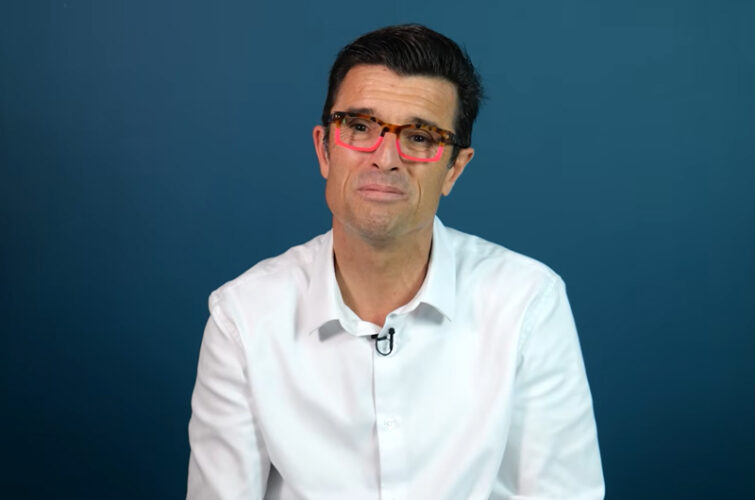
Watch Rodolphe Delord’s video to discover the commitments and ambitions behind this unique project.
A unique project in Europe, centred on animal welfare
The CERSSD will be a completely new type of facility in Europe.
Spanning over two hectares, it will comprise:
- 10 pools covering a total area of 10,000 m²
- 3 vast landscaped lagoons
- beaches, rocks, waves and natural currents
The dolphins will be able to move freely between the pools and remain out of public view.
The technologies employed (mechanical and biological filtration, ozone and UV sterilisation, without the addition of chemicals) will ensure optimal water quality.
This new centre will become a leading scientific and educational hub, dedicated to research, training and the conservation of cetaceans.
Marineland is in favour of transferring the dolphins to Beauval
Marineland in Antibes has expressed its willingness to transfer its dolphins to the ZooParc de Beauval and stands ready to formalise an agreement so that the dolphins can be transferred as soon as the facilities are operational.
Marineland also undertakes to ensure that none of its dolphins are transferred outside the European Union.
A clear and rigorous charter of commitment
The project is governed by a charter which provides, in particular, for:
- Strengthened scientific governance, including a Scientific and Technical Committee responsible for animal welfare, public information and the conservation of animal species.
- No breeding in the short term. Any future breeding may only take place on the recommendation of the European EEP* programme, for scientific reasons or to maintain social balance, without artificial insemination and following consultation with an independent Scientific and Technical Committee.
- Transfers carried out exclusively with the aim of preserving or restoring harmonious social groups, taking into account the animals’ age, sex, individual history and behaviour. Such transfers will be made exclusively to facilities meeting equivalent or higher standards. No transfer may be motivated by commercial, public relations or visitor numbers considerations.
- The possibility, for certain dolphins, of being transferred to marine enclosures when places become available, subject to scientific validation by the EEP, the necessary administrative authorisations and following consultation with the Scientific Committee. These decisions will be considered on a case-by-case basis, taking into account the individual characteristics of the animals and their ability to adapt.
- Marine enclosures must meet strict safety, health and welfare standards, at least equivalent to those at Beauval, and comply with international guidelines (IUCN, EAAM, EEP, ACCOBAMS*).
- Beauval will also be able to make its technical and scientific expertise available to these marine enclosure projects, which are regarded as complementary solutions in the evolution of European practices.
- A high level of transparency, with regular animal welfare assessments, scientific publications and a public annual report.
This framework ensures that every decision will be taken in accordance with European scientific criteria, with a single objective: the welfare of the animals.
A scientific centre dedicated to the protection of dolphins in the wild
Beyond providing a home for the animals, the CERSSD will actively contribute to research, training and conservation efforts in the wild. The centre will commit, to the best of its ability, alongside the relevant authorities, partner organisations and scientific networks, to emergency response measures for cetaceans at sea (strandings, care, population monitoring).
This cooperation may include providing veterinary and scientific expertise, technical and analytical resources, participation in monitoring and research programmes, as well as data sharing and the development of joint protocols. The objective is clear: to strengthen the protection of wild dolphin populations and make a tangible contribution to reducing the threats they face, in collaboration with stakeholders working at sea.
For over 45 years, ZooParc de Beauval has placed animal welfare at the heart of every decision it makes. The creation of CERSSD is fully in line with this approach: a responsible, innovative and transparent project, dedicated to dolphins and the conservation of marine life.
*IUCN: International Union for Conservation of Nature.
EAAM: European Association for Aquatic Mammals.
EEP: European Endangered Species Programme.
ACCOBAMS: Agreement on the Conservation of Cetaceans of the Black Sea, Mediterranean Sea and contiguous Atlantic area.