World Elephant Day: let’s protect these giants of biodiversity!
Elephants are the largest land mammals still in existence. Every 12 August, World Elephant Day serves as a reminder of the urgent need to protect these iconic giants, who are true architects of ecosystems. By shaping landscapes, dispersing seeds and creating habitats that support many other species, elephants play a vital role in maintaining the balance of biodiversity. However, poaching, habitat destruction and conflicts with human activities continue to threaten their survival in the wild.
At ZooParc de Beauval and within the Beauval Nature association, their conservation is a long-standing commitment. Support for conservation programmes in the field, scientific research and public awareness campaigns: numerous initiatives are being carried out to help secure the future of these exceptional animals.
Three species, three fragile futures
Did you know that there are three species of elephant? Two live in Africa, the third in Asia. All are now under threat.
- The African savannah elephant (Loxodonta africana), the largest land animal.
- The African forest elephant (Loxodonta cyclotis), a more elusive species, which lives in equatorial forests.
- The Asian elephant (Elephas maximus), found from India to South-East Asia.
All three species are listed on the IUCN (International Union for Conservation of Nature) Red List. The forest elephant is classified as ‘critically endangered’, whilst the African savannah elephant and the Asian elephant are ‘endangered’.
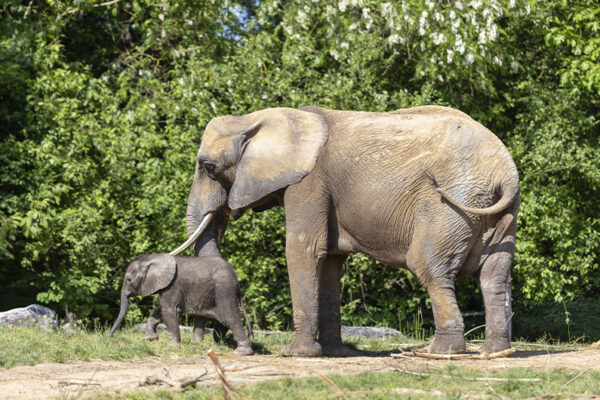
At Beauval, you can see African savannah elephants.
Find out more about African elephants
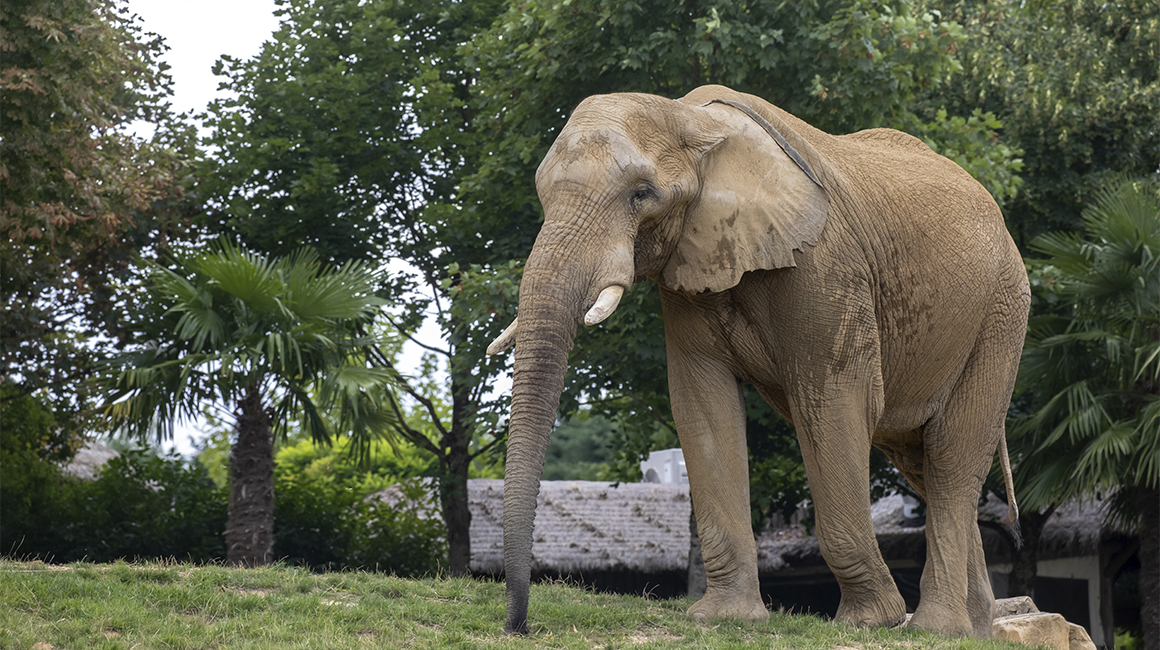
The trunk is made up of around 150,000 muscle bundles
Why are elephants under threat?
Whilst adult elephants have few natural predators, humans are now their main threat.
- Poaching. Despite the ban on the international ivory trade, thousands of elephants are still killed every year for their tusks. Ivory continues to fuel certain illegal markets, particularly for carving or the manufacture of decorative objects.
- Habitat loss. The expansion of agricultural land, infrastructure and human activities is gradually fragmenting elephants’ territories, restricting their movements and access to the resources essential for their survival.
- Conflicts with local communities. When elephants venture into crops in search of food, tensions can quickly escalate. Every year, these conflicts result in human and agricultural losses… as well as the deaths of elephants.
Beauval Nature is working to conserve elephants
For many years, Beauval Nature has been supporting several conservation programmes dedicated to elephants.
- Big Life Foundation (Kenya). In Kenya, Beauval Nature supports the work of the Big Life Foundation at the Rombo Group Ranch. Eco-ranges provide constant surveillance against poaching, whilst measures such as solar-powered electric fences and emergency interventions help to minimise conflicts between elephants and local communities.
- HUTAN (Malaysia). In Borneo, Beauval Nature supports HUTAN, which works to protect Bornean elephants (a subspecies of the Asian elephant) through scientific monitoring of individual animals, studying their movements and reducing conflicts with local communities.
- ElefantAsia (Laos, Myanmar, Cambodia and India). In Laos, Beauval Nature also continues its work to support domestic and wild elephants through the ElefantAsia programme. In particular, this programme is developing a veterinary ambulance service, carrying out research and monitoring the animals’ health.
Find out more about Beauval Nature
The ZooParc de Beauval and Beauval Nature: key players in research
The ZooParc de Beauval and its associated organisation, Beauval Nature, are actively involved in scientific research. For several years now, the Frozen Dumbo programme has been underway, aimed at preserving the genetic diversity of elephants through the collection and cryopreservation of semen from wild males in South Africa. This work helps to strengthen European breeding programmes.
At the same time, the ZooParc’s elephants have taken part in a research programme conducted in collaboration with the National Museum of Natural History, focusing on the extraordinary capabilities of their trunks. Researchers studied the grip strength, precision of movement and the manoeuvres used to grasp different foods, in order to better understand the functioning of this organ, which is composed of around 150,000 muscle bundles. This work has enhanced our understanding of the species and has also contributed to research in biomechanics and bio-inspired robotics.
In 2012, the ZooParc de Beauval made history with the birth of Rungwe, the first elephant calf conceived through artificial insemination in France.
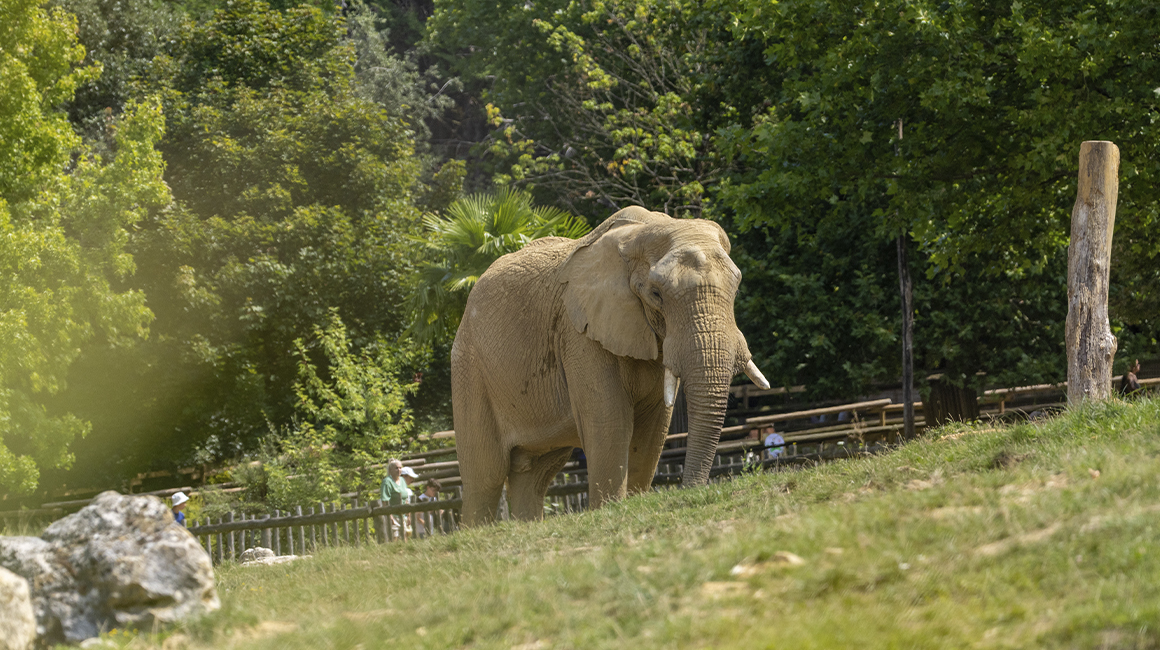
Akili, the only male elephant at ZooParc de Beauval
1 male, 6 females and 2 young elephants to see at Beauval
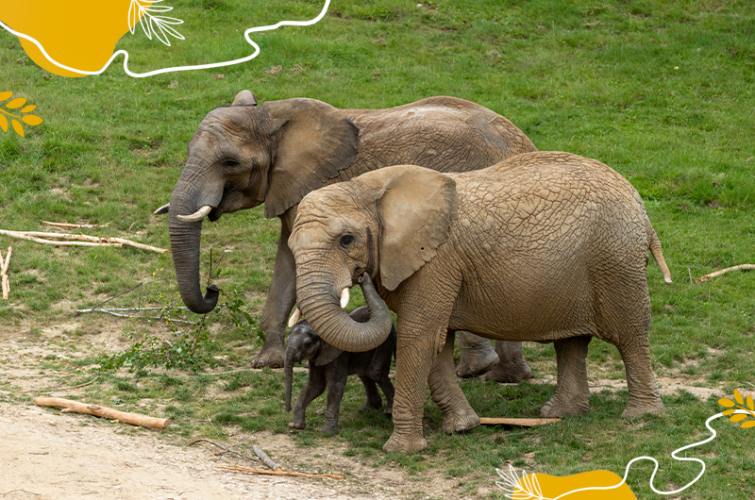
The elephant herd at ZooParc de Beauval enjoyed an exceptional year in 2026 with the birth of two females – a first in over thirteen years. Himba, born on 15 February to N’Dala, and Rosie, born on 22 March to Ashanti, are both daughters of Akili, the breeding bull who arrived at Beauval in 2021. These two half-sisters are now growing up together within the herd, surrounded by their mothers and the other females.
Every day, the two young elephants discover a little more of their vast living space and are already beginning to reveal very different temperaments. Himba, the calmer of the two, seems very at ease outdoors and is particularly curious as she explores the plain. Rosie, who is livelier, still stays very close to her mother as she discovers her surroundings. Both enjoy playing with branches, trunks and leaves, whilst beginning to imitate the adults and try out certain foods.
The herd now consists of the male Akili, the females Tana, Ashanti, Juba, M’Kali, N’Dala and Marge, as well as the two young elephants, Himba and Rosie. They all roam across three plains totalling 6 hectares, the largest area dedicated to elephants in France.
The elephants at ZooParc de Beauval also take part in European conservation programmes (EAZA Ex-situ). Following the birth of Rungwe in 2012 – the first elephant calf born via artificial insemination in France – the births of Himba and Rosie confirm the ZooParc’s major role in elephant conservation.
Watching the elephants at ZooParc de Beauval means discovering one of the most fascinating species on the planet whilst gaining an understanding of the challenges involved in their conservation.
I’m coming to see the elephants
The elephant herd at Beauval is open for sponsorship
By sponsoring the elephant herd at the ZooParc de Beauval, you’ll be making a direct contribution to Beauval Nature’s work to protect elephants and many other endangered species around the world. Your support helps fund conservation, research and protection programmes in the field.
Sponsorship is a donation to the Beauval Nature charity, 66 per cent of which is tax-deductible against income tax, subject to the conditions set out in current legislation.
Sponsorship is open to everyone thanks to a range of options, starting from €20, allowing everyone to support biodiversity according to their means. Sponsors receive regular updates from Beauval Nature, an invitation to the Annual Sponsors’ Day and, depending on the package chosen, can enjoy benefits such as an admission ticket, a ZooPass or even a special encounter with their sponsored animal.
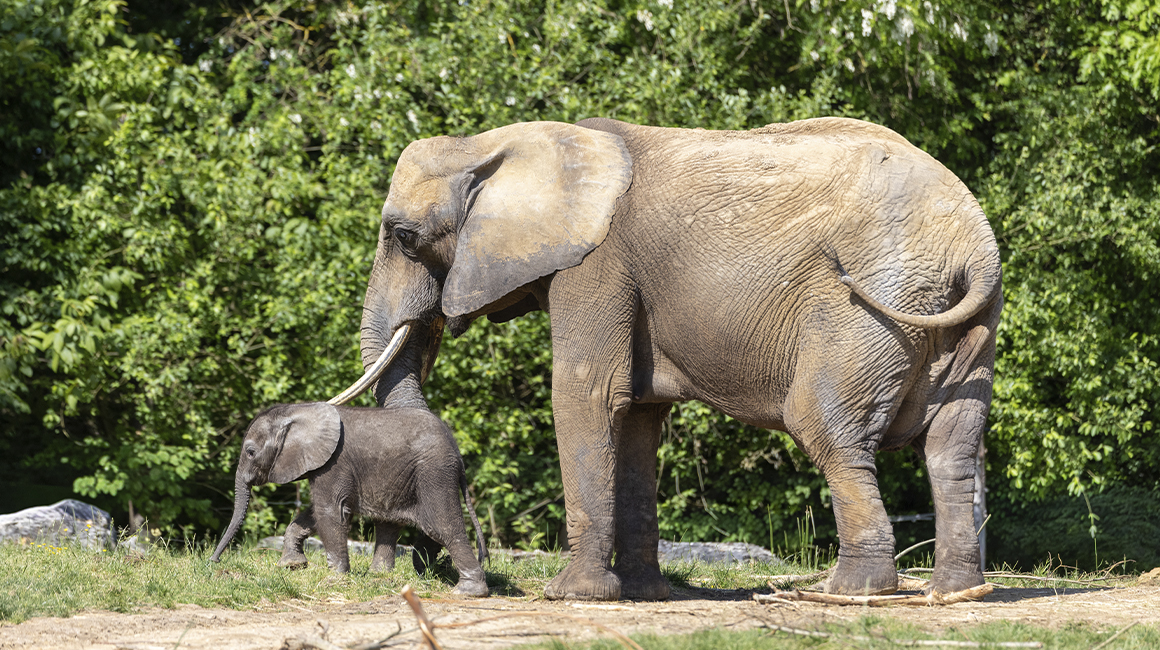
Himba and her mother N’Dala
All about elephants
Why do elephants have a trunk?
The trunk is an extraordinary organ, formed by the fusion of the nose and upper lip. It contains no bones, but is made up of around 150,000 muscle and tendon units, giving it impressive strength and great precision. Elephants use it to breathe, smell, communicate, drink, feed, bathe and even manipulate objects.
Why do elephants have large ears?
Elephants’ ears play a vital role in regulating their body temperature. Rich in blood vessels, they function as natural radiators. By flapping them, elephants cool the blood circulating through them, which helps to lower their body temperature. The large ears of African savannah elephants are particularly well-suited to hot climates.
How long is an elephant’s gestation period?
At around 22 months, the elephant’s gestation period is the longest of any land mammal. At birth, a baby elephant usually weighs between 70 and 160 kg, depending on the species. This long period of development means that calves are born already well-developed and able to quickly follow their mother within the herd.
Why are elephants essential to biodiversity?
By travelling long distances, elephants disperse the seeds of many plants through their droppings. They also clear paths through the vegetation, create clearings and promote the development of new habitats for many animal and plant species. This is why scientists regard them as true ecosystem engineers.