Birth at Beauval: a baby female manatee weighing 34 kg is born at the Dôme Équatorial
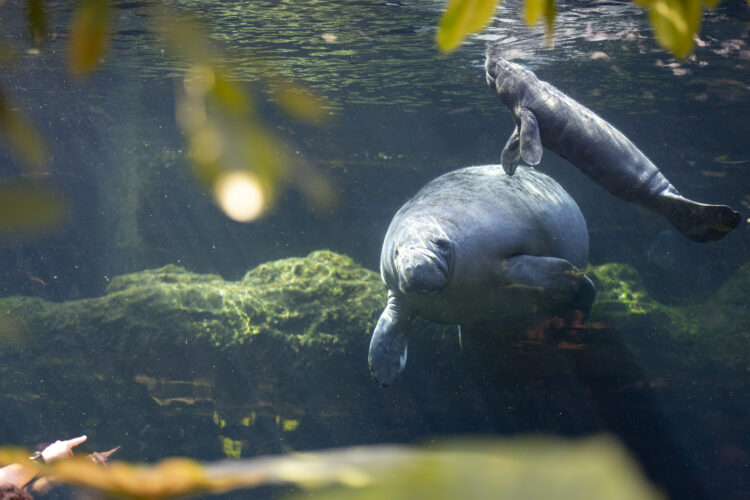
A new arrival has joined the group of Caribbean manatees at ZooParc de Beauval! During the night of 28–29 August 2026, Aceituna gave birth to a baby girl at the Equatorial Dome. Weighing 34 kg and measuring 1.30 m in length, the newborn is doing very well and is settling in peacefully with her mother in a separate pool.
A birth on the night of 28–29 August
For several weeks, the keepers had been closely monitoring Aceituna. Certain physical and behavioural changes indicated that the end of her gestation was approaching. These signs became increasingly evident over the last few days.
On 28 August, Pépino, a young male born at the ZooParc de Beauval on 17 April 2023, left the ZooParc to join Pairi Daiza in Belgium. His departure freed up the small pool, allowing Aceituna to be moved there in peace in preparation for the birth. The female settled in there immediately.
At around 5.45 pm, the keepers noticed that her waters had broken. By 8.00 pm, the calf had not yet been born. The birth therefore took place during the night, before the teams discovered the newborn with its mother on the morning of 29 August.
Pépino’s departure had temporarily reduced the group to 15 individuals. With the birth of this little female, Beauval is once again home to 16 Caribbean manatees: 8 males and 8 females.
“We’d been noticing signs for several days and thought the birth would take place at the end of the month. When Aceituna was given access to the pool, she settled in straight away,” explains Léa, an animal keeper at the Dôme Équatorial for the past five years.
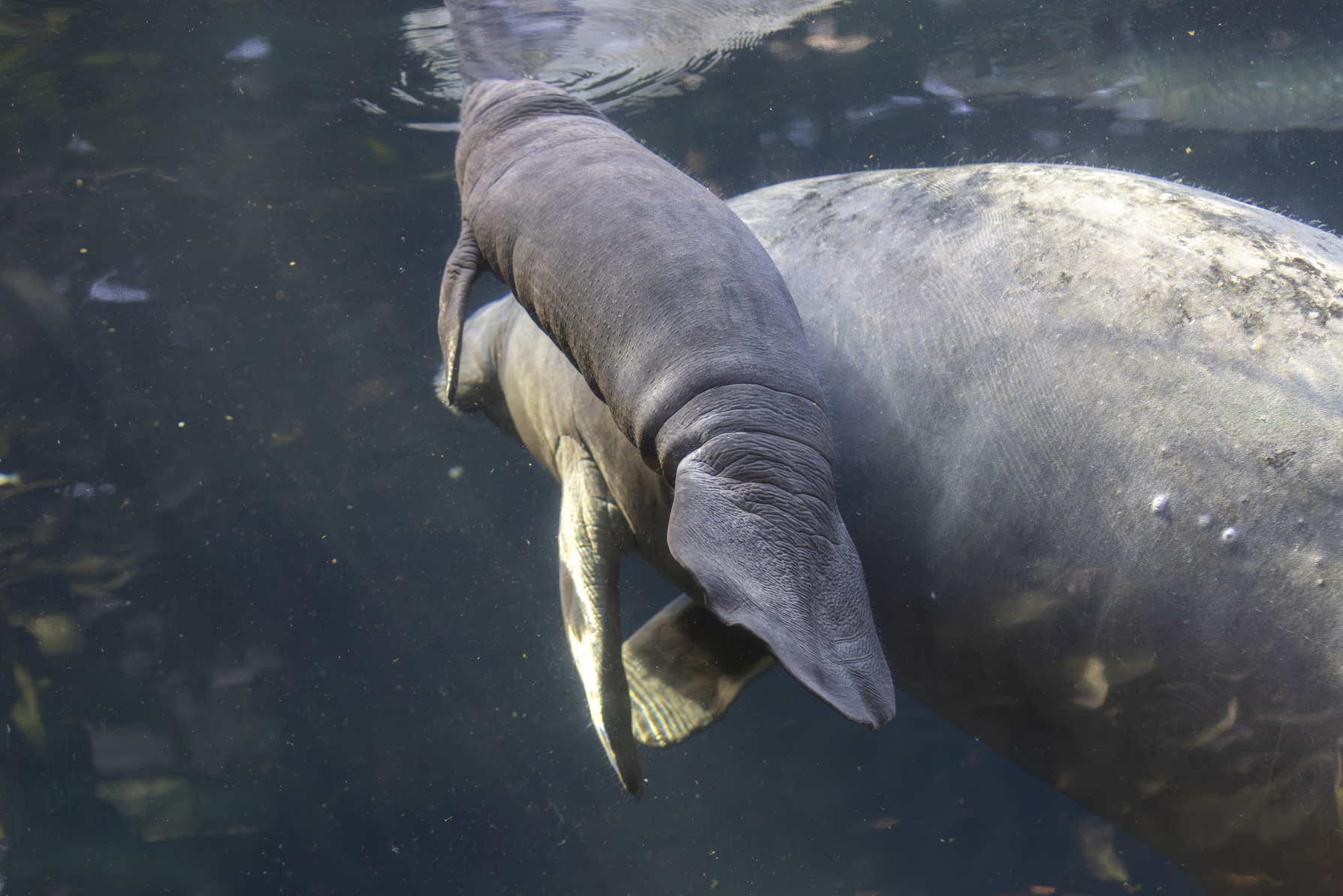
Baby manatee with her mum Aceituna
Aceituna, a devoted mother with her second calf
Born on 2 March 2016 in Madrid and arriving at Beauval in July 2020, this isn’t Aceituna’s first birth. She had already given birth to Unaï on 23 January 2022. This young female now lives at the Paris Zoological Park.
Just as with her first birth, Aceituna is displaying excellent maternal behaviour. She keeps her calf close to her at all times and regularly positions herself to make it easier for the calf to reach her teats, which are located beneath her flippers.
“Aceituna has always been very attentive with her young. She’s behaving very well with her calf, keeping her close by and guiding her perfectly during feeds,” says Léa.
A 34 kg manatee calf – a record at Beauval!
The baby’s sex was confirmed visually the very next morning: it is a female. In manatees, the position of the genital opening allows keepers to easily distinguish males from females.
On 1 September, the animal care and veterinary teams took the first measurements. The little female weighs 34 kg, measures 1.30 m and has a chest circumference of 77.5 cm.
“She’s a beautiful 34-kg baby. She’s the biggest manatee calf we’ve ever had at Beauval!”, says Léa. By way of comparison, Moana weighed 33 kg at birth in September 2023 and Gwada around 30 kg in November of the same year. A manatee calf usually weighs around 20 kg and measures over one metre at birth. This substantial weight is all the more remarkable given that Aceituna is smaller in build than some of the other females in the group, such as Femore, an animal available for sponsorship (see below).
Very encouraging early behaviour
From her very first hours, the baby has displayed all the expected behaviours. The little female has come up to the surface on her own to breathe and follows her mother around the pool. She still surfaces very frequently, but her ability to hold her breath will gradually develop over the coming weeks.
She also positions herself correctly to suckle and is particularly active. “She suckles very well and is full of energy. I’ve seen her suckle whilst swimming: she stayed firmly attached to the teat and, as she moved forward, made Aceituna pivot,” says the keeper.
As she took her colostrum naturally and quickly enough, no supplements or bottle-feeding were required. The keepers simply provided extra supervision for just over an hour on the first morning. After checking that the calf was breathing, suckling and moving about correctly, they were able to resume their usual daily monitoring routine.
A calm pair in a separate pool
To ensure their peace and quiet and to make monitoring easier, Aceituna and her calf will remain temporarily in a pool separate from the rest of the group. In particular, the keepers will monitor the calf’s weight. A slight loss is normal during the first few days, but her weight should then stabilise and begin to increase.
If her development continues as normal, she may be integrated into the rest of the group in about a month’s time.
The little female does not yet have a name. The keepers will soon draw up a list of suggestions before holding a vote amongst the team. Whilst we wait to find out her name, you can already watch the pair in the small pool at the Equatorial Dome!
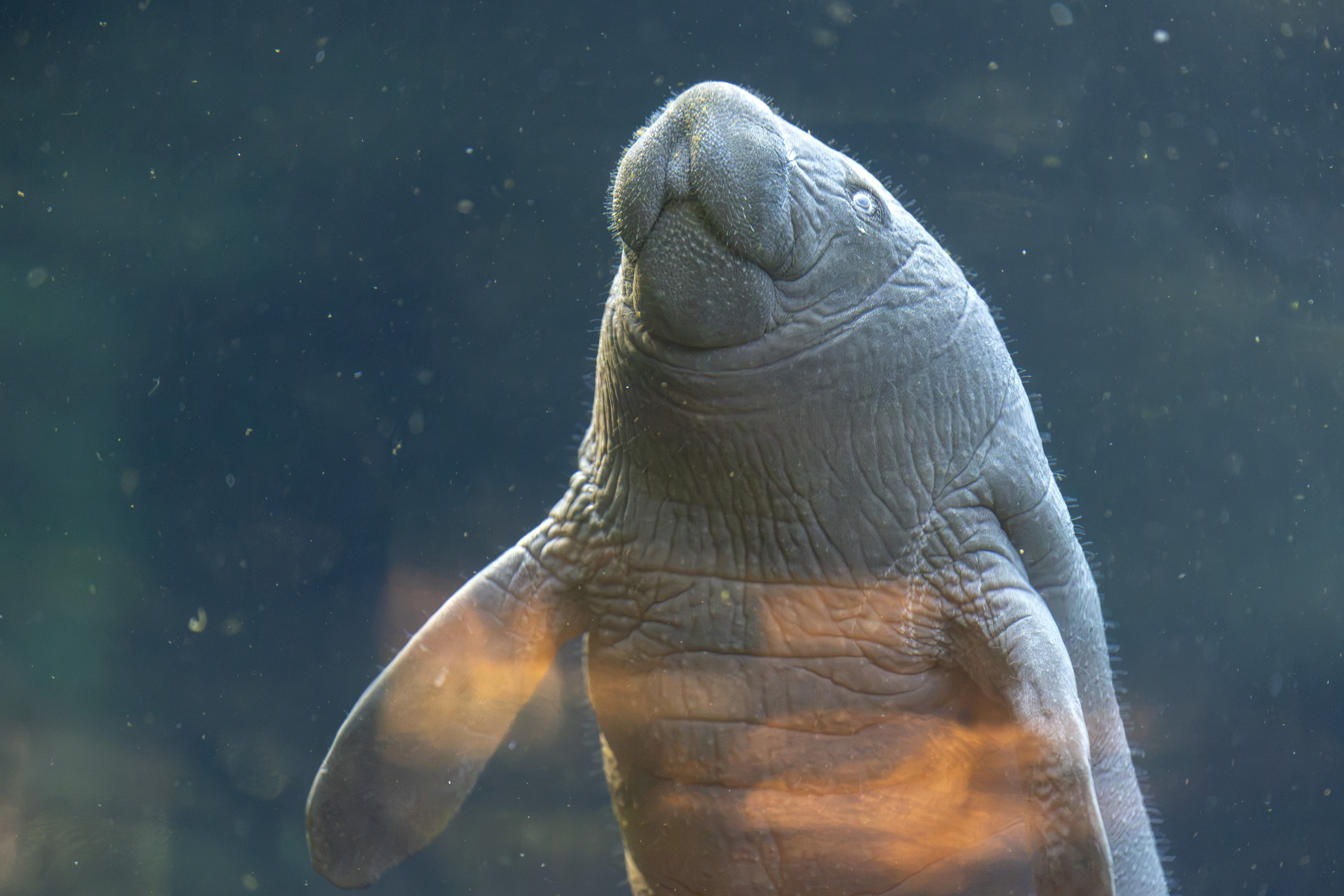
Baby manatee
Beauval, a leading centre for manatee breeding
Residing at the ZooParc since 1997, the Caribbean manatees now live in a 1,750 m³ pool at the Equatorial Dome. Beauval is home to one of the largest groups of manatees on display in Europe and has extensive experience in the breeding and monitoring of the species.
This new birth is the second recorded at Beauval in 2026, following that of Machtou, the son of Lolita and Humboldt, on 12 January. It once again demonstrates the expertise developed by the animal care teams in supporting the females and their young during this crucial period.
Listed as ‘Vulnerable’ on the International Union for Conservation of Nature’s Red List, the Caribbean manatee also benefits from an EAZA ex situ programme. This programme helps to maintain a genetically healthy population within European zoos and to improve scientific knowledge of the species.
Find out more about the Caribbean manatee
Sponsor Femore and protect biodiversity
Do you have a soft spot for manatees? Become Femore’s sponsor for a year and help fund the biodiversity conservation programmes supported by Beauval Nature. There are seven sponsorship packages available, starting from €20, with different benefits depending on the amount you choose: a certificate and photo of your sponsored manatee, information leaflets, the Beauval Nature newsletter, an admission ticket, a ZooPass, an invitation to Sponsors’ Day or even a special meet-and-greet with your sponsored manatee. Sponsorship is a donation that is 66 per cent tax-deductible against income tax.
Frequently asked questions: everything you need to know about the Caribbean manatee
Where does the Caribbean manatee live?
The Caribbean manatee lives in the Western Atlantic, from the coast of Brazil to the south-east of the United States, including the Caribbean and Central America. It inhabits marine, brackish and freshwater habitats, including bays, estuaries, lagoons, rivers and canals.
What does the Caribbean manatee eat?
Primarily herbivorous, the manatee feeds on seagrass and many other aquatic plants. It can consume an amount of vegetation each day equivalent to 5–10 per cent of its body weight, earning it the nickname ‘sea cow’.
How big and how heavy is a Caribbean manatee?
An adult manatee is generally around 3 m long and weighs between 200 and 600 kg. At birth, a calf measures over one metre in length and usually weighs between 20 and 30 kg. The female calf born during the night of 28–29 August 2026 at Beauval weighed a record 34 kg and measured 1.30 m.
How long is the gestation period for a manatee?
The gestation period generally lasts between 12 and 14 months. The female usually gives birth to a single calf, as twin births are very rare. The calf may begin to eat plants after a few weeks and gradually becomes independent in its feeding. However, it may continue to suckle from its mother until the age of 2, without relying exclusively on her milk for nourishment.
Why is the Caribbean manatee endangered?
Listed as ‘Vulnerable’ on the IUCN Red List, the Caribbean manatee is mainly threatened by collisions with boats, habitat degradation, pollution and entanglement in fishing nets. Its low reproduction rate slows down population recovery.