World Rhino Day: let’s protect these horned giants!
Every 22 September, World Rhino Day serves as a reminder of the urgent need to protect these endangered species. Whether it has one or two horns, the rhinoceros commands respect with its quiet strength. However, it is one of the world’s most endangered animals: its populations are particularly vulnerable to poaching for their horns. In this article, we invite you to discover rhinos, their distinctive features, as well as the scale of the threats they face and the measures put in place to protect them.
5 species worldwide, 2 at Beauval
There are five species of rhinoceros in the world. Three of them live in Asia: the Sumatran rhinoceros, the Javan rhinoceros and the Indian rhinoceros. The other two, namely the white rhino and the black rhino, are found in various African countries.
At Beauval, you can see three white rhinos in the African Savannah:
- the male Smoske,
- the females Satara and Mafunyane.
Five Indian rhinos can be seen in the Asian Plains:
- the females Henna and Saathi,
- their respective calves, Neytiri and Bahïs,
- the male Sonaï.
It’s easy to tell them apart: white rhinos have two horns, whilst Indian rhinos have just one!
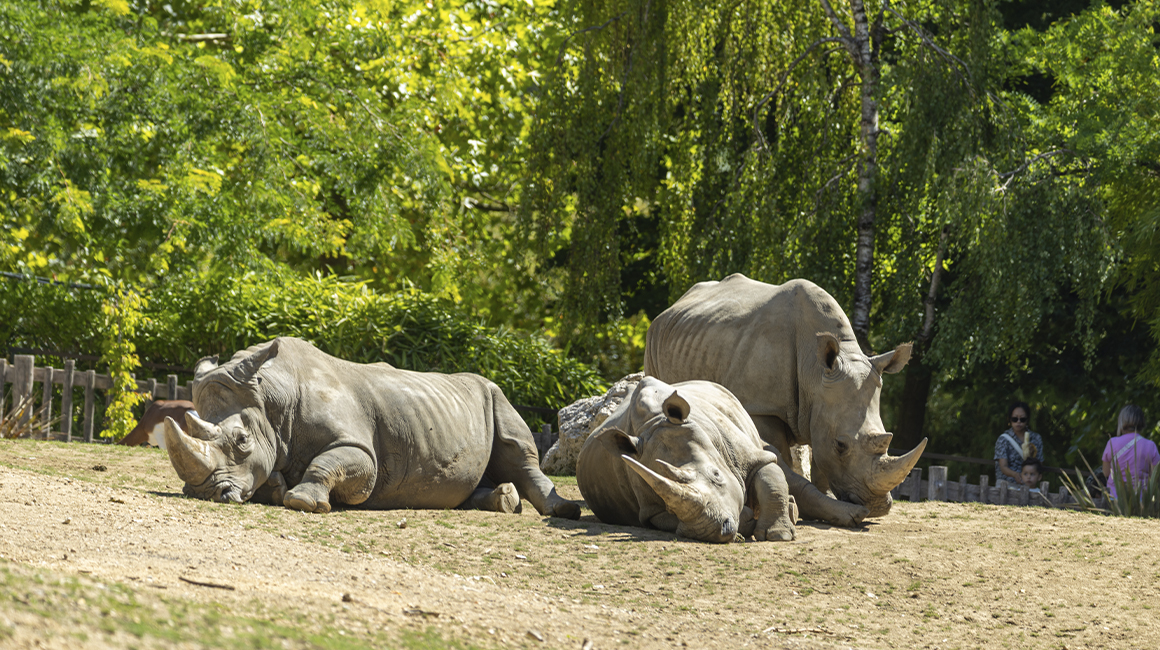
Our three white rhinos enjoying a sunbathe in the African Savannah
The white rhino, the most imposing of them all
Weighing up to 3.6 tonnes – the equivalent of three cars – the white rhinoceros is the fourth-largest land mammal, after the three species of elephant. The southern subspecies, which you can see at Beauval, was historically found throughout southern Africa. Its range has since shrunk significantly. It is now found in South Africa, which is home to over 80 per cent of its population, as well as in Botswana, Eswatini, Mozambique, Namibia, Zimbabwe, Kenya, Uganda and Zambia.
Its decline is primarily linked to poaching for its horn. From India to China, its horn has long been believed to possess protective, healing or invigorating properties: some beliefs even went so far as to recommend placing a rhinoceros horn under a pregnant woman’s bed to ease childbirth. Yet this horn is made solely of keratin, the same protein that makes up our nails and hair.
Over time, the scarcity of rhinos has turned their horns into a luxury commodity, sold at exorbitant prices and constantly fuelling poaching. In the early 20th century, the southern white rhino even came close to extinction: there were only 20 to 50 individuals left in the Hluhluwe-Umfolozi Reserve in south-eastern South Africa.
Thanks to the conservation measures put in place, its population grew to around 21,000 in 2012. However, the population subsequently declined: in 2017, there were around 18,000 southern white rhinos, the vast majority of which lived in South Africa. Although it remains the largest of the rhino populations, this subspecies is still threatened and its numbers are currently in decline.
Beauval Nature, the association behind the ZooParc de Beauval, provides financial support to the Poaching Prevention Academy, which equips and trains rangers to monitor and protect rhinos in Africa. In practical terms, this enables them to work safely and respond effectively to all the technologies used by poachers. The programme also helps raise awareness amongst local communities, showing them the importance of this iconic animal to its environment.
Find out more about the programme (in French)
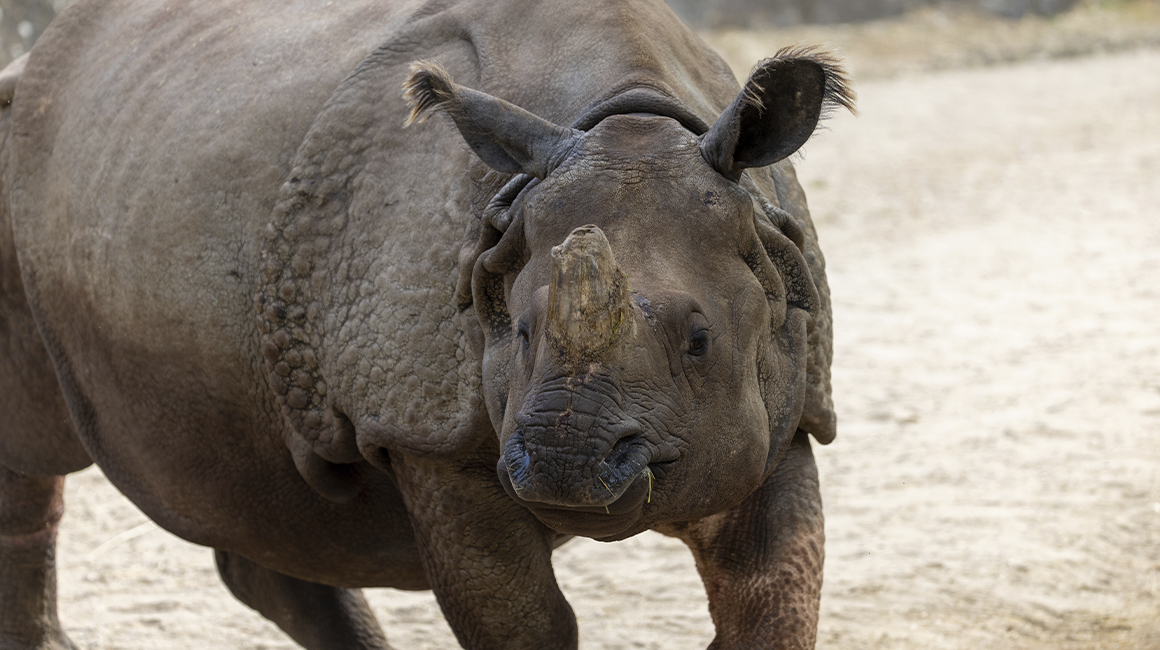
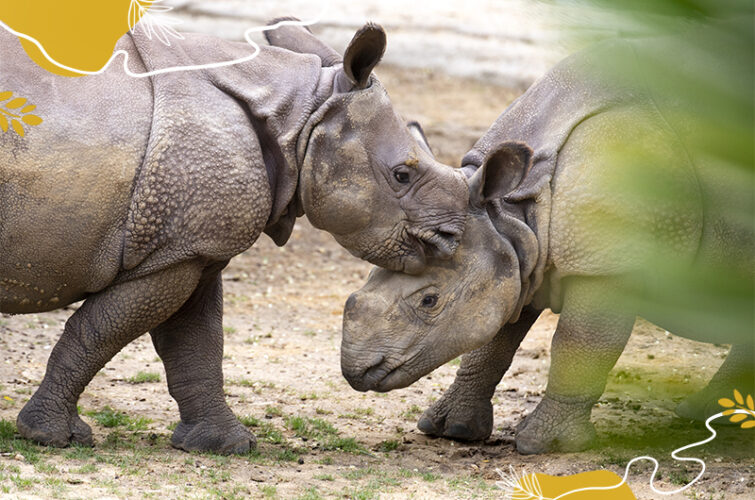
Henna and her impressive armour
The Indian rhinoceros, a colossus in armour
This species is the most imposing of all the Asian rhinos. Its unusual physique, with very thick, wrinkled skin, resembles armour. Its single horn even led the first European explorers, who observed it in the 16th century, to mistake it for a unicorn.
As with the white rhinoceros, the Indian rhinoceros is particularly threatened by poaching, as its horn is sought after to be sold on the black market for its supposed medicinal properties. But it also faces the loss of its habitat, linked to agriculture, livestock farming and various developments along watercourses. At the start of the 20th century, the population numbered only around 250 individuals. Thanks to protective measures and conservation programmes, this number has gradually increased to reach 3,600 animals in 2018. Today, 70 per cent of these rhinos live within Kaziranga National Park in India, making this population vulnerable: an epidemic or a natural disaster could have serious consequences for the entire species. Close monitoring and the ongoing fight against poaching therefore remain essential to ensure the survival and growth of Indian rhino populations.
Find out more about the Indian rhinoceros
What can we do to protect rhinos?
At an individual level, to avoid encouraging poaching and the trafficking of rhino horn, it is important not to buy products made from rhino horn, such as jewellery, decorative items or traditional remedies.
You can also help conserve rhinos by supporting our organisation, Beauval Nature, through a donation or sponsorship. By choosing to sponsor Satara, our female white rhino, or Henna, our female Indian rhino, you’ll be making a donation – 66 per cent of which is tax-deductible – which will be channelled into Beauval Nature’s biodiversity conservation programmes. In return, you’ll enjoy a range of benefits: newsletters, merchandise, wallpapers, educational resources, photos… and even access to guided tours, a free admission ticket or a free ZooPass!
I’d like to make a donation to Beauval Nature
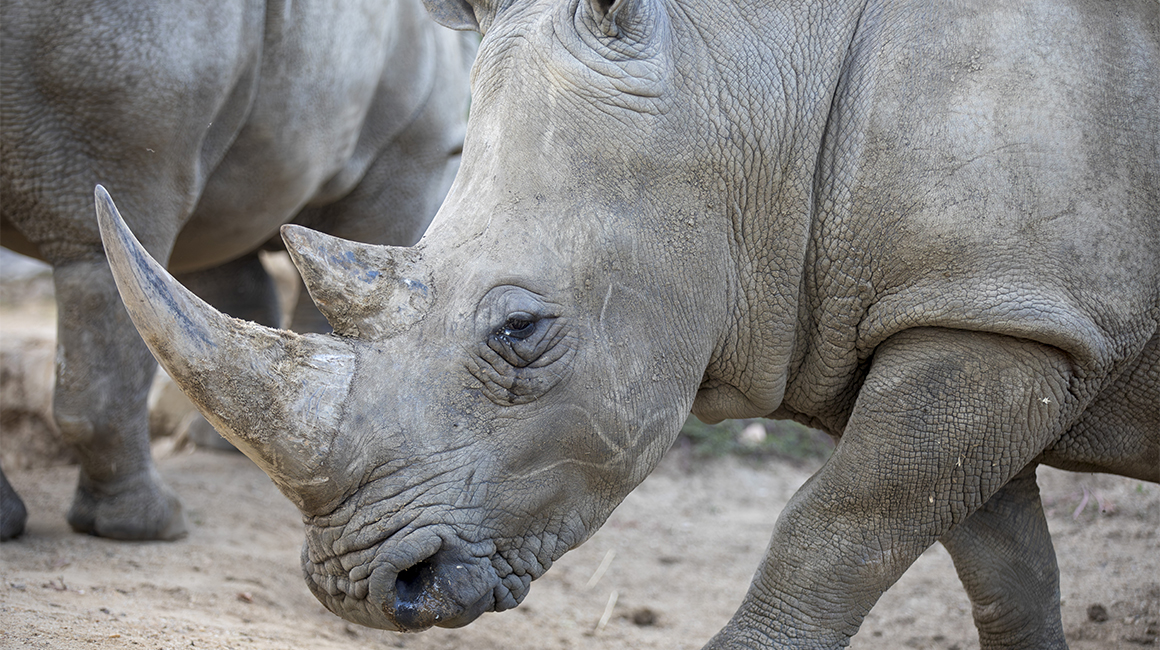
Satara, our female white rhino, is available for sponsorship
Frequently asked questions about rhino conservation
Why are rhinos poached for their horns?
Rhinoceroses are mainly poached because of the supposed protective, curative or stimulating properties attributed to their horns in certain cultures. Their rarity has also made them a luxury item sold at exorbitant prices on the black market. However, the horn is simply made up of keratin, the same protein found in our nails and hair, and has no scientifically proven medicinal properties.
Does a rhino’s horn grow back?
Yes, a rhino’s horn grows back gradually, provided its base is not damaged. Made of keratin, it grows by a few centimetres a year, usually between 3 and 6 cm. The rate of regrowth varies depending on the animal’s age and may also differ from one horn to another.
How does Beauval Nature contribute to their protection?
Beauval Nature’s support for the Poaching Prevention Academy helps fund practical initiatives in several African reserves and national parks. Teams on the ground receive training in patrolling, wildlife monitoring and first aid, as well as being provided with suitable equipment: binoculars, cameras, vehicles and first-aid kits. The programme also engages with younger generations, notably through educational materials dedicated to rhino conservation.