Beauval is hosting the IUCN symposium on combating wildlife trafficking
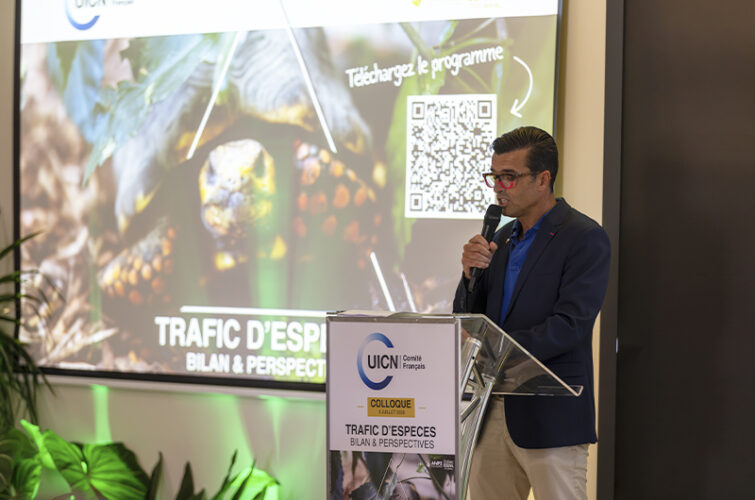
On Thursday 9 July 2026, the ZooParc de Beauval welcomed nearly a hundred participants to the symposium organised by the French Committee of the International Union for Conservation of Nature (IUCN) entitled ‘Wildlife Trafficking: Review & Outlook’, at the invitation of the French Association of Zoological Parks (AFdPZ) and ZooParc de Beauval.
Three years after the publication of the IUCN French Committee’s 25 recommendations on wildlife trafficking and organised crime, this meeting brought together government representatives, magistrates, scientists, NGOs, zoological institutions and experts to take stock of the progress made and identify priorities for the coming years.
Opened by Rodolphe Delord, president of the AFdPZ and chief executive of ZooParc de Beauval, this event highlights the sector’s commitment to combating one of the world’s most lucrative forms of trafficking. Beauval Nature, a member of the French Committee of the IUCN, also contributes to this body’s work in support of biodiversity conservation.
Seized animals: a reality on the ground
Before the symposium, IUCN members and speakers took part in a guided tour of the ZooParc de Beauval. This opportunity for discussion allowed them to see several animals rescued from illegal trafficking and now cared for at Beauval.
Among them were Maxima and Simba, two caracals seized from private individuals in France who were keeping them illegally. Maxima, in particular, had been found locked in a toilet and fed whipped cream – conditions that had profoundly altered her behaviour. After being taken into care by the Tonga Terre d’Accueil charity, the two felines arrived at ZooParc de Beauval in 2023, where they now live in an environment suited to their needs.
This visit provided a concrete illustration of the role played by zoos in taking in and caring for animals rescued from trafficking.
Essential cooperation to combat trafficking
At the opening of the symposium, Rodolphe Delord emphasised that the fight against wildlife trafficking relies on collective action: “Faced with a trade that has become one of the most lucrative forms of international crime in the world, only close cooperation between public authorities, enforcement agencies, the judiciary, scientists, nature conservation organisations and zoos will enable us to achieve lasting results.”
The discussions thus brought together several key stakeholders involved in this fight: the French Biodiversity Agency, OCLAESP, CESAN, WWF, IFAW, the Jane Goodall Institute France, Wildlife Angel, Tonga Terre d’Accueil, the AFdPZ, the French Committee of the IUCN and the National Museum of Natural History.
The presentations provided an update on the progress made since 2022, both in terms of regulation and coordination between the various stakeholders, whilst highlighting the challenges that remain in the face of constantly evolving criminal networks.
From seizure to the rehabilitation of animals
The afternoon focused heavily on the future of wild animals seized alive. Speakers detailed the various stages following a seizure: intervention by the authorities, reception, quarantine, veterinary care, behavioural rehabilitation and then referral to a suitable facility.
The Assistance Service for Seized Wild Animals (SAASS), which has been managed by the AFdPZ since October 2024, was highlighted in particular. Unique in Europe, this scheme coordinates the search for suitable care facilities for seized animals and facilitates the work of enforcement agencies at national level. It is a colossal task: in France, 1,000 live animals are seized every year, ranging from passerines to spectacled caimans and marmosets. All these animals need to be placed in one of the 450 volunteer facilities registered with the scheme, of which the ZooParc de Beauval is a part.
First-hand accounts have also highlighted that taking in these animals represents a long-term human, technical and financial commitment for specialist organisations.
Raising awareness to reduce demand
Beyond legal and operational responses, several speakers emphasised the need to tackle demand, particularly through public awareness campaigns and the fight against new forms of trafficking on the internet and social media.
As Maud Lelièvre, Chair of the French Committee of the IUCN, pointed out, raising awareness amongst travellers is paramount. Before setting off, everyone must be able to identify what they are prohibited from buying and bringing back with them, as a souvenir for example: “The main driver of trafficking in France is the end consumer. If nobody buys bushmeat, if nobody buys reptiles to put in a terrarium, there will be far less demand.”
Taking action at all levels
Furthermore, wildlife trafficking raises numerous issues relating to public health, the environment and conservation. These were discussed in detail during a round-table discussion, along with the solutions and resources available to us to combat this scourge. All participants then emphasised the importance of coordination, cooperation and communication between the various stakeholders involved. Despite the scale of the trafficking, hope and determination continue to drive those who work on this issue day in, day out.
To offer a different perspective on the subject, two young professionals spoke, opening up new avenues for reflection on the legal status of seized animals and the role of future generations in the fight against trafficking.
In conclusion, Maud Lelièvre outlined the three levels of action required. Firstly, the French Committee of the IUCN plays a vital role by enabling its members to exchange ideas and work together. At national level, strengthening resources, implementing a multi-year strategy and facilitating cooperation between the relevant departments are key priorities. Finally, at the international level, whilst the interdependence of crises is now widely recognised, a comprehensive approach must be developed to strengthen mutual support between countries and foster collective action.