The Dodoma Rocks are rising from the ground!
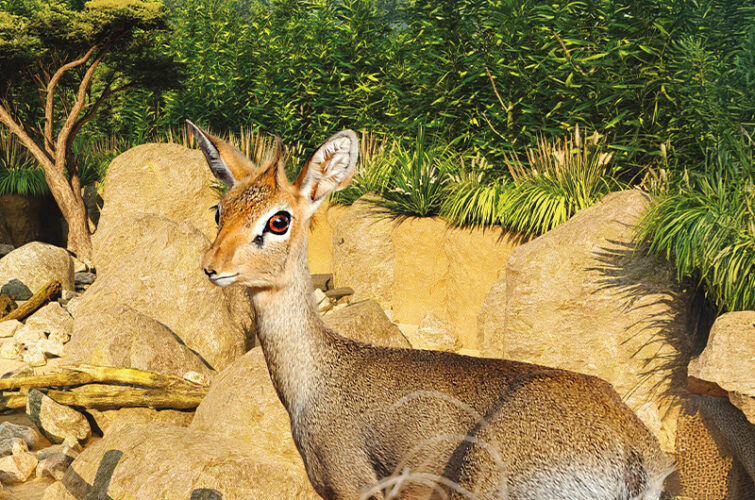
A new area has just been created at ZooParc de Beauval to house new species, most of which are native to Africa. After several months of work, the Dodoma Rocks have been completed and will allow visitors to discover several animals that will be living together from April onwards: meerkats, Kirk’s dik-diks, porcupines, bat-eared foxes…
This new enclosure is situated near the Elephant House. Rocks, vegetation, tunnels, shelters, burrows, outcrops… the African habitat has been skilfully recreated. “As with all our enclosures, we have designed this space to replicate the natural environment as closely as possible in order to optimise the welfare of our future residents. They will live here in mixed groups. The Dodoma Rocks combine aesthetic appeal with maximum visibility for visitors. “Whatever their size, we make it a point of honour to create well-maintained, sustainable spaces that meet the animals’ needs,” explains Rodolphe Delord, Chief Executive of Beauval.
Several species will be on display in their natural habitats, much to the delight of visitors.
Before seeing them ‘in the flesh’, find out a little more about these mammals from the African continent.
- Meerkats, Suricata suricatta, 8 females.
Native to the arid and rocky regions of southern Africa, the meerkat is a small mammal known for its communal lifestyle. With its upright posture, black-rimmed eyes and stripes on its back, it is easily recognisable. Highly sociable, it lives in well-organised colonies where each individual has a specific role: keeping watch, hunting, looking after the young… To shelter, meerkats dig or reuse elaborate burrows. Their diet consists mainly of insects, but they will also eat small reptiles or scorpions, which they skilfully disarm. Behind their endearing appearance, these animals can prove formidable, especially when it comes to defending their territory against another colony. - Kirk’s dik-dik, Madoqua kirki, 1 male and 1 female.
The Kirk’s dik-dik is a small antelope, standing about 40 cm tall and weighing between 4 and 6 kg, making it one of the smallest antelopes in Africa. It lives in savannahs and wooded areas, where it often hides in dense vegetation to escape predators. It is a shy and solitary animal, but can also form small family groups. The dik-dik is herbivorous. It is most active in the early morning and late afternoon, and likes to bask in the sun during the cooler parts of the day, particularly after chilly nights. When it feels threatened, it lets out a high-pitched cry to alert other dik-diks nearby. Thanks to its small size and speed, it is quite difficult for its predators to spot and catch. - Cape porcupine, Hystrix africaeaustralis, 2 females.
A new species at ZooParc de Beauval, the African porcupine is a large rodent easily recognisable by the long quills covering its back and tail, which it uses mainly to defend itself against predators. This porcupine is nocturnal, meaning it is mainly active at night when it forages for food. It is herbivorous and feeds on fruit, leaves, bark and roots. Although it is rather slow, it uses its quills as a weapon of defence, turning towards its enemy to prick it. Cape porcupines like to hide in burrows or crevices during the day to protect themselves from the heat. They are solitary animals that generally live alone or in small family groups. - Otocyon, Otocyon megalotis, 1 male and 1 female.
The otocyon, nicknamed the ‘bat-eared fox’, is a small African canid recognisable by its enormous ears, which are useful both for regulating its body temperature and for hearing the slightest rustling of insects. It lives in arid savannahs, often in pairs or in small, close-knit groups. It feeds almost exclusively on termites, which it locates thanks to its keen sense of hearing and chews at an impressive speed thanks to its highly efficient jaws. Highly sociable, the otocyon communicates using its tail, ears and small cries. Adaptable, it adjusts its behaviour according to the season and seeks shelter when it is too hot or too cold. Although it is still classified as ‘Least Concern’, it is threatened by rabies, hunting, roads and human expansion.
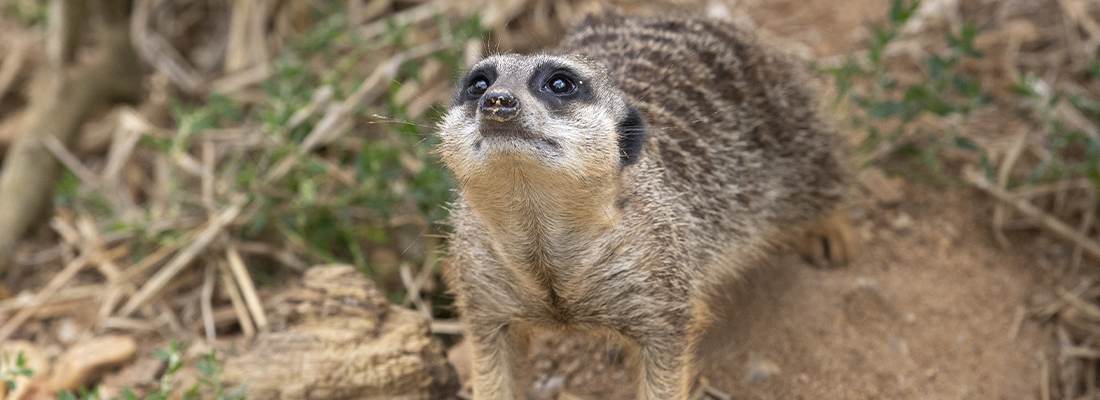
Meerkats
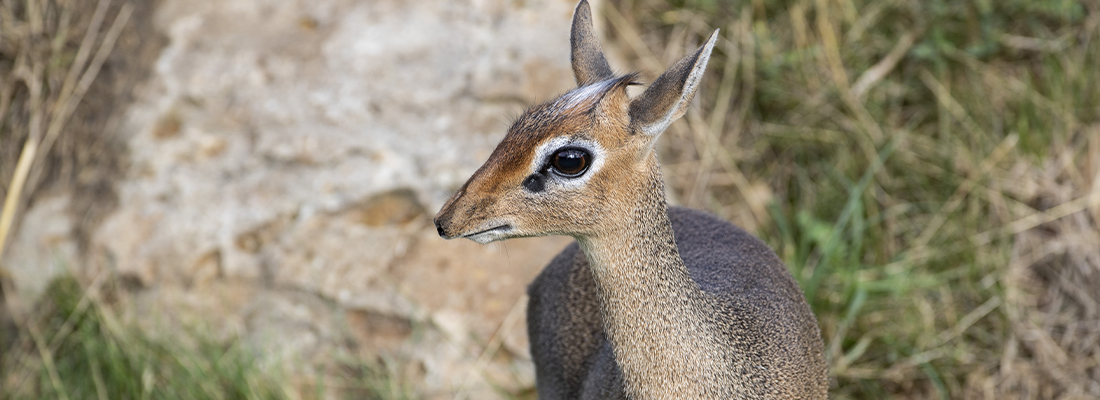
Kirk’s dik-dik
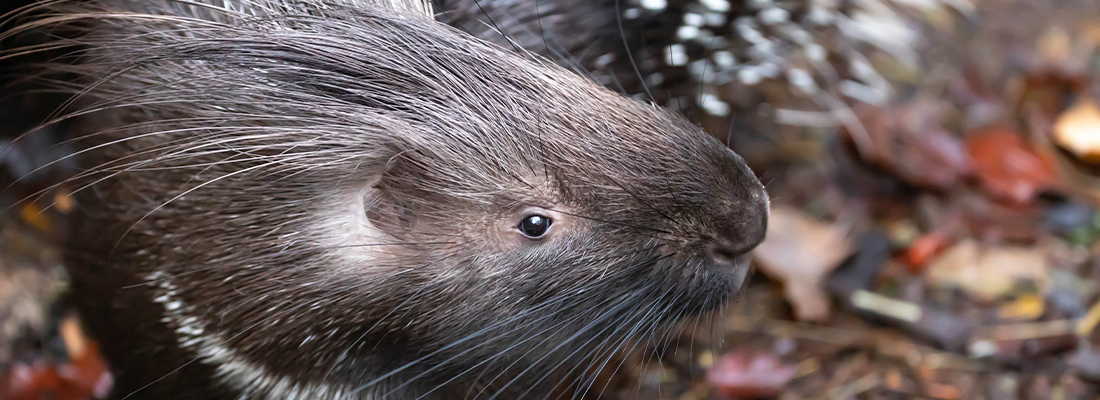
Porcupine
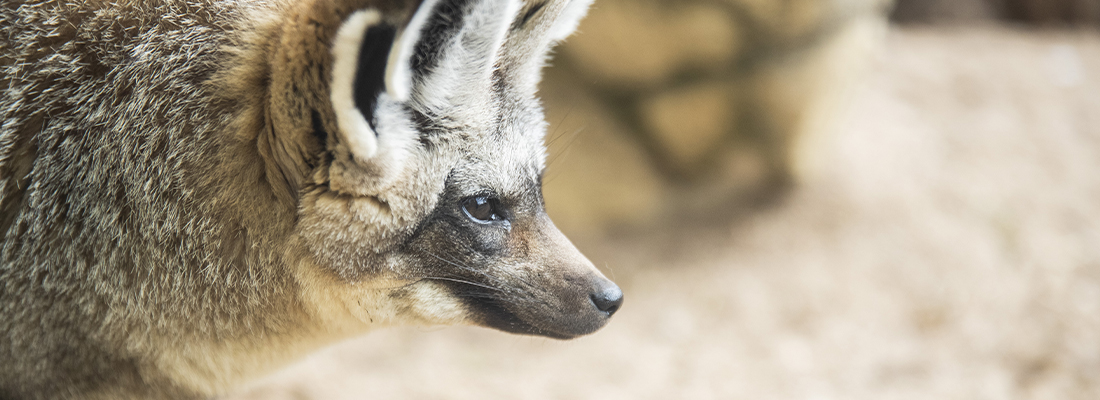
Otocyon
So, to discover these agile and swift little animals, head to the Dodoma Rocks next to the Maison des éléphants!