13 Great Bustards reintroduced in Indre-et-Loire to save the species
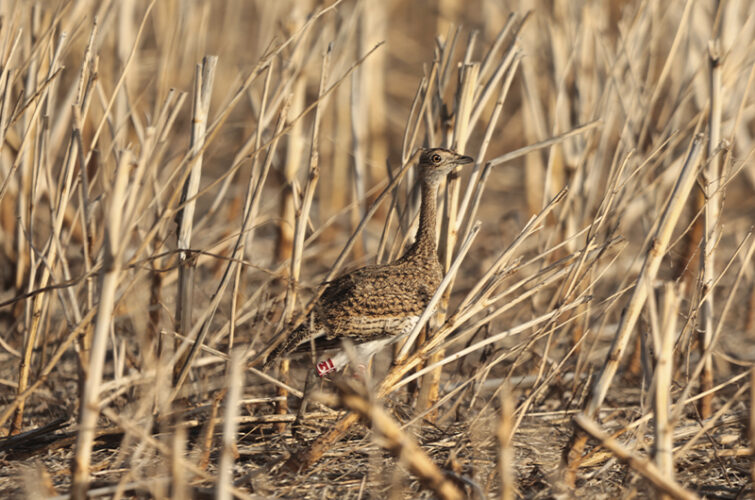
On 31 August 2026, 13 young little bustards were released in the commune of Luzillé, in the heart of the Touraine countryside, as part of a programme to bolster the wild population. Among them were birds cared for by the Beauval Nature Care Centre, as well as others from the conservation breeding programme at the Zoodyssée wildlife park, located in the Deux-Sèvres department. This initiative marks another important step in the conservation of this species, which has become very rare in the Centre-Val de Loire region.
16 eggs entrusted to the Beauval Nature Care Centre
It all began in June. Thanks to extensive field surveys, six little bustard nests were located and protected within the Champeigne Special Protection Area (SPA). To locate them, the partners used a range of techniques: remote observation, ground searches, drones, thermal binoculars and tracking of birds fitted with GPS tags.
In total, 16 eggs were collected and then handed over to the Beauval Nature Care Centre between 3 and 26 June as part of the protocol under the National Action Plan for the species, in order to protect the broods from predation. They were immediately placed in an incubator and monitored daily by the carers, who weighed and examined them regularly to track the embryos’ development.
Eight of them were returned to their nest under their mother, who had continued to brood dummy eggs in their absence. The other eight were kept until they hatched, and the chicks were reared at the Care Centre, to be released into the wild at a later date.
Find out more about the Beauval Nature Care Centre (in French)
Careful attention at every stage of their development
The first few days required a particularly high level of care. Kept warm in a brooder, the chicks were fed every hour for seven to ten days. They were fed a diet of suitable plants, insects and pellets using tweezers.
This period proved challenging for some of the chicks, who suffered from digestive problems. Close monitoring and appropriate care – including rehydration, probiotics and veterinary treatment – enabled them to overcome this critical phase. Despite all the efforts made, one of the chicks sadly died due to significant developmental problems.
The other seven gradually became more independent. They were first moved to a small aviary, whilst continuing to be monitored four times a day and kept warm at night. From around twenty days old, they were moved to a large pre-release aviary. Their food, including live insects, was then scattered around the enclosure to encourage their natural behaviour.
To minimise their habituation to humans, the carers wore camouflage clothing during their interactions. This was an essential precaution to prepare these birds for independent life in their natural habitat.
A much-anticipated return to the Champeigne plains
On 31 August, 13 young little bustards, cared for by the Beauval Nature Care Centre and Zoodyssée, were released at Luzillé, within the Champeigne Special Protection Area (SPA).
Eight of them are fitted with GPS transmitters. These trackers will enable specialists to monitor their movements, observe how they integrate with the wild little bustards in the vicinity and, in the coming months, confirm when they set off on their migration.
This operation follows on from an initial reintroduction carried out in 2025, during which nine young birds born in a conservation breeding programme were released in Champeigne. That was the first release of great bustards to take place in the Centre-Val de Loire region.
A species threatened by changes to the agricultural landscape
Once very common in the Centre-Val de Loire region, the little bustard has all but disappeared from the area. Since the 1980s, the population of singing males in the cereal-growing plains of the central-western region has plummeted by 94%.
Changes in farming practices have drastically reduced the grasslands, fallow land and insect-rich areas that the species needs for feeding and breeding. Mechanical mowing can also destroy nests or threaten chicks, which nest directly on the ground.
To restore suitable habitats, farmers in the Special Protection Area (SPA) are committed, in particular, to establishing appropriate ground cover and implementing agri-environmental measures to adjust mowing times. These actions provide the bustards with areas where they can forage, breed and rear their young.
A vital collective effort
This release forms part of the third National Action Plan for the little bustard, running from 2020 to 2029. In the Centre-Val de Loire region, its management and strategic coordination are overseen by the DREAL Centre-Val de Loire and the Centre-Val de Loire Conservatory of Natural Areas, with technical support from the French Office for Biodiversity.
Within the Champeigne Special Protection Area (SPA), the conservation of the species relies above all on the commitment of local farmers and on the outreach work carried out under the Natura 2000 scheme. The Indre-et-Loire Chamber of Agriculture, the Indre-et-Loire Departmental Hunting Federation, the LPO Centre-Val de Loire and the Association for the Study, Protection and Management of Nature in Touraine (Sepant) work together on the ground. Their efforts help, in particular, to identify and protect nests, safeguard chicks and support farmers in creating habitats suitable for the species.
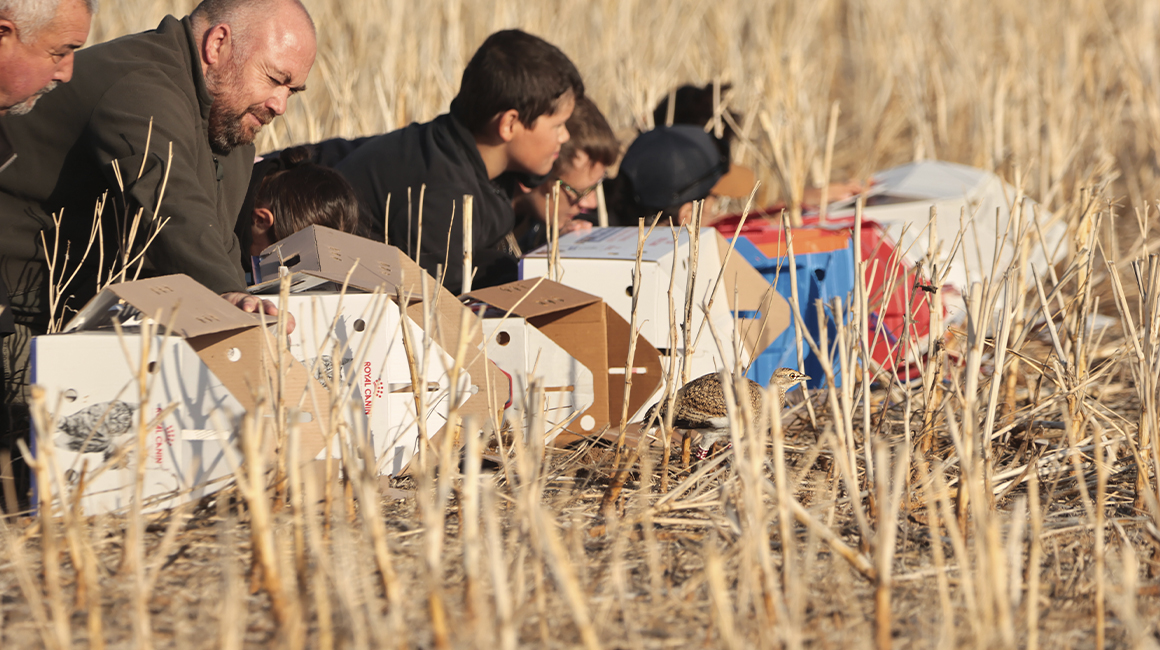
On 31 August 2026, 13 young little bustards were released, eight of which were fitted with GPS transmitters
The Beauval Nature Care Centre, the Zoodyssée wildlife park, situated in the Chizé Forest in the Deux-Sèvres, and the Haute-Touche Zoological Reserve, in Azay-le-Ferron in the Indre department, are contributing their expertise in protecting nests and rearing young birds for release as part of a conservation programme.
This collaboration between farmers, naturalists, institutions and specialist organisations is essential to enable the little bustard to permanently reclaim the agricultural plains of the Centre-Val de Loire region.
Support the Beauval Nature Wildlife Centre
From incubating eggs to rearing the chicks, this project illustrates the daily commitment of the teams at the Beauval Nature Care Centre to wildlife. Would you like to support their work? Every donation helps them to continue their work in care, rehabilitation and conservation.
Donate to the Beauval Nature Wildlife Centre
Frequently asked questions: everything you need to know about the little bustard
How can you recognise a little bustard?
The little bustard is a ground-dwelling bird of the plains, measuring around 40 to 45 cm in height, with a wingspan of up to 90 cm. Its brown and ochre plumage allows it to blend into the vegetation. In spring, during the breeding season, the male is distinguished by his black neck crossed with white stripes and by his short, characteristic call.
Where does the little bustard live and where does it migrate to?
The little bustard frequents open agricultural habitats consisting of meadows, cropland and fallow fields. It nests directly on the ground, sheltered by vegetation. Central-Western France is home to the last remaining population of migratory little bustards in Europe. Over 80 per cent of this population breeds in cereal-growing plains designated as Special Protection Areas, where fallow land favourable to the species is set aside. In autumn, the birds migrate to the Iberian Peninsula, mainly to Spain and Portugal, before returning to their breeding grounds in spring.
Why is the little bustard under threat?
The disappearance of grasslands and fallow land, the enlargement of fields, the decline in insect populations and mowing carried out during the breeding season are placing the species under severe threat. In view of the low population numbers and the threats it faces, a third National Action Plan has been implemented over a ten-year period, from 2020 to 2029. It combines habitat restoration, the adaptation of farming practices, the protection of broods, conservation breeding, the reintroduction of birds and the strengthening of wild populations.