A warm welcome to the newest arrivals at Beauval!
The end of summer was marked by several births at ZooParc de Beauval! Ring-tailed lemurs, squirrel monkeys, tamanduas, porcupines and ostriches. Come and meet the new arrivals, who are currently growing up with their parents and under the watchful eye of their keepers.
A young ring-tailed lemur to see as soon as you arrive
Born on 18 August, the young ring-tailed lemur has already reached several milestones. Initially clinging to his mother’s belly, he then settled onto her back before beginning to venture away from her to take a few steps on the ground, climb and play. This experienced female keeps a close watch over him, and the keepers have observed regular feeding sessions. The young lemur is thus developing naturally alongside her and the other members of the group, who often gather round the pair.
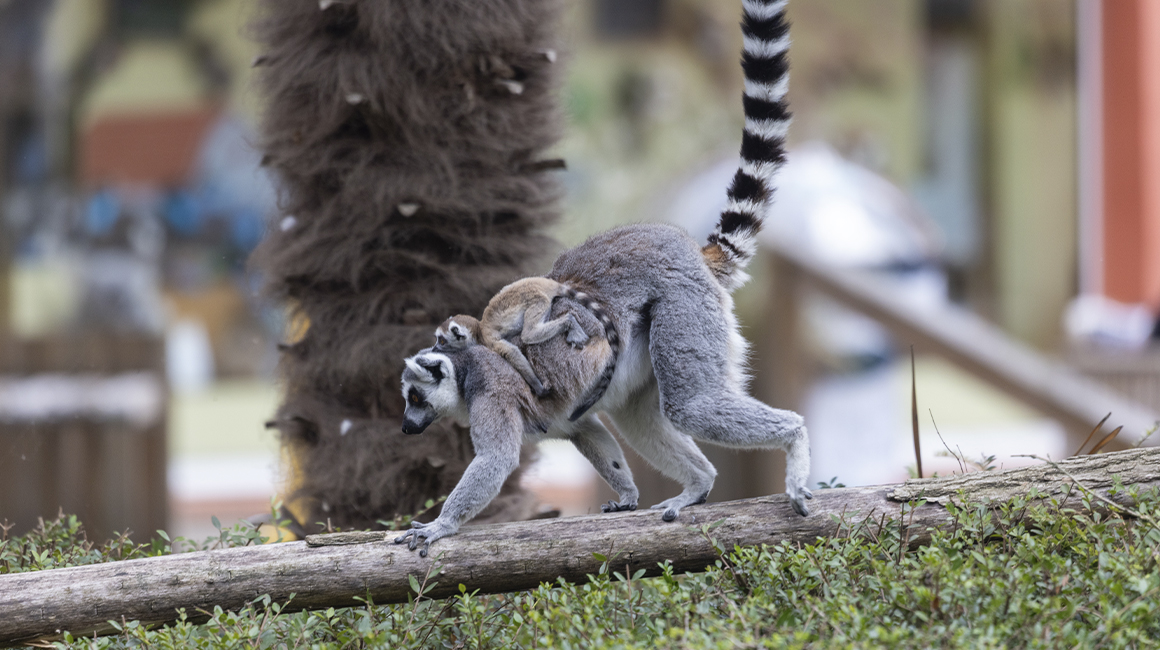
Born on 18 August, the young ring-tailed lemur is becoming increasingly independent.
For the time being, the teams are prioritising the group’s peace and quiet and are not interfering with the baby. Its sex is therefore not yet known for certain and it has not yet been given a name. You can try to catch a glimpse of it as soon as you enter the ZooParc, near the south entrance.
The ring-tailed lemur group is open for sponsorship. It’s a wonderful way to forge a unique bond with this endearing species whilst supporting Beauval Nature’s conservation work.
Two little female porcupines already full of character
Two female porcupines were born on 6 August. Both are doing very well and are still very close to their mother, who is looking after them attentively.
Although the two little ones are still very dependent, one of them is already showing signs of a strong personality! When she wants to make an impression, she stamps her foot, makes her quills quiver and can even make small intimidating charges.
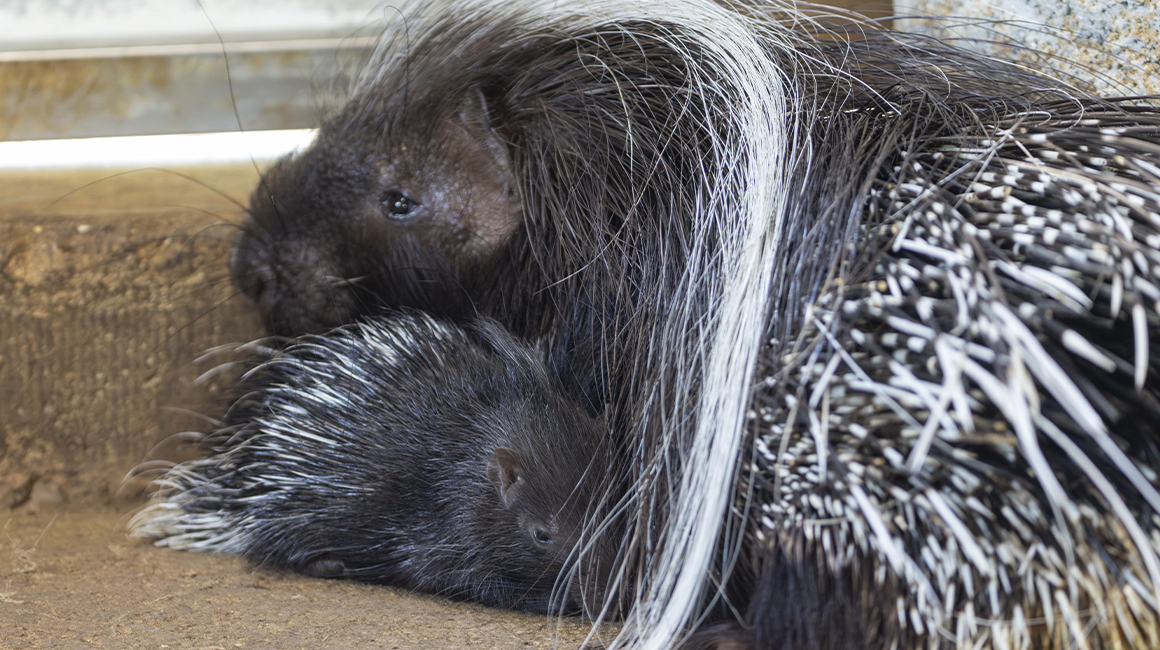
Both females are doing very well and are still very close to their mother.
Introductions to the other two porcupines have begun, although interactions are still limited. The otocyons and dik-diks, with whom they usually share their territory, will gradually be reintroduced to the porcupines.
Six marmoset babies in just a few days
The marmoset group grew considerably between late August and early September. Six babies were born in three weeks:
- Papaya’s baby, on 23 August
- Pixie’s baby, on 28 August
- Aart’s baby, on 29 August
- Alma’s baby, on 31 August
- Chip’s baby, on 3 September
- Flekje’s baby, 13 September
They are all doing well with their respective mothers. The eldest is already starting to stay awake during feedings and the enrichment activities provided by the keepers. The older brothers and sisters are also showing great interest: they regularly approach the newborns’ faces, making little vocalisations.
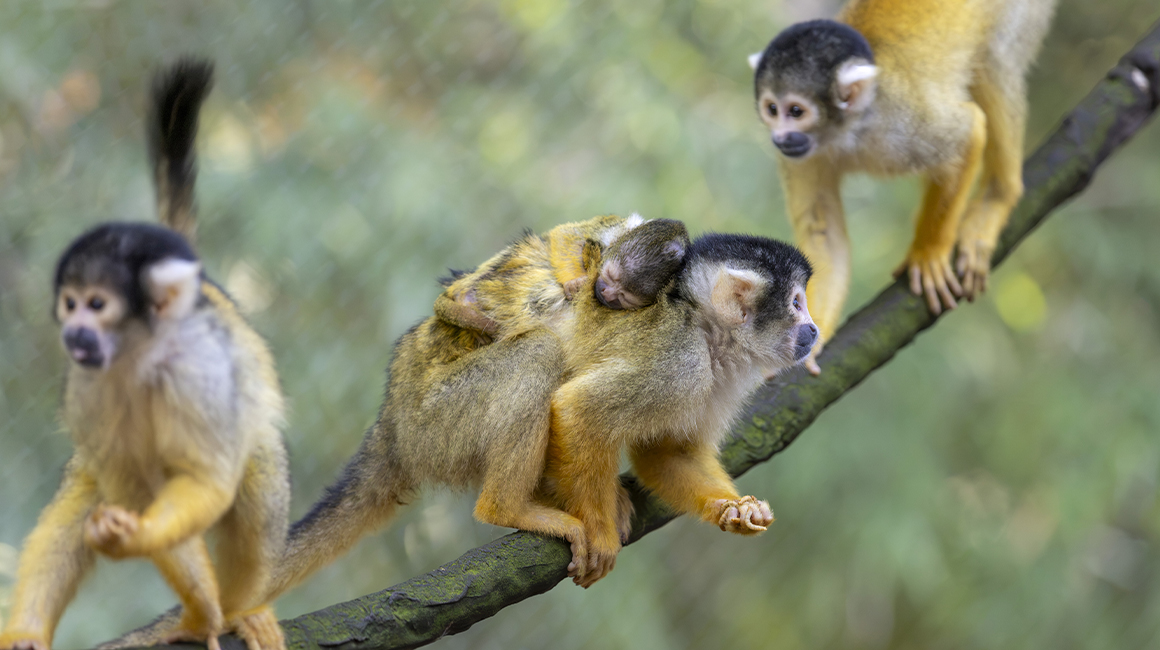
The older brothers and sisters are showing great interest.
In the wild, males only join groups of females for mating. At Beauval, Jonny is able to stay with the group all year round to continue benefiting from social interactions, provided the females accept his presence. The teams are closely monitoring their relationships and, this year, no particular tension has been observed. However, the male does not take part in caring for the young.
Still too young to fully reveal their personalities, the babies cling tightly to their mothers’ backs. One of them, however, already stands out physically: Pixie’s baby has a small tuft on the top of its head! The sex of each cub can be determined at around two months of age, before their names are chosen.
A curious but still cautious young tamandua
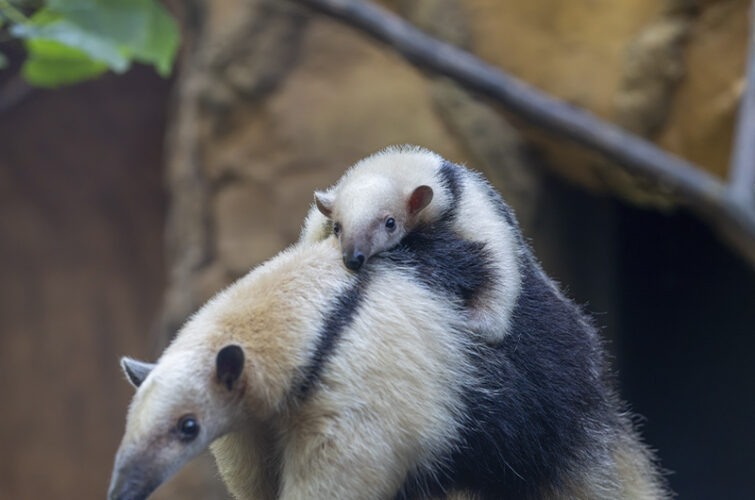
Born on 23 July, Emilia’s baby is growing before our very eyes. He weighed around 1.2 kg at the start of September – an estimate obtained by comparing his mother’s weight on her own and then with him on her back.
Growing ever more curious, the young tamandua is beginning to explore his surroundings and briefly venture away from his mother when the keepers are present. Though still a little unsure of himself, he quickly climbs back onto her back. When Emilia comes down to eat, she can place him in a high spot before returning to fetch him. She also sometimes takes him with her.
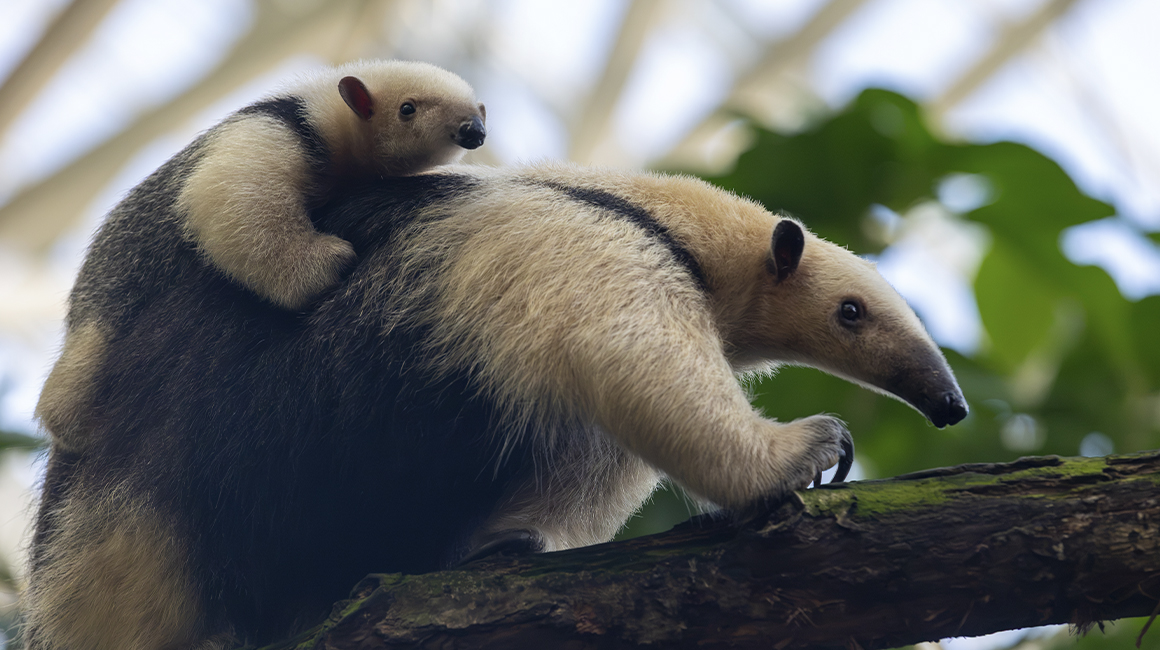
Still a little unsure of himself, the young tamandua spends most of his time on his mother’s back.
With its fur still all ruffled, the little one is discovering its new surroundings by licking them. It does not yet share its mother’s meals, but suckles regularly. The marmosets and agamis showed some curiosity when it arrived, before quickly returning to their usual routines.
Its sex, which is difficult to determine at this age, will be confirmed later. The keepers will choose a name for it shortly.
New ostrich chicks coming soon to the African Savannah
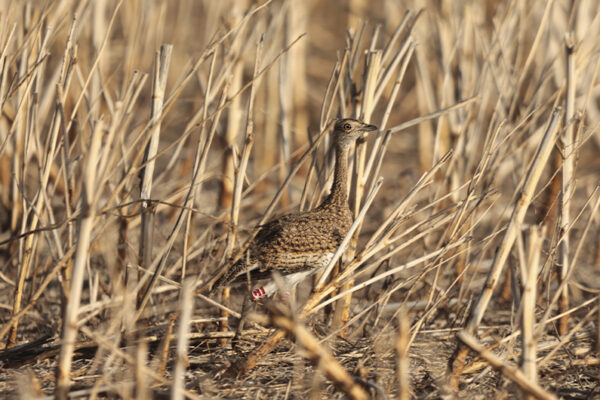
Four ostrich chicks – three females and one male – have also hatched at Beauval. Although their sex has already been determined and they have been identified, they are not yet on display to visitors. At around 8 or 9 months of age, the three females will join the African Savannah, where they will live alongside the four adult females already there. The young male, meanwhile, will leave Beauval to join another zoo, where he will in turn be able to breed.
These various births once again demonstrate the rich diversity of wildlife at Beauval. As you explore the park, the most observant visitors may spot some of these young ones with their mothers and watch them make their first discoveries.