Endangered snails reintroduced to restore the Desertas’ ecosystem
On 19 April 2026, another significant milestone was reached in the conservation of biodiversity: several hundred snails endemic to the Desertas Islands were reintroduced into their natural habitat. A low-key… yet vital initiative, carried out in the middle of the Atlantic Ocean by the Instituto das Florestas e Conservação da Natureza (IFCN), ZooParc de Beauval, Beauval Nature and Chester Zoo.
Unique, critically endangered species
Two species of snail were involved in this operation:
- Discula lyelliana (bred at ZooParc de Beauval)
- Geomitra coronula (bred at Chester Zoo)
These species are endemic to the Desertas archipelago: they are found nowhere else on Earth. Even today, they are classified as ‘critically endangered’.
Their decline dates back several decades, when the introduction of animals such as goats, rabbits and rodents severely disrupted the ecosystem. By grazing on the vegetation and weakening the soil, these animals indirectly deprived the snails of food, whilst the rodents became their direct predators.
A vital role… often overlooked
Behind their seemingly unassuming nature, these snails play a fundamental role. By turning over the soil and breaking down organic matter, they:
- recycle nutrients
- aerate the soil
- contribute to the regeneration of vegetation
They thus form the basis of the ecological balance of the archipelago’s islands. Their disappearance would have a knock-on effect on the flora and on many other species.
“Even the smallest species deserve our attention: without them, the entire foundation on which the species that depend on them thrive would disappear,” emphasises Anaëlle Loiseau, Animal Species Manager at ZooParc de Beauval.
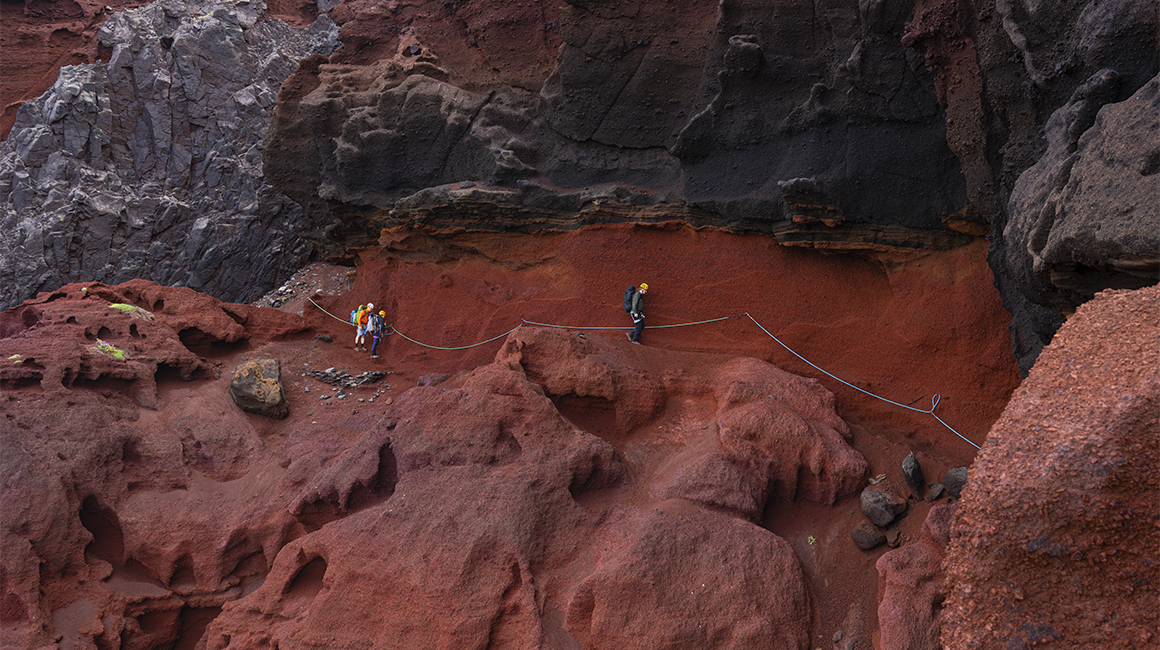
It took the teams two hours of climbing to cover 3 km
A night-time reintroduction
This second reintroduction took place on Bugio Island, in the south of the archipelago.
In total, 270 individuals of the species Discula lyelliana, bred at ZooParc de Beauval, were reintroduced, alongside 300 Geomitra coronula bred at Chester Zoo.
The animals were transported by plane and then by boat to the island, followed by a climb up steep paths.
“This may well be the most complex reintroduction we have carried out to date. The weather gave us only a short window of opportunity, and there is no jetty on the island. We had to wade straight into the water, reach the shore, put on our helmets and harnesses, and then start climbing the cliffs. It took us two hours to cover three kilometres,” explains Tamas Papp, deputy head of the invertebrate team at Chester Zoo.
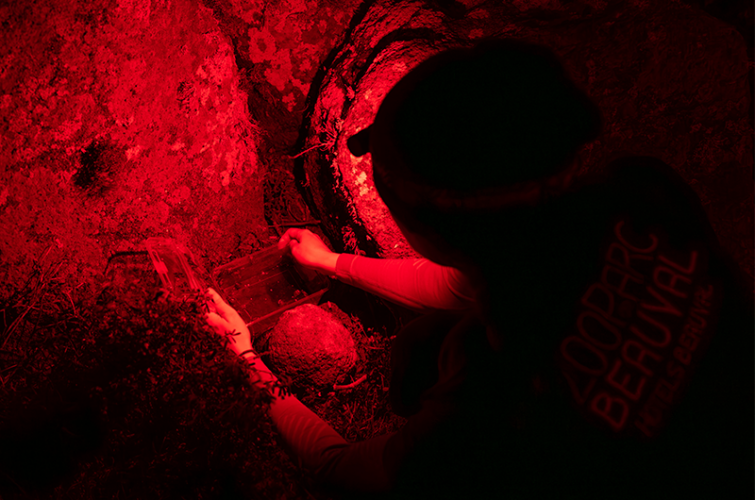
Once there, the teams set up a self-sufficient camp before carrying out the release at night, in keeping with the snails’ natural rhythm. Red-light lamps were used so as not to disturb the rare seabirds on the island, which are particularly sensitive to artificial light.
Spread across three separate areas, the snails were placed under rocks and shrubs in carefully selected spots, sheltered from the wind and with food within reach.
Despite sometimes extreme conditions, including strong winds and thick mist, the teams successfully completed the operation.
“Up there, on the plateaus, we could rarely see beyond the coast because of the mist that often hangs over the archipelago. We really felt as though we were alone in the middle of the ocean, far from any human presence. It was very relaxing,” says Anaëlle.
An international effort
This initiative is part of a wider programme that has been running for several years in partnership with the IFCN, led by conservation programme coordinator Dinarte Teixeira, and Chester Zoo.
The IFCN teams prepared for the snails’ return by controlling invasive alien species and gradually restoring their habitat. They have also identified the most suitable sites on the islands of Bugio and Deserta Grande and are monitoring the populations in the field.
For their part, the ZooParc de Beauval and Chester Zoo are carrying out conservation breeding of several species in enclosures that replicate the conditions of their natural habitat as closely as possible. Faced with an initial lack of knowledge, their specialists had to determine the snails’ diet, the most suitable temperatures and their reproductive cycles.
To date, three operations have already been carried out:
- an initial reintroduction on Bugio Island in November 2024 by Chester Zoo,
- this second reintroduction in April 2026, bringing the total number of individuals released on the island to 1,200 Geomitra coronula and 919 Discula lyelliana,
- and a population reinforcement of Geomitra grabhami in April 2025 at Fajã Grande, on the island of Deserta Grande, involving 870 individuals.
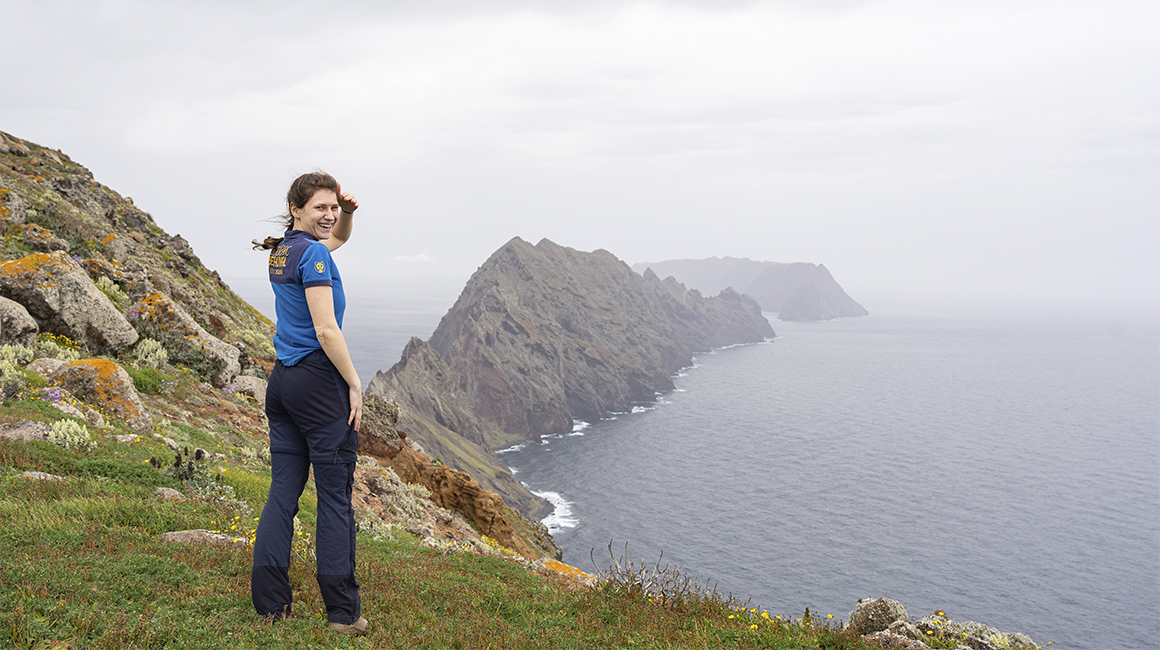
Anaëlle Loiseau, Animal Species Manager at ZooParc de Beauval, had the opportunity to visit the site
The commitment of ZooParc de Beauval and Beauval Nature
ZooParc de Beauval and Beauval Nature play a vital role: ensuring the conservation breeding of the snails to establish viable populations for reintroductions carried out on the Desertas Islands.
Beauval Nature also supports activities carried out directly in the field: monitoring snail populations, controlling invasive alien species, analysing climatic conditions and vegetation cover, developing access routes, etc.
This joint effort has already resulted in more than 1,000 snails for each of the species bred at Beauval (Discula lyelliana and Geomitra grabhami), starting from an initial stock of around fifty individuals.
Chester Zoo, a key partner in the programme
Chester Zoo is responsible for the conservation breeding of the four species covered by the programme: Atlantica calathoides, Geomitra grabhami, Geomitra coronula and Discula lyelliana. Its expertise has, in particular, helped to save the species Geomitra coronula, of which only 21 individuals had been found in the wild, all under a single rock.
The zoo is also working to establish an international network of partners committed to the conservation of these snails. One of its key objectives is to develop conservation breeding centres in Madeira, in collaboration with local communities and the authorities, in order to sustainably consolidate the populations of these threatened species.
Already encouraging results
The first reintroductions, carried out since 2024, are showing promising signs:
- an estimated survival rate of between 40 and 50 per cent (well above expectations)
- observations of breeding in the wild
- juveniles have been observed, close to both native populations and those that have been released
The snails are monitored using UV and acrylic markings, which enable them to be identified and tracked in the field.
Although the programme is still in its early stages, these results suggest that population recovery is well under way. Further monitoring and reintroduction operations are already being planned for the coming years to continue the restoration of populations across the archipelago.
A long-term project
Rebuilding an ecosystem does not happen in a matter of months. For these vulnerable species, it will take several more years to achieve long-term stability.
But every reintroduction counts.
If you’d like to support this conservation programme, you can make a donation to Beauval Nature.
Photo credit: ©Chester Zoo