World Gorilla Day: a vital campaign for their survival
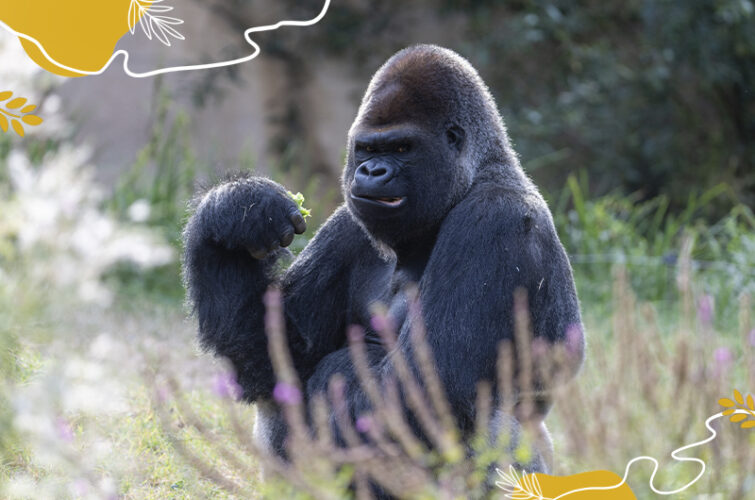
Every 24 September, World Gorilla Day encourages us to learn more about and protect these African great apes, by raising awareness of the threats facing gorillas and their forests. It covers both species, the eastern gorilla and the western gorilla, one subspecies of which lives at Beauval: the western lowland gorilla. Discover their unique characteristics, conservation efforts and the latest news about the gorillas at Beauval!
I’m coming to see the gorillas
A great ape that plays a vital role in forest ecosystems
Gorillas live in the tropical forests of equatorial Africa, from the plains up to the mountains. There are two species: the western gorilla and the eastern gorilla, each comprising two subspecies. Their habitats vary: Western gorillas are found mainly in the forests of Gabon, Cameroon and the Republic of the Congo, whilst Eastern gorillas live in the Democratic Republic of the Congo, Rwanda and Uganda.
Their diet is mainly plant-based, but its composition depends on their environment. Fruit plays an important role in the diet of western lowland gorillas, whereas mountain gorillas mainly eat leaves, stems and shoots. By dispersing the seeds of the fruit they eat, gorillas help to regenerate the forests.
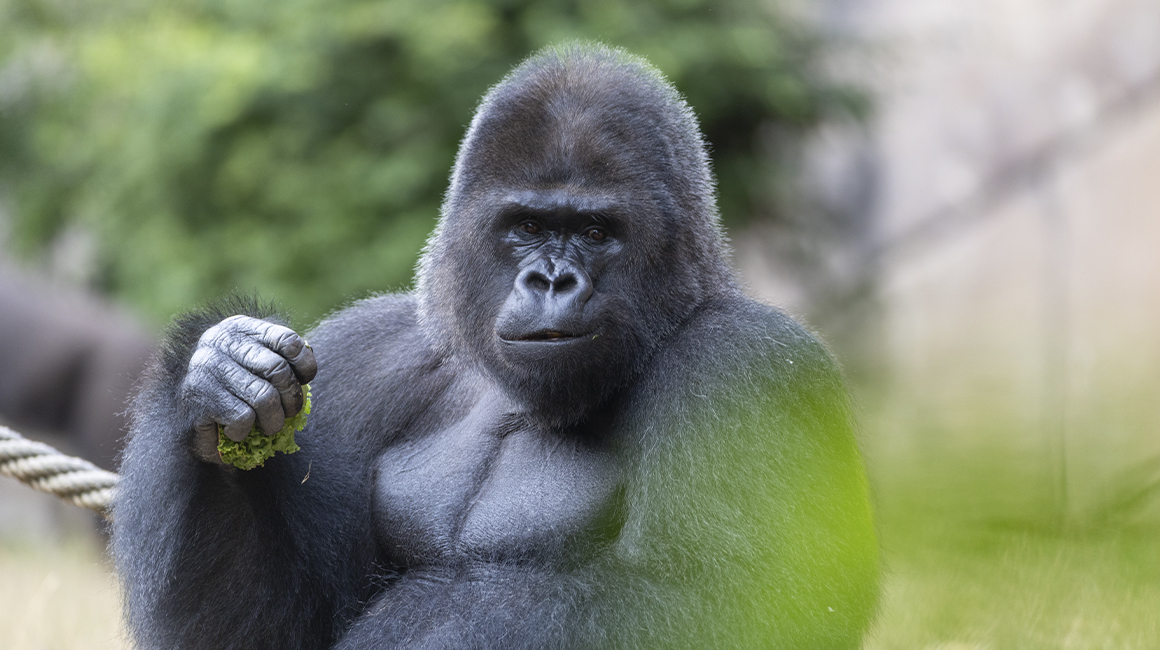
Euro, the dominant male, lives with four females.
Despite their size, they can climb trees, particularly the younger ones, who are lighter. To rest, they build nests out of branches and leaves, either on the ground or high up. Tool use has also been observed in some gorillas: a stick may be used to test the depth of the water before wading in!
In adult males, the hair on their backs turns grey, hence their nickname ‘silverback’. Groups usually consist of several females and their young centred around a dominant male (a harem), but there may also be groups of single males (bachelor groups). Vocalisations, facial expressions, postures: their forms of communication are varied. The famous chest-beating, or drumming, allows males in particular to impress one another from a distance.
Populations under threat in their natural habitat
Both species of gorilla – Eastern and Western – are classified as ‘Critically Endangered’ on the IUCN Red List. At the subspecies level, however, the mountain gorilla has been classified as ‘Endangered’ since 2018 – a lower threat level – thanks to progress made possible by conservation efforts. This is an encouraging improvement, but it does not mean that its future is secure.
Deforestation and forest fragmentation, linked in particular to agriculture, logging and mining, are reducing the gorillas’ resources and their ability to move around. Poaching and the illegal wildlife trade also pose threats. Diseases are weakening certain populations: Ebola epidemics, in particular, have severely affected the western gorillas.
These losses are difficult to offset, as gorillas reproduce slowly. A female raises her young for several years before giving birth again. Their conservation therefore requires a long-term commitment to protect both the individuals and the forests on which they depend.
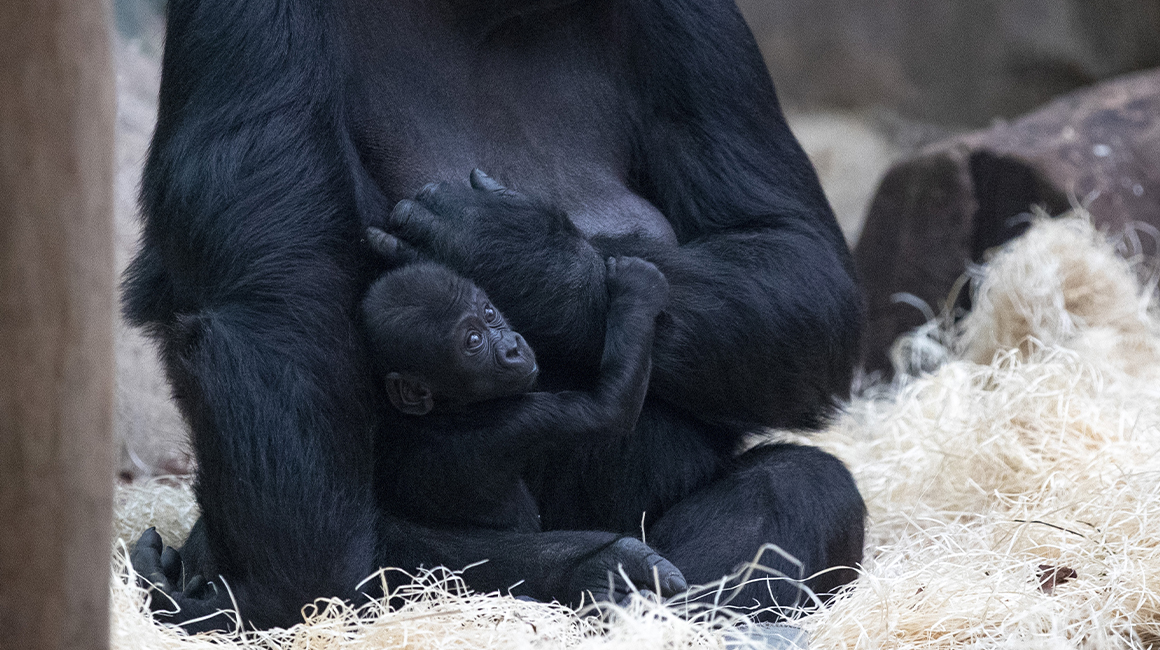
At Beauval, we have been lucky enough to witness the birth of several young gorillas, including M’Baku, born in 2018.
Beauval Nature committed to their conservation
Since March 2021, Beauval Nature has been working alongside the HELP Congo association in Conkouati-Douli National Park, in the Republic of the Congo. This area is home to a wide variety of endangered species, including the western lowland gorilla. Camera traps are used to regularly monitor their presence and gain a better understanding of the park’s biodiversity. The teams also carry out research, environmental education and awareness-raising activities amongst local communities.
Find out more about the HELP Congo programme (in French)
For several years, Beauval Nature and the ZooParc de Beauval have also collaborated with the Aspinall Foundation. In 2019, this partnership notably enabled the reintroduction into the wild in Gabon of Mayombe and Kuimba, two female gorillas born at Beauval.
On the night of 13–14 June 2021, Mayombe gave birth to Taàli, a baby female whose name means ‘hope’ in the Batéké language. Born to two gorillas who were born in zoos and later reintroduced into the wild, Taàli represents a world first and a landmark milestone for the conservation of the species. Beauval Nature continues to monitor the progress of Mayombe, Djongo and their baby.
At Beauval, 11 gorillas divided into two groups
The ZooParc is currently home to a breeding group of five gorillas and a group of six single males. Two social groups to discover during your visit.
- The first group consists of Euro, the dominant male, and four females: Kabinda, Sheila, Sawa and Anandi.
- On the bachelors’ island, Asato shares his territory with five of his sons: Mapenzi, Yamba, Kiwano, M’Baku and Kovanga, all born at the ZooParc between 2010 and 2019.
Asato, a protective father… with a few quirks of his own!
Many of you have been following Asato with affection and taking an interest in his daily life since he moved to the island of single males. So here’s some news and anecdotes shared by his keepers!
To spot him, look in front of the building or near the cave opposite Pelican Island: these are two of his favourite spots. He’s still a real foodie, especially when it comes to tomatoes or cooked sweet potatoes!
The keepers find him a little calmer since he changed territory, with fewer individuals to watch over and protect. He remains, however, very attentive to his sons, particularly the youngest, M’Baku and Kovanga. Kind-hearted, he also knows how to step in during conflicts and protect the weakest.
His sons seek out his company a great deal. Kiwano, the most independent, sometimes engages in frequent displays of strength, which Asato does not particularly appreciate: relationships evolve as the young ones grow up.
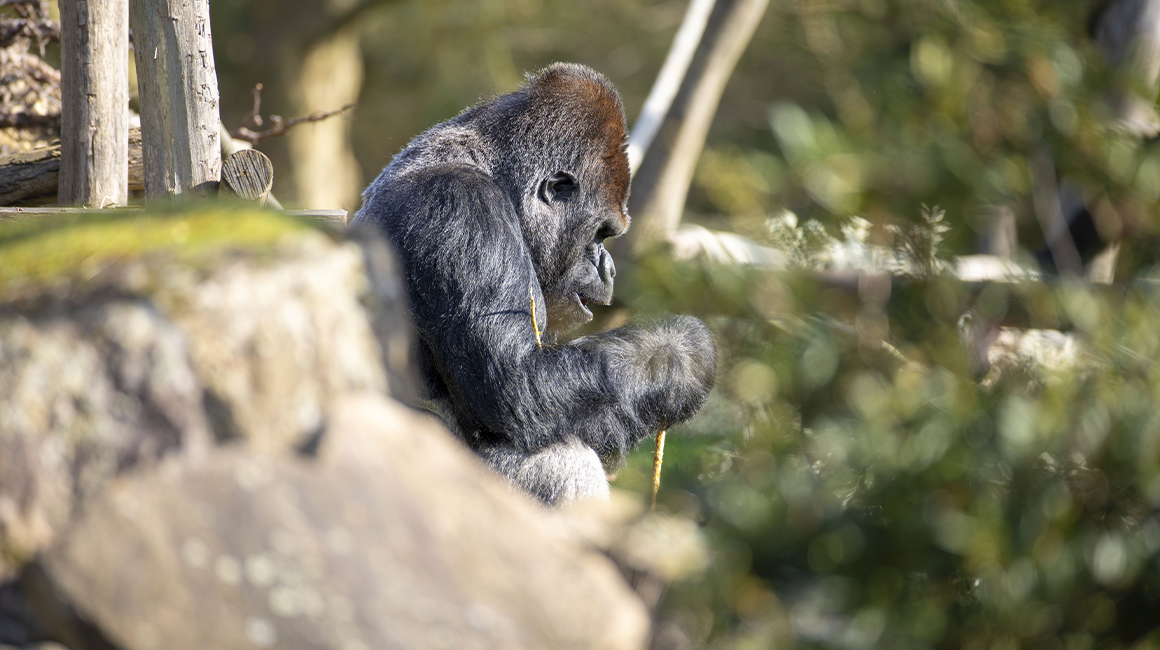
Asato is enjoying his new life on the island of single males.
Become Asato’s sponsor
You can sponsor Asato from as little as €20 for a year. It’s a way to forge a special bond with him whilst supporting Beauval Nature’s conservation and research programmes.
Frequently asked questions about gorilla conservation
Why are gorillas threatened with extinction?
Gorillas are mainly threatened by the destruction and fragmentation of their forests, linked to agriculture, logging and mining. They are also victims of poaching and the illegal trade, whilst certain diseases, such as Ebola, can decimate entire populations. Their slow reproduction rate makes it particularly difficult for populations to recover.
Why do gorilla populations recover so slowly?
Gorillas reproduce late in life, and females generally give birth to just one infant after a gestation period of around eight and a half months. The infant remains dependent on its mother for several years, which means births are spaced out by around four years. This slow reproductive rate means that losses caused by poaching, disease or habitat destruction cannot be quickly offset.
Does recycling mobile phones help to protect gorillas?
Yes, because mobile phones contain coltan, amongst other things, and the mining of coltan can damage the forests where gorillas live. Recycling them allows certain components to be recovered and reduces the need for new raw materials. At Beauval, you can drop off your old mobiles at the collection point located at the south entrance to the ZooParc de Beauval, before the ticket office. Since 2011, more than 14,000 mobiles and tablets have been recycled thanks to you!
What other actions can help protect gorillas?
Everyone can make a difference by choosing FSC-certified wood or paper products and minimising the replacement of their electronic devices. You can also support conservation programmes by making a donation to Beauval Nature or sponsoring Asato. Finally, learning more about the threats facing these great apes and raising awareness amongst those around you also helps to protect them.